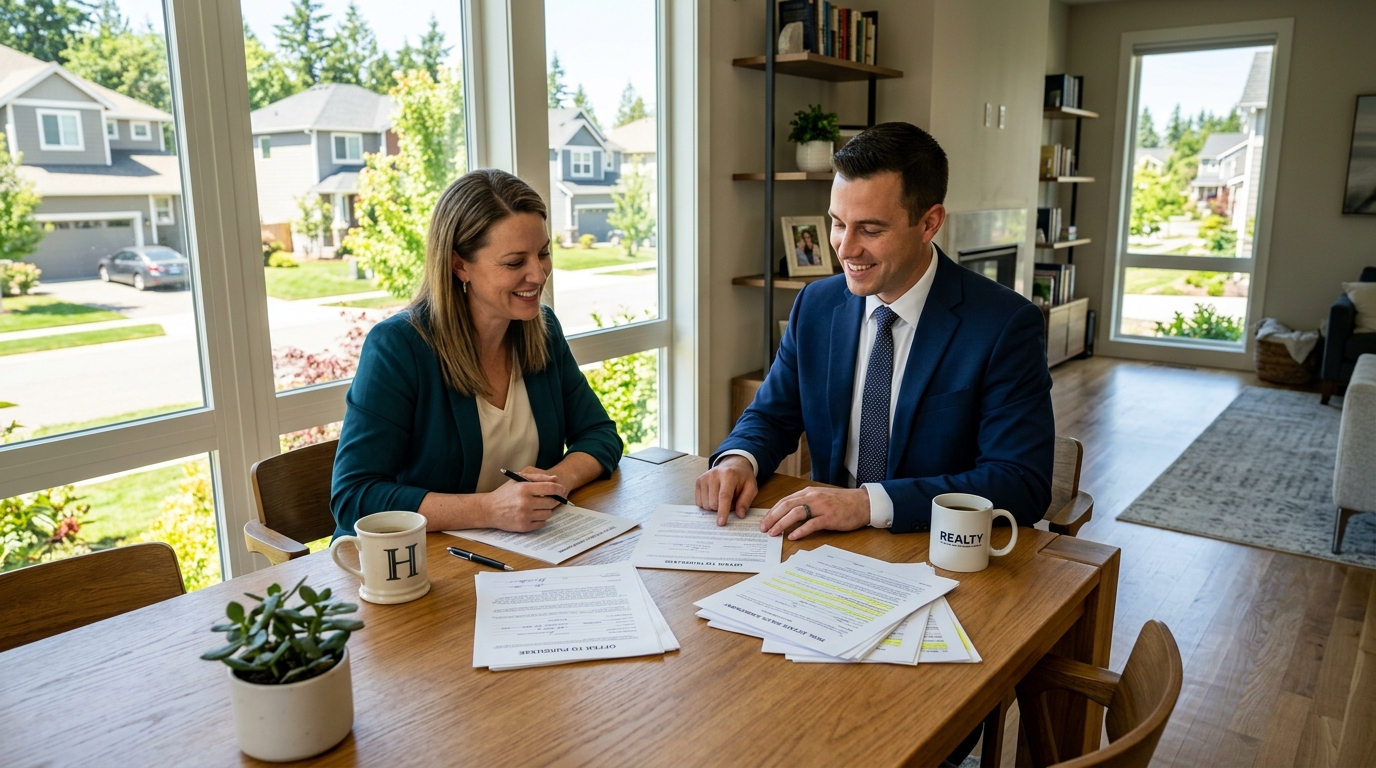
How to negotiate home sale offers is something most sellers never really learn until they are already in the middle of it. And honestly, that is where things can go wrong fast.
I remember the first time I got an offer on a property. I was so excited I almost said yes on the spot. But then my agent said, “Wait. Let’s look at the full picture.” That one moment changed everything.
This guide will walk you through each step. Simple, clear, and easy to follow.
What Does It Mean to Negotiate a Home Sale Offer?
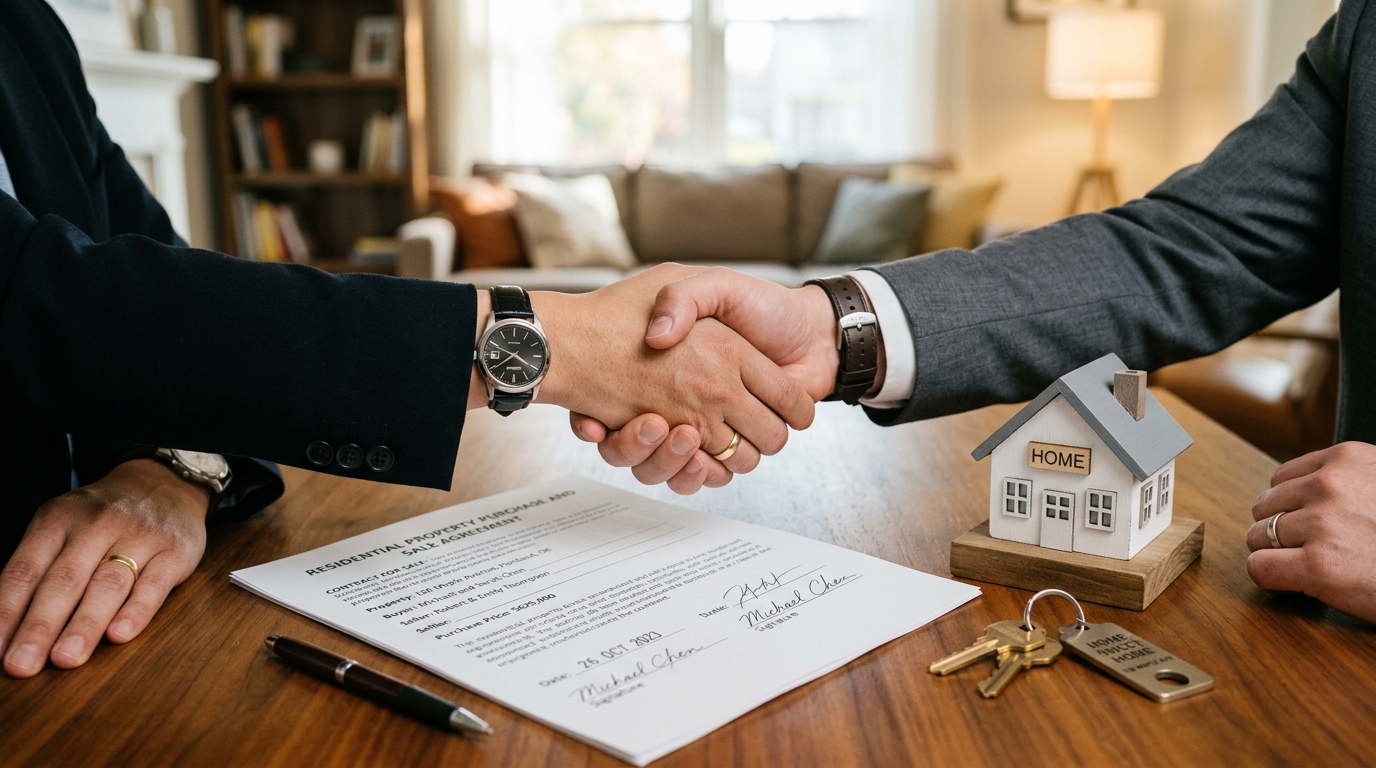
When a buyer is interested in your home, they send you an offer. This offer has a sale price, a closing date, and often some conditions called contingencies.
You do not have to say yes or no right away. You can send back a counteroffer. That is negotiation.
It is a back-and-forth between you and the buyer until both sides agree on the terms. The goal is to get the best deal for yourself without pushing the buyer away.
Why Negotiation Matters More Than the List Price
Most sellers think the job is done once they set a good list price. But the truth is, the real money is made or lost during negotiation.
The negotiation phase is where money is either made or lost. Most sellers focus heavily on preparing to sell, then freeze up when offers start coming in.
A buyer might offer you $490,000 with no conditions attached. Another might offer $505,000 but come with five contingencies and shaky financing. A $490,000 offer with no contingencies and a clean close can easily outperform a $505,000 offer loaded with conditions.
So yes, the number on the paper matters. But it is not the only thing that matters.
How to Negotiate Home Sale Offers Step by Step
Step 1: Understand Your Market Before You List
Before you even get an offer, you need to know where you stand. Are you in a seller’s market or a buyer’s market?
In a seller’s market, there are more buyers than homes. You have the power. You can hold firm on price and terms. In a seller’s market, homes sell quickly, often with multiple offers. Buyers may need to compete by offering above the asking price or waiving contingencies to make their offers stand out.
In a buyer’s market, there are more homes than buyers. Sellers need to be more flexible. In a buyer’s market, more homes are available than buyers. Homes often stay on the market longer, and sellers may reduce prices or offer incentives to attract buyers.
Knowing which market you are in shapes your whole strategy. Ask your real estate agent for a comparative market analysis (CMA) before you list.
Step 2: Know Your Bottom Line Before Offers Come In
I learned this the hard way. If you do not know your minimum acceptable price before offers arrive, you will panic when they do.
Sit down and figure out your costs. What do you owe on the home? What are your closing costs? What do you need to walk away with to cover your next move?
Figure out what you want your bare minimum list price to be, but do consider more than the dollar signs. Other areas for concessions might matter more to you than the buyer’s offer price.
For example, if you need to move fast, a quick closing date might matter more to you than a slightly higher price. Know your priorities first.
Step 3: Review the Full Offer, Not Just the Price
When an offer lands, do not just look at the number. Read every line.
Here is what to check carefully:
The sale price is just the starting point. Look at the earnest money deposit — a bigger deposit means the buyer is more serious. Look at the financing contingency — is the buyer pre-approved? Look at the inspection contingency — can they back out after an inspection? Check the closing timeline — does it work for your situation?
Fewer contingencies mean less risk. A buyer waiving inspection or financing contingencies is offering you more certainty, and that has real value. A larger earnest money deposit signals a serious buyer who is less likely to walk away.
Step 4: Respond With a Smart Counteroffer
You have three choices when you get an offer. You can accept it, reject it, or send a counteroffer.
Most of the time, a counteroffer is the right move. It keeps the conversation going.
If the price is too low, counter at your list price or close to it. Do not drop to meet them right away. That signals desperation.
Most buyers will try to lowball your property value, expecting a back-and-forth negotiation. You may need to play hardball and counter their offer at your list price. A buyer who is truly interested in the property will continue to engage and present a higher offer.
Set a deadline on your counter. A 24 to 48-hour response window creates urgency and prevents buyers from shopping your counter to other properties.
Handling Contingencies the Right Way
What Are Contingencies and Why Do They Matter?
A contingency is a condition that the buyer puts in the offer. If the condition is not met, they can walk away without penalty.
Common ones include the home inspection contingency, the financing contingency, and sometimes a home sale contingency (where the buyer needs to sell their own home first).
Contingencies are not always bad. But too many of them put you at risk. The deal can fall apart at any point.
Contingencies are potential landmines for any property negotiations. You can reject contingencies in their totality with a straightforward approach. However, standing your ground can risk making a buyer walk away from purchasing your property.
A smarter move is to counter with fewer contingencies rather than removing them all at once. Be firm but flexible.
How to Handle a Home Inspection Request
The home inspection is often where negotiations get messy. A buyer hires an inspector, and suddenly, there is a list of things they want fixed.
Here is the truth: not every item on an inspection report is your responsibility.
If the inspection turns up serious structural issues, you may have less power at the negotiating table. Multiple challenges may require taking a line-item approach. For instance, you might agree to take care of one issue and drop the price accordingly, but have the buyer manage smaller items.
Do not show up at the inspection. Do not panic and agree to fix everything. Stay calm and decide what is fair.
Smart Tactics for Getting the Best Deal
How to Handle Multiple Offers the Right Way
If you are lucky enough to get more than one offer at the same time, do not just pick the highest number.
If your home is priced and presented well, you may find yourself with more than one offer on the table. Avoid the temptation to simply pick the highest number. Instead, ask all interested buyers to submit their highest and best offer by a specific deadline. This creates a fair, competitive environment and often pushes offers higher than buyers initially planned.
When you compare the offers, rank them by net value — the actual money you walk away with after fees, concessions, and repair credits.
How to Respond to a Lowball Offer
Getting a lowball offer can feel like an insult. I get it. But do not take it personally.
Receiving a lowball offer can feel personal. It is not. Buyers are trying to get the best deal for themselves, just as you are trying to get the best deal for yourself.
Counter back confidently. Do not drop too far. If the buyer is serious, they will come up. If they walk, they were never your buyer.
According to a survey published by LendingTree, more than 63% of buyers reported negotiating a price reduction. That means almost every buyer goes in expecting to negotiate. You should too.
Common Negotiation Mistakes Sellers Make
Showing Too Much Emotion
Real estate is a business deal. Once a buyer sees how badly you want to sell, they use that against you.
Buying a house is a business transaction, but it is almost impossible for it to not feel personal. If negotiating a much better deal is a goal, do not offer too much information about how excited you are about buying or selling.
Keep your feelings off the table. Be professional. Be calm.
Ignoring the Closing Timeline
The closing date is something many sellers overlook. But it can be a real deal-maker or deal-breaker.
Some sellers want a quick closing, while others may need to line up the sale of their current home with the purchase of a new one. A little wiggle room on your part could make yours the winning offer.
If you can be flexible on the closing date, say so early. Buyers love that. It can help you get a better price in exchange.
When to Walk Away From a Deal
Know When Enough Is Enough
Not every deal is worth taking. Sometimes walking away is the right move.
It is a powerful statement when your listing agent tells the buyer’s representative you are ready to walk away, and you actually mean it.
If a buyer keeps asking for more concessions, repairs, and credits after every step, that is a sign they may not be the right buyer. Your time has value, too.
Waiting for the right offer is a real strategy, not just a last resort.
Using an Experienced Real Estate Agent
Honestly, this is the single biggest thing you can do to negotiate better. A good agent has done this dozens or hundreds of times. You have probably done it once or twice.
Agents know about things like appraisal gaps and escalation clauses to boost the sale. If you do not know what is going on, you will not get the most for your money.
According to data shared by the National Association of REALTORS, homes sold with an agent consistently sell for more than for-sale-by-owner properties. A skilled agent pays for themselves.
Conclusion
Negotiating home sale offers is not just about pushing for a higher number. It is about reading the full offer, knowing your market, handling contingencies wisely, and staying calm when things get tense.
The sellers who walk away with the most money are not always the ones with the best homes. They are the ones who came prepared, thought clearly under pressure, and made smart decisions at every step.
You can do that too. Start with the basics, trust the process, and do not leave money on the table.
Frequently Asked Questions
How much can I negotiate on a home sale offer?
It depends on the market. Depending on your market and the specific home, expect to negotiate somewhere between 1% and 5% off the list price, plus 2% to 6% of the home price in closing cost help or repair credits. In a hot market, expect less room to move. In a slower market, buyers may push harder for concessions.
Should I accept the first offer I get for my home?
Not always, but do not dismiss it either. Conventional wisdom says that the first offer is usually the best. Review it carefully, compare it to your bottom line, and counter if needed. The first offer often sets the tone for the whole negotiation.
What is an escalation clause, and should I worry about it?
An escalation clause lets a buyer automatically raise their offer if a competing bid comes in. A buyer can include a $4,000 escalation clause over the highest bid for your $500,000 home, up to a maximum of $550,000. Using such a clause can result in higher offers for your home. It is a good sign when buyers use this. It means they really want your home.
Can I negotiate closing costs as a seller?
Yes. Buyers often ask sellers to cover some or all of the closing costs. If the seller will not reduce the asking price, they may agree to seller concessions such as paying some or all of your closing costs to close the sale more quickly. You can use this as a trade-off. Agree to cover closing costs in exchange for a higher sale price or fewer contingencies.
What should I do if the home appraisal comes in low?
A low appraisal can cause problems if the buyer’s lender will not finance more than the appraised value. You have a few options. You can lower the price to match the appraisal, ask the buyer to pay the difference in cash, or challenge the appraisal with your own comparable sales data. Talk to your agent right away. This is one of those moments where experience really matters.