
Selling your home in Virginia can feel exciting. But the paperwork? That part trips up a lot of sellers. The big question everyone asks is: “What do I actually have to tell the buyer?” The answer might surprise you.
When you look at seller disclosure Virginia requirements, you quickly learn that Virginia plays by different rules than most states. It follows the old English legal idea called caveat emptor, which means “let the buyer beware.” That sounds like sellers can hide anything. But that is not quite right either.
In this guide, I will walk you through exactly what you must disclose, what you do not have to share, when the forms are due, and what happens if you get it wrong. Let us start from the beginning.
What Are Seller Disclosure Virginia Requirements?
Virginia Is a Caveat Emptor State: What That Really Means
Virginia is one of the few states that still follows the caveat emptor doctrine in real estate. This means the law does not force sellers to list every defect they know about. Buyers are expected to do their own homework and hire their own inspectors.
But here is the key thing most people miss. Caveat emptor does not mean sellers can lie. Virginia law draws a clear line between passive non-disclosure (which is usually legal) and active concealment or misrepresentation (which is fraud). If a buyer asks you directly whether your basement floods, you must answer honestly. Painting over water stains to hide them? That is a serious legal problem.
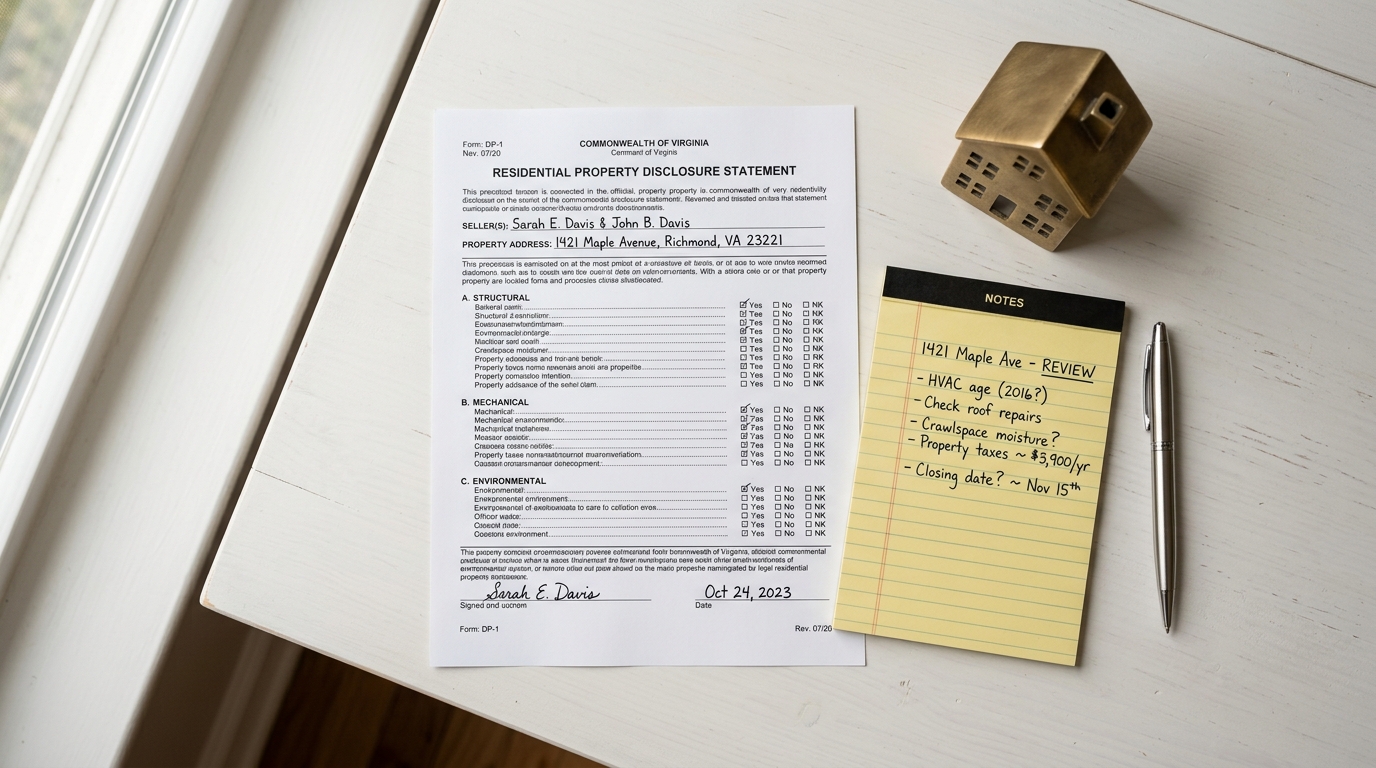
The Virginia Residential Property Disclosure Act (found in the Code of Virginia, sections 55.1-700 and following) is the main law that governs this. It requires sellers to give buyers a signed Residential Property Disclosure Statement before the purchase contract is signed. This form is issued by the Virginia Real Estate Board.
The Virginia Residential Property Disclosure Statement Explained
When I first looked at Virginia’s disclosure form, I expected pages of checklists. I was honestly surprised. The form is basically a one-pager that says the seller “makes no representations” about most things relating to the property. The seller is not confirming the home is in good shape. They are just telling the buyer: go check it yourself.
The form advises buyers to do their own due diligence. It covers things like the condition of the roof, HVAC systems, plumbing, electrical systems, the presence of defective drywall, and more. But instead of asking sellers to confirm or deny these things, it just says buyers should investigate on their own.
You can download the official form directly from the Virginia Department of Professional and Occupational Regulation (DPOR). According to DPOR’s official website, this statement is required for most residential property sales in the Commonwealth.
What Do You Have to Disclose When Selling a Home in Virginia?
Affirmative Disclosures That Are Always Required
Even though Virginia is a buyer-beware state, there are specific situations where sellers must make affirmative written disclosures. These are things you must actually tell the buyer in writing, not just leave for them to find on their own.
Here are the main ones under the Virginia Residential Property Disclosure Act:
- Military Air Installation: If the property is near a military air installation, you must disclose this under Section 55.1-704 of the Code of Virginia.
- Pending Building Code or Zoning Violations: If there are open violations on the property, Section 55.1-706 requires you to tell the buyer.
- Lis Pendens Filed: If a lawsuit has been filed against the property (a Lis Pendens), Section 55.1-706.1 says you must disclose it.
- Methamphetamine Manufacturing: If the home was previously used to make meth, Section 55.1-708 requires disclosure.
- Privately Owned Stormwater Facilities: Section 55.1-708.1 requires disclosure of privately owned stormwater management systems on the property.
- Repetitive Risk Loss Property: If the property has filed multiple flood insurance claims, you must disclose this under Section 55.1-708.2.
- Septic System Permit Validity: Section 32.1-164.1:1 covers disclosure about septic system operating permits.
- Mining History (Planning District 15): If your property is in a locality that is part of Planning District 15, you must disclose any known history of mining operations or abandoned mines.
Important Timing Rule
You must deliver the disclosure statement to the buyer before the purchase contract is ratified (signed). If you fail to do this, the buyer has the right to void the contract within a set number of days after receiving the disclosure. This is covered under Code of Virginia Section 55.1-709.
Federal Disclosure Requirements That Apply in Virginia Too
Virginia’s state rules do not exist alone. Federal law adds its own layer of required disclosures. The most important one is the lead-based paint disclosure.
If your home was built before 1978, federal law under the Residential Lead-Based Paint Hazard Reduction Act of 1992 (42 U.S.C. Sections 4851-56) requires you to do three things:
- Disclose any known lead-based paint hazards on the property to the buyer.
- Give the buyer an EPA-approved pamphlet about lead paint risks.
- Give the buyer the chance to do a lead paint inspection before the sale closes.
The penalties for ignoring federal lead paint rules are serious. According to the U.S. Environmental Protection Agency (EPA), sellers and landlords who violate these requirements can face fines of over $16,000 per violation.
What You Do NOT Have to Disclose in Virginia
Things Virginia Law Does Not Require Sellers to Share
This part often shocks buyers but reassures sellers. Virginia law is clear that sellers do not have to disclose many things that other states require. Here is what you can legally keep quiet about:
| Topic | Must Disclose? | Notes |
| Deaths or suicides on the property | No | As long as it does not affect the property’s physical condition |
| Presence of a registered sex offender nearby | No | Buyers can check public databases themselves |
| Claims the property is haunted | No | Virginia law does not require paranormal disclosures |
| Previous occupants had AIDS or HIV | No | Protected under privacy laws |
| Adjacent property issues or nearby highways | No | Even agents are not required to disclose this (Code of Virginia 54.1-2131.B) |
| Crime committed on the property | No | Covered under Code of Virginia 55.1-713 |
Honestly, when I first learned this, it felt a bit odd. But Virginia’s approach puts the responsibility on the buyer to investigate. That is why home inspections are so important in Virginia real estate transactions.
Situations Where No Disclosure Statement Is Needed at All
Not every home sale in Virginia requires the standard disclosure form. The Virginia Residential Property Disclosure Act lists several exempt transfers under Code of Virginia Section 55.1-702. These include:
- Sales between co-owners of the property
- Transfers between blood relatives or divorcing spouses
- Certain tax sales, bankruptcy sales, and trust transfers
- Foreclosure sales
- The first sale of a brand new dwelling (though new builders still have some specific obligations)
Note on Exempt Sales
Even when a sale is exempt from the state disclosure form, federal lead paint disclosures still apply if the home was built before 1978. Federal law does not make exceptions for family transfers or other exempt sales.
HOA Disclosures and Other Special Forms in Virginia
What You Must Provide if Your Home Is in an HOA
If your property is part of a Homeowners Association (HOA), Virginia adds another set of rules. Sellers must provide buyers with an HOA disclosure packet. This packet typically includes the HOA’s governing documents, budget information, meeting minutes, and any pending assessments.
The rules on HOA disclosures are specific. You must deliver the HOA packet within 14 days of the buyer’s request. After receiving it, the buyer has 3 days to cancel the contract if they do not like what they see. This is a buyer protection rule that sellers often do not know about.
Flood Risk, Stormwater, and Environmental Disclosures
Virginia has some unique environmental disclosures worth knowing. The Virginia Real Estate Board provides a flood risk information form that sellers should be aware of. While buyers are generally responsible for checking if their home is in a Special Flood Hazard Area, sellers with known repetitive flooding history must disclose it.
Homes in the Chesapeake Bay Preservation Area also face special rules. These properties must follow pollution management guidelines, minimize land disturbances, and meet tree canopy coverage requirements. If your home sits in a resource-protected area, buyers need to know the rules they will be living under.
According to the Virginia Legislative Information System (LIS), the full set of disclosure laws under Title 55.1, Chapter 7 covers all of these special situations in detail.
What Happens If You Hide Defects or Lie on the Disclosure?
Legal Consequences of Fraud or Misrepresentation
Here is where things get serious. Virginia may not force you to share everything, but it absolutely prohibits lying. If you actively hide a defect, paint over water damage, or give false answers to a buyer’s direct questions, you are committing fraud.
The legal consequences can be severe:
- Fraud charges: Virginia law takes fraud in real estate seriously. You can face criminal and civil charges.
- Lawsuits for damages: A buyer can sue you for the cost of repairs, legal fees, and sometimes even more if they can prove you knew about the defect.
- Contract rescission: A court can unwind the entire sale, forcing you to take the home back and return the money.
Real Risk: Active Concealment Is Fraud
There is a big difference between not volunteering information (often allowed) and hiding it on purpose (fraud). If a buyer asks you about the roof’s condition and you lie even though you know it leaks, you are legally exposed. Virginia courts have clear precedent on this.
How a Real Estate Attorney Can Protect You
I have talked to people who tried to handle their home sale completely on their own. Some of them later wished they had gotten legal help. Honestly, for something this important, a real estate attorney is worth every dollar.
A good Virginia real estate attorney can help you figure out which forms apply to your specific property, review your answers on the disclosure statement, and flag anything that could create legal risk later. The DPOR itself notes that sellers should consult an attorney if they need legal advice about disclosure requirements.
Real estate agents in Virginia also carry their own disclosure duties. Under Virginia licensing regulations, agents must share any material facts about the property they know about. If your agent knows something and stays quiet, they can face disciplinary action too.
Tips for Virginia Sellers to Stay Safe and Sell With Confidence
Practical Steps Before You List Your Home
Before you put that “For Sale” sign in your yard, here are a few things I strongly recommend every Virginia seller do first:
- Get a pre-sale home inspection: This gives you a clear picture of what is wrong before a buyer’s inspector finds it. Surprise disclosures are the worst kind.
- Complete all required disclosure forms early: Share them with buyers before they make an offer. This actually speeds up the process and avoids deals falling apart later.
- Answer buyer questions honestly: Even if the law does not require you to volunteer something, you must always answer direct questions truthfully.
- Talk to a real estate attorney or experienced agent: Virginia’s laws have real nuances. Getting expert guidance is not a sign of weakness. It is smart.
- Document everything: Keep records of repairs, inspection reports, and any disclosures you provide. If a dispute arises later, this documentation protects you.
Timing Is Everything: When Disclosures Must Be Delivered
One of the most common mistakes sellers make is waiting too long to hand over the disclosure forms. Virginia law is clear: the Residential Property Disclosure Statement must be delivered before the purchase contract is ratified.
If you deliver it late and the buyer has not yet signed a binding contract, they can void the deal within a few days of receiving it. This can be a huge problem if you are counting on the sale to close by a certain date. Share your disclosures early. It protects you and keeps the deal moving.
Also remember: if anything changes between the time you give the disclosure and the time of closing, you are required to update it. Say the roof gets damaged in a storm three days before settlement. You must tell the buyer. Staying silent at that point is concealment.
Conclusion
Understanding seller disclosure Virginia requirements does not have to be confusing. The short version is this: Virginia gives sellers a lot of protection through its caveat emptor rules, but it never gives you permission to lie or hide things on purpose.
Fill out the Residential Property Disclosure Statement. Deliver it before the contract is signed. If your home is near a military base, has known flooding history, or was used for meth production, disclose it. If it was built before 1978, follow the federal lead paint rules without exception.
Beyond that, answer buyer questions honestly, get a good real estate attorney or agent in your corner, and keep documentation of everything. Do those things and you will be in a strong legal position when you close the deal.
I would love to hear your questions below. Have you sold a home in Virginia and faced a tricky disclosure situation? Share your experience in the comments.
Frequently Asked Questions About Seller Disclosure Virginia Requirements
Does Virginia require sellers to fill out a detailed property condition report?
No. Virginia is a caveat emptor (buyer beware) state. The standard Residential Property Disclosure Statement does not ask sellers to list defects. Instead, it tells buyers to do their own inspections. Virginia law does require affirmative disclosure in specific situations like military air installations, pending zoning violations, and methamphetamine history. But sellers are not required to detail every known defect the way sellers in states like California or Texas must.
What happens if I do not give the buyer a disclosure statement before they sign?
If you fail to deliver the Virginia Residential Property Disclosure Statement before the purchase contract is ratified, the buyer gains the legal right to void the contract. They can walk away within a set number of days after finally receiving the form. This can cost you significant time and money. Always share the disclosure before the contract is signed.
Do I have to tell buyers about a death that happened in my home?
No. Virginia law does not require sellers to disclose deaths, suicides, or even crimes that occurred on the property, as long as the event did not cause any physical damage to the home. According to Code of Virginia Section 55.1-713, this information does not need to be shared. Buyers who are concerned about this can ask, and sellers must answer honestly, but they have no duty to volunteer it.
Does the federal lead paint disclosure requirement apply to all Virginia homes?
Only to homes built before 1978. If your home was built in 1978 or later, the federal lead-based paint disclosure does not apply. For pre-1978 homes, the rule is mandatory regardless of what state you are in. You must give buyers an EPA-approved lead hazard pamphlet, share any known lead information, and give them the chance to do a lead inspection. Ignoring this rule can result in fines over $16,000 per violation.
If I sell my home to a family member, do I still need to complete disclosure forms?
In many cases, no. The Virginia Residential Property Disclosure Act exempts certain transfers from the disclosure form requirement. These include sales between co-owners, transfers between blood relatives, and sales between divorcing spouses. However, even in these exempt situations, the federal lead paint disclosure rules still apply if the home was built before 1978. It is always a good idea to check with a real estate attorney to confirm whether your specific transfer qualifies for an exemption.