If you are planning to sell your home in Virginia, the closing costs selling home Virginia can be a big surprise. Many people think they will just get a check for the full sale price. But that is not how it works. Before you get your money, a long list of fees gets taken out first. Knowing what these fees are can help you plan and save.
What Are Closing Costs When Selling a Home in Virginia?
Closing costs are fees you pay when your home sale is final. As a seller in Virginia, you do not write a check at the table. Instead, these costs are taken right out of your sale proceeds before the money is sent to you. Think of it like your paycheck after taxes. You sold for $400,000, but you walk away with less because fees come out first.
I remember when my neighbor sold her townhouse in Fairfax a few years back. She was shocked when the settlement sheet showed $27,000 in fees she had not fully planned for. That moment taught her, and me, to always know the numbers before you list.
These costs cover things like real estate agent commissions, transfer taxes, title insurance, recording fees, attorney fees, and more. Some are fixed. Some you can negotiate. Knowing which is which gives you power.
How Much Are Closing Costs for Sellers in Virginia?
Here is the honest answer: it depends on what you include. If you count only the taxes and fees (not agent commissions), Virginia sellers pay about 1.7% to 3.17% of the home’s sale price in closing costs. On a $425,000 home, that is roughly $7,200 to $13,500.
But if you add in real estate commissions, which are usually the highest cost, the total jumps to 7% to 10% of the sale price. On a $600,000 home, that can be $42,000 to $60,000.
According to data published by Bankrate, Virginia’s average closing cost rate is 1.7% of the home’s sale price, not including realtor fees. For a median-priced home around $432,300, that equals about $7,349.
| Home Sale Price | Closing Costs Only (3%) | Total with Commission (8%) |
| $300,000 | $9,000 | $24,000 |
| $425,000 | $12,750 | $34,000 |
| $600,000 | $18,000 | $48,000 |
| $1,000,000 | $30,000 | $80,000 |
Full Breakdown of Seller Closing Costs in Virginia
Real Estate Agent Commission: The Biggest Fee
The real estate commission is almost always the highest cost for Virginia home sellers. Traditionally, the total commission was 5% to 6% of the sale price, split between the seller’s agent and the buyer’s agent. On a $500,000 home, that is $25,000 to $30,000 out of your pocket.
But things changed after the 2024 NAR Settlement (National Association of Realtors). Now, buyers are expected to negotiate and pay their own agent’s fees directly. This means sellers may only need to pay their own listing agent commission, which typically runs 2.5% to 3%. You can save up to 2.5% to 3% by not covering the buyer’s agent anymore.
You can also work with a discount real estate broker in Virginia who charges 1% to 2% instead of the standard 3%. That can save you thousands on a typical home sale.
Virginia Transfer Tax and Grantor’s Tax
Virginia has a grantor’s tax, which is a transfer tax paid by the seller. The state charges $1 per $1,000 of the sale price (that’s 0.1%). So on a $400,000 home, you pay $400 in grantor’s tax. Some areas, like Northern Virginia, also add a regional congestion tax of about 0.1% to 0.15% on top of the state rate.
This is a required, non-negotiable fee. You cannot skip it. But it is not that large compared to the other costs, so most people handle it without much trouble.
Quick Tip: In Virginia, the buyer usually pays recordation fees (also called mortgage stamps). The seller pays the grantor’s tax. Your settlement agent will split these correctly on your closing disclosure form.
Other Common Closing Costs Sellers Pay in Virginia
Title Insurance and Settlement Fees
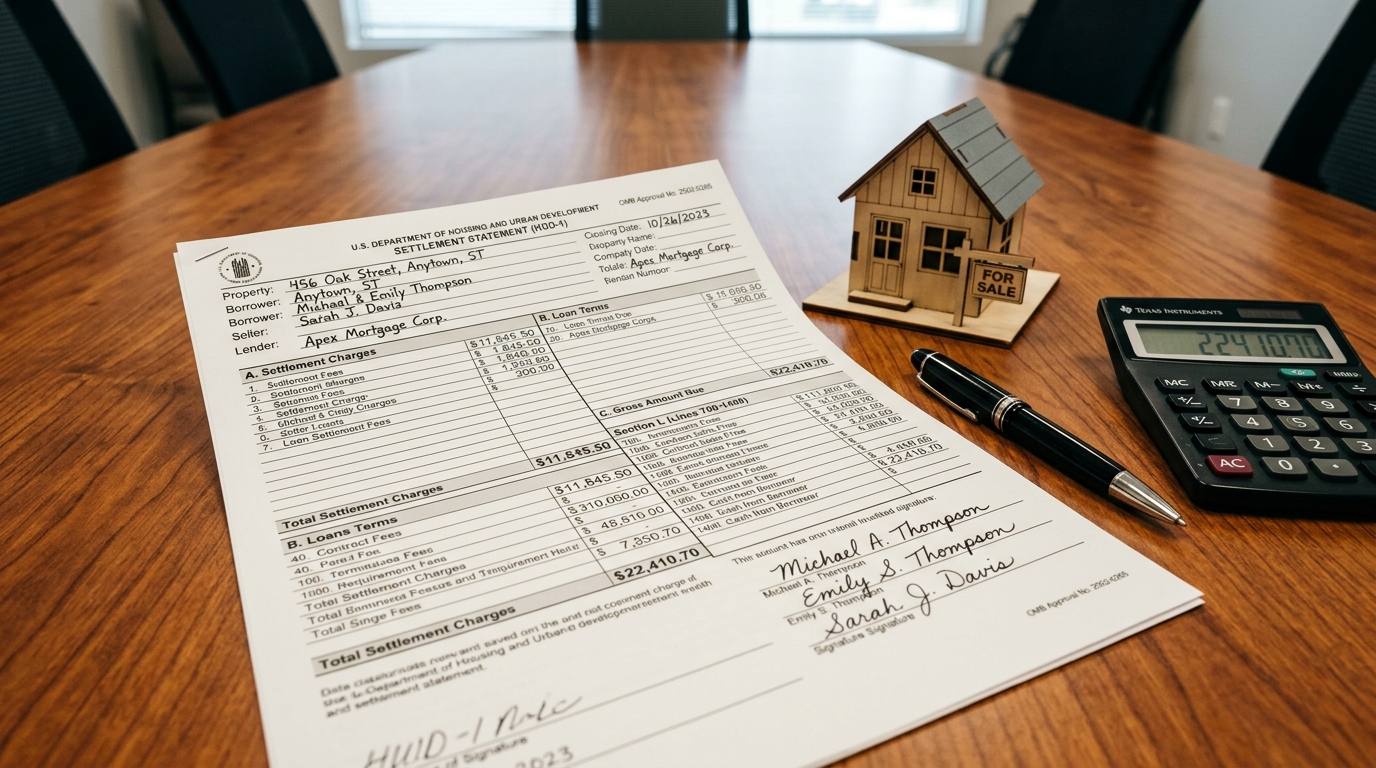
As a seller in Virginia, you are usually expected to pay for the owner’s title insurance policy. This protects the buyer against any past problems with the property’s ownership. It covers things like old liens, legal claims, or mistakes on the deed. The cost is usually between $800 and $2,500, depending on the home’s price.
You will also share in the settlement fee or escrow fee. This is what the title company or closing attorney charges for handling all the paperwork. The seller’s share is usually $400 to $800.
HOA Fees, Property Taxes, and Other Prorated Costs
If your home is in a Homeowners Association (HOA), you will likely need to pay for a resale package. This is a bundle of HOA documents the buyer needs to review. It can cost $150 to $500. You may also owe a prorated HOA fee for the months you lived there that year.
On top of that, property taxes in Virginia are prorated at closing. If you have already paid taxes for months you will not live there, you may get a credit. If you owe taxes, they come out of your proceeds. The average property tax rate in Virginia is about 0.72% of the home’s assessed value, but this varies a lot by county.
Honestly, the funny part is that some sellers forget about their mortgage payoff. If you still have a loan, the remaining mortgage balance gets paid off from the sale. That is not technically a closing cost, but it is a big chunk of money that comes out before you see your net proceeds.
Virginia Closing Costs Breakdown by Fee Type
Complete Cost Summary Table for Virginia Sellers
Here is a simple table to show what sellers in Virginia typically pay at closing.
| Fee Type | Typical Cost | Who Pays |
| Listing Agent Commission | 2.5%–3% of sale price | Seller |
| Grantor’s Tax (State Transfer Tax) | $1 per $1,000 (0.1%) | Seller |
| Regional Congestion Tax (Northern VA) | 0.1%–0.15% | Seller |
| Owner’s Title Insurance | $800–$2,500 | Seller |
| Settlement/Escrow Fee (Seller’s Share) | $400–$800 | Seller |
| HOA Resale Package | $150–$500 | Seller |
| Real Estate Attorney Fees | $100–$500 (flat fee $750–$1,250) | Optional, Seller |
| Recording Fees | $50–$200 | Seller |
| Home Inspection (Pre-listing) | $325–$425 | Seller (optional) |
| Home Warranty (if offered) | $400–$700 | Seller (optional) |
| Prorated Property Taxes | Varies | Split |
| Seller Concessions / Buyer Incentives | Up to 2%–3% | Seller (negotiated) |
Source: Data compiled from Real Estate Witch’s 2026 Virginia Seller Closing Costs Calculator, which shows average seller closing costs in Virginia at approximately 3.16% of the home’s purchase price.
What Are Seller Concessions and Buyer Incentives?
Seller concessions are when you agree to help cover some of the buyer’s closing costs. You might do this to seal the deal when a buyer is short on cash or when the market is slow. For example, if the buyer asks for $5,000 toward their closing costs, you could say yes to make the sale happen.
Most sellers budget about 1% to 2% of the sale price for possible concessions. On a $400,000 home, that is $4,000 to $8,000. It is not required, but it can help you sell faster in a tight market.
Who Pays Closing Costs in Virginia, Seller or Buyer?
Costs the Buyer Typically Pays
Buyers in Virginia pay for things tied to their mortgage and the loan process. This includes the loan origination fee, appraisal fee, home inspection, private mortgage insurance (if needed), recordation fees, and their down payment. Buyers usually pay 2% to 5% of the loan amount in closing costs.
Costs the Seller Typically Pays
Sellers pay for the costs of verifying and transferring ownership. This includes the grantor’s tax, owner’s title insurance, part of the settlement fee, HOA resale documents, and the agent’s commission. Most of these are fixed by law or custom, so there is less room to negotiate them compared to commission.
The key thing to remember is that almost everything is negotiable in real estate. If a buyer really wants your home, they might agree to take on some costs that sellers normally pay. A good listing agent can help you figure out what to push back on.
How to Lower Closing Costs When Selling a Home in Virginia
Negotiate Your Agent Commission
The single best way to save money on closing costs in Virginia is to negotiate your real estate commission. Traditional agents charge 2.5% to 3% just for the listing side. But today, many agents will work for 1.5% to 2%. Some offer flat fees. Even saving 1% on a $500,000 home means $5,000 more in your pocket.
I always say: interview at least three agents before you sign anything. Ask each one what their commission is and what they will do for that fee. The cheapest is not always the best, but you should always know what you are paying for.
Time Your Sale Wisely and Shop for Services
In Virginia, you have the right to choose your own title company or settlement agent. Prices can vary by hundreds of dollars between companies. It is worth calling two or three to compare. You can also ask your agent if they have a preferred provider that offers discounted rates for their clients.
Also, consider your closing date. If you close at the end of the month, you pay less in prorated interest on your mortgage. Small choices like this can add up to real savings.
According to the Consumer Financial Protection Bureau (CFPB), homeowners have the right to shop around for many closing services, including title insurance and settlement services. Exercising this right can reduce your costs meaningfully.
Closing Costs in Northern Virginia vs. Other Parts of the State
Why Northern Virginia Costs More
If you are selling in Northern Virginia (think Arlington, Fairfax, Loudoun), your closing costs will likely be higher than in the rest of the state. That is because Northern Virginia has an extra regional congestion tax of about 0.1% to 0.15% on top of the standard state grantor’s tax. Home prices are also much higher there, so even fixed-rate fees feel bigger.
For example, in Arlington, where the median home price is around $739,900, the closing costs add up much faster than in Lynchburg, where the median is about $259,900. Same rules, but bigger numbers.
Closing Cost Differences Across Virginia Cities
| City / Area | Median Home Price | Est. Closing Costs (1.7%) | Notes |
| Arlington | ~$739,900 | ~$12,578 | Plus regional tax |
| Fairfax | ~$600,000 | ~$10,200 | Plus regional tax |
| Virginia Beach | ~$350,000 | ~$5,950 | Standard rates |
| Richmond | ~$310,000 | ~$5,270 | Standard rates |
| Lynchburg | ~$259,900 | ~$4,418 | Lower prices |
Conclusion
Understanding closing costs selling home Virginia is one of the smartest things you can do before you list your property. There are a lot of fees, but when you know what they are, you can plan, negotiate, and walk away with more money. The biggest cost is almost always the agent commission. After that come the grantor’s tax, title fees, and settlement costs.
Do not let the numbers scare you. Most sellers in Virginia do just fine once they understand the full picture. Get a seller’s net sheet from your agent early on. It shows your expected take-home after all costs. That one document can save you a lot of stress.
If you found this guide helpful, I would love to hear your thoughts. Have you sold a home in Virginia before? What surprised you the most at closing? Drop your question or story below.
Frequently Asked Questions About Closing Costs Selling Home Virginia
1. How much are closing costs for sellers in Virginia?
Virginia sellers typically pay between 1.7% and 3.17% in closing costs (not including agent commission). When you add in the listing agent’s commission, total costs often reach 7% to 10% of the sale price. On a $425,000 home, expect to pay roughly $7,000 to $13,000 in fees alone.
2. Who pays the grantor’s tax in Virginia, the buyer or the seller?
The seller pays the grantor’s tax in Virginia. The state charges $1 per $1,000 of the sale price (0.1%). In some Northern Virginia counties, there is also a regional congestion tax of an extra 0.1% to 0.15% that the seller pays as well. The buyer typically pays recordation fees instead.
3. Can a seller avoid paying closing costs in Virginia?
You cannot avoid all closing costs, but you can reduce them. You can negotiate a lower agent commission, shop around for a cheaper title company, and avoid offering seller concessions to the buyer. After the 2024 NAR Settlement, you may also save by not covering the buyer’s agent fee.
4. What is a seller’s net sheet in Virginia?
A seller’s net sheet is a simple document your real estate agent gives you. It lists your expected sale price, all the fees and costs that will come out, and what you will actually receive after everything. It is one of the most useful tools a seller can use before listing their home.
5. Do I need a real estate attorney to sell my home in Virginia?
A real estate attorney is not required to sell a home in Virginia, but many sellers choose to hire one. Attorney fees range from $100 to $500, or a flat fee of $750 to $1,250 for full closing services. If your sale is complicated, like a short sale or a disputed title, having an attorney can be very helpful.