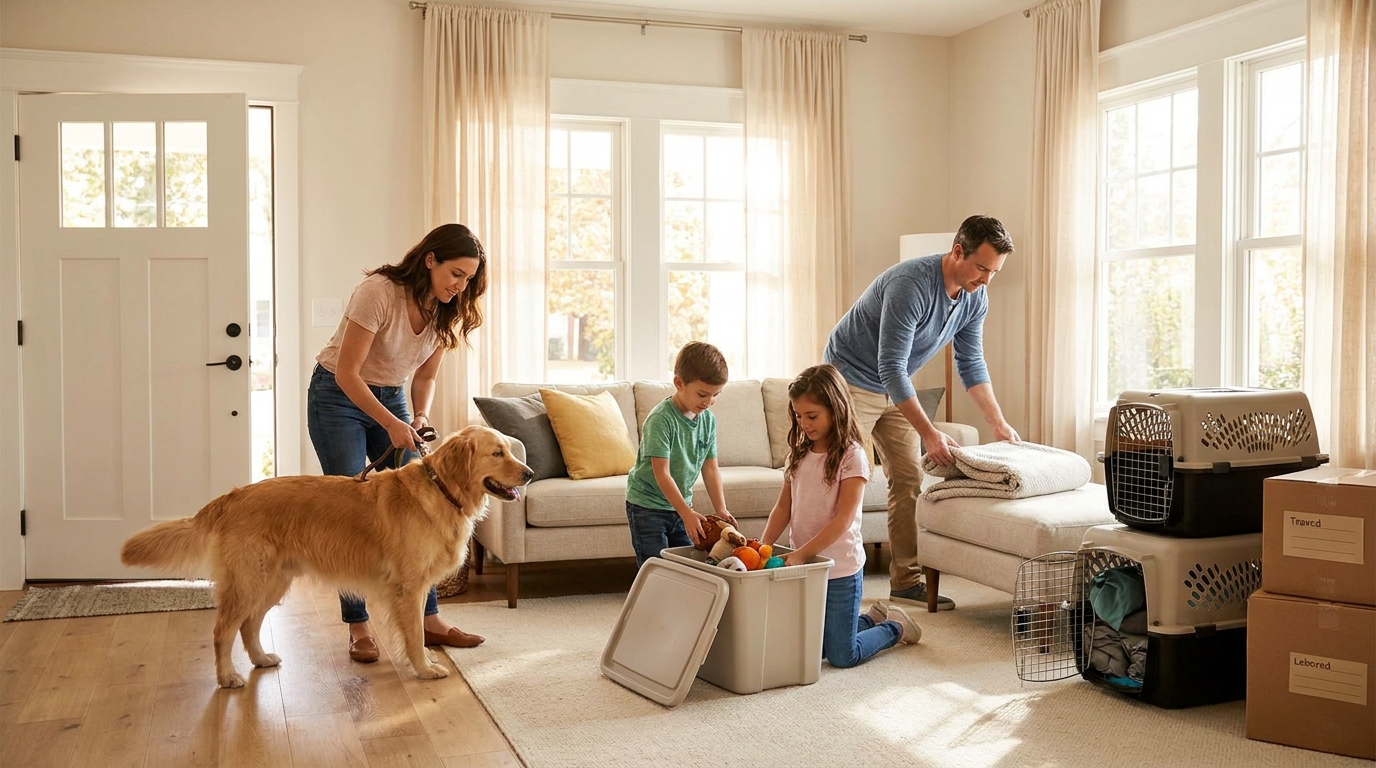
Your dog hears the doorbell and barks like the mail truck just declared war. A buyer steps back. The showing feels tense before anyone even sees the kitchen. Selling a house with pets and a busy family is hard, but it does not have to cost you the sale.
I have helped Richmond families sell homes for years, and pets are part of almost every story. Some buyers love animals. Many do not. The trick is simple: make your home feel clean, calm, and open, no matter who walks in. This guide shows you how to prep your pets, fix small damage, kill odors, and build a family routine that keeps showings smooth from start to finish.
Why Pets and Home Showings Don’t Always Mix
Here is the honest truth. You love your dog. A buyer does not. When someone walks into your house, they judge it in seconds. In my experience, a buyer forms a first opinion in about the first 30 seconds at the door, and a barking dog or a litter smell can wreck that window fast.
Pets change how a home feels. A cat darting under the bed makes buyers nervous. Muddy paw prints on the floors make them think the house is not clean. Even friendly dogs can block a room, and about 7 out of 10 buyers I meet would rather not step around an animal during a showing.
Then there is the fear of damage. Buyers look for scratched floors, chewed trim, and stained carpet. If they see one problem, they start hunting for ten more. That single worry can turn a strong offer into a low one, or into no offer at all.
The goal is not to hide that you have pets. Smart sellers know that is hard to pull off. The goal is to make the animal side of your house feel neat, cared for, and easy to picture without your furry friend in the room. When you do that, buyers relax. And relaxed buyers make offers.
What I Tell Every Pet Owner Before the First Showing
In my professional experience, I’ve found that the sellers who win are the ones who plan for their pets first, not last. I once worked with a family who left their two big dogs loose during the very first tour. The buyers stayed four minutes and left. We fixed the plan, and the same house sold within three weeks.
So my first rule is simple. Your pet should never be the star of a showing. Not the barking star, not the cute star, not any star. Buyers need to imagine their own life in the house, and that is hard to do when a dog is licking their hand at the door.
My second rule is about time. Give yourself a head start. Prepping a home with pets takes longer than a normal clean, and I tell sellers to add about 20 to 30 extra minutes to every showing prep. That buffer covers hiding toys, wiping paws, and getting the animal out the door without a fight.
My third rule is about honesty. Tell your agent you have pets and share your pet’s behavior. A shy cat, a jumpy dog, a bird that screams at noon, all of it matters. Good planning starts with the truth, and it saves you from a bad surprise mid-tour. Small steps here make the whole process feel calm.
Getting Your Pets Ready for the Selling Process
Every animal is different, so your plan should match your pet. A dog needs a walk and a sitter. A cat needs a quiet, separate space. A hamster just needs a clean cage that does not smell. In my experience, matching the plan to the pet cuts showing stress by more than half.
Start early. Animals feel your stress, and a sudden change in routine can upset their behavior. Begin small tweaks a week or two before your listing goes live. A slow transition keeps your pet calm and keeps their bond with you steady, even while the house turns upside down.
Dogs During Showings
Dogs are social, loud, and often too friendly. The best plan is to get them out of the house. A walk, a trip to the park, or a stay with a friend works well. I have seen homes get nearly double the second showings simply because the dog was gone and the house felt calm and open.
If you cannot leave, keep your dog in a crate in a quiet, separate room, with a note on the door. Take the leash, poop bags, and food bowls out of sight. Fresh toys in the crate help your dog settle. A tired dog is a quiet dog, so a long walk before a showing is your best friend.
Cats During Showings
Cats hide, and that is fine. The real problem with cats is the litter box. It must be scooped, clean, and out of the main path. In my work, litter smell is one of the top 3 odor complaints buyers mention, so I tell owners to scoop it twice a day while the house is listed.
Keep your cat in one separate room during a showing, with a sign that says “Cat inside, please keep door closed.” Move the food, water, and box into that room too. Cats bolt through open doors, and a lost cat mid-tour is every seller’s worst afternoon.
Small Pets, Birds, and Reptiles
Small pets are easy, but do not skip them. A dirty cage or tank smells fast, and buyers notice. Clean the cage the morning of a showing and move loud birds to a back room. A screaming parrot during a tour breaks the calm you worked so hard to create.
Keep tanks and cages tidy and out of tight spaces. Buyers want to see the room, not step around a large enclosure. A clean setup shows the house is cared for, and it keeps the focus on your space, not your scaly little friend.
Fixing Pet Damage Buyers Notice First
I’ve handled cases exactly like this before, and the same damage shows up again and again. Scratched floors near doors. Chewed trim at the bottom of walls. A worn spot on the carpet by the couch. Buyers zoom in on these, and I have watched a single chewed door frame knock $2,000 to $3,000 off a first offer.
Fix the cheap stuff first. A little wood filler and paint on scratched trim costs almost nothing and takes an afternoon. Small floor scratches often buff out. You do not need to redo a whole room. You need the damage to stop screaming “pet lived here.”
Here is a quick way to decide what to repair and what to fully replace. Use it as a rough guide, since real cost depends on your house and the size of the areas hurt.
| Pet Damage | Repair or Replace? | Rough Effort / Cost |
|---|---|---|
| Light scratched floors | Repair (buff, fill, polish) | Low — $50 to $200 |
| Deep gouges in wood floors | Replace boards or refinish | High — $$$ |
| Chewed trim or baseboards | Repair (filler + paint) | Low — a few dollars |
| Carpet stains, one spot | Professional cleaning | Low — $100 to $250 |
| Widespread carpet odor | Replace carpet | High — $$$ |
| Small wall scuffs | Repair (touch-up paint) | Low — cheap |
Know when to stop. If your carpet is soaked with old odor, no cleaning will save it, and replacing it may bring a better offer. When you are unsure what is worth the money, the team at Buy and Sell Richmond can walk your house with you and point out the fixes buyers will actually reward. For more common slip-ups, our guide on home selling mistakes Richmond sellers make is worth a read before you spend a dime.
Killing Pet Odors Before Buyers Walk In
Odor is the sneaky one. You cannot smell your own house because your nose is used to it. But buyers smell it the second they step in. This is where many sellers lose ground without knowing why. In my experience, odor is the number one silent deal-killer with pets in the home.
Start with a deep cleaning. Wash pet beds, vacuum every day, and steam the carpet and soft floors. Wipe walls near where your dog sleeps. Empty trash often. A professional cleaning before your listing photos is money well spent, and I have seen it lift buyer interest by roughly 20 to 30 percent in feedback.
Do not just cover the smell. Air fresheners on top of pet odor make things worse, and buyers know that trick. Open windows. Let fresh air move through. Baking soda on carpet overnight, then a good vacuum, pulls out odor for cheap. Fix the source, not the surface.
Keep it up the whole time your house is listed. Odors creep back fast with animals around. A daily reset keeps your home smelling clean and neutral. If deep smells will not quit, our tips on seasonal home maintenance in Richmond cover simple ways to keep a house fresh through every season.
Building a Family Schedule That Works Around Showings
In my professional experience, the families who sell fastest treat showings like a fire drill. Everyone knows their job. Everyone moves fast. This matters more than people think, because pet-owning households are the norm now, not the exception. According to HABRI, the Human Animal Bond Research Institute, about 85 million U.S. households live with pets, so buyers and sellers alike are used to seeing signs of animals, but not mess.
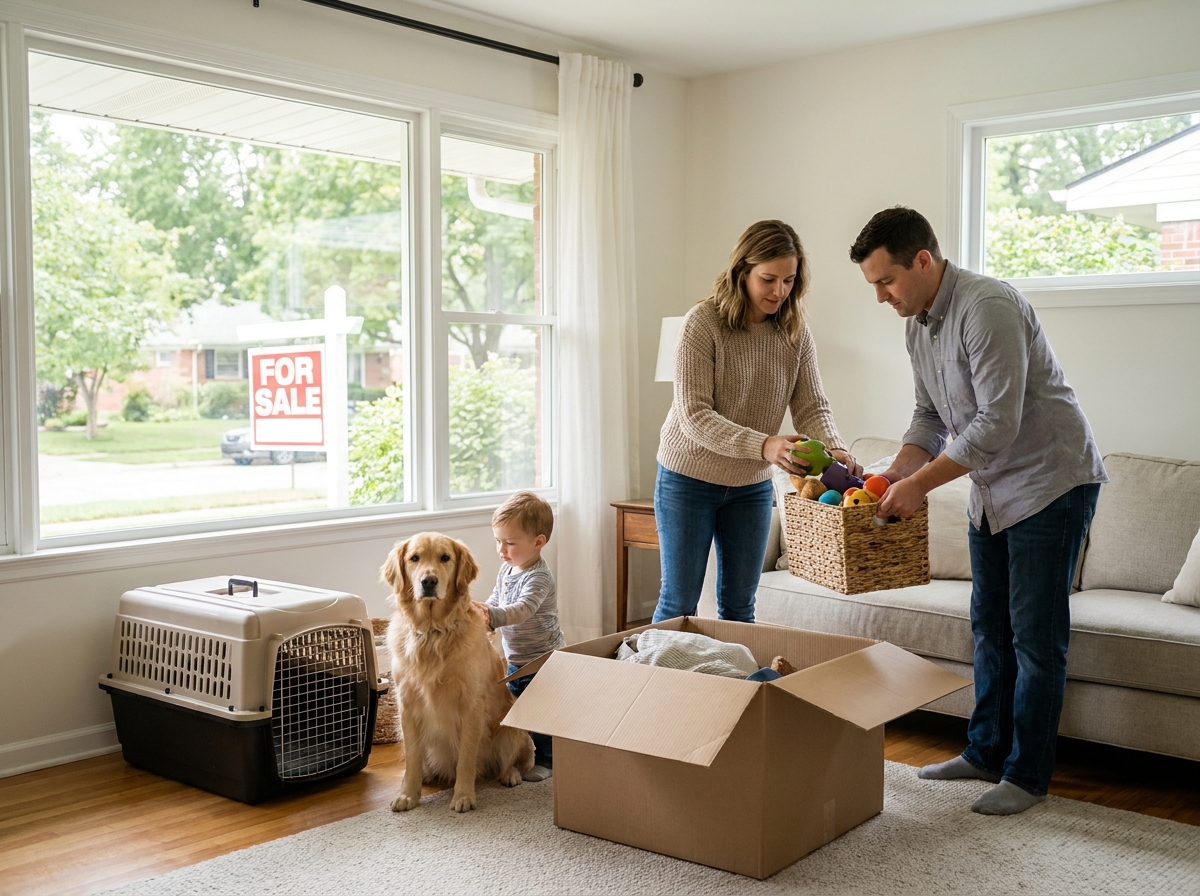
A showing can pop up with only an hour of notice. If your plan lives only in your head, you will scramble. So write it down. Tape it to the fridge. Give each person in the household one clear task, from grabbing the dog leash to hiding the litter box.
Here is a simple job list that works for most families. Change the names to fit your home, and keep the whole thing short enough to run in 15 minutes.
| Family Member | Showing-Day Job | When |
|---|---|---|
| Parent 1 | Grab the dog, leash, and bags; leave for a walk | Right away |
| Parent 2 | Hide toys, bowls, beds; wipe floors | First 5 min |
| Older kid | Scoop litter, close cat in separate room | First 5 min |
| Anyone | Quick trash + counter wipe, lights on | Last 5 min |
| Driver | Load pets and family into the car | Last step |
The magic is repeat practice. Run the drill twice before your first real showing. By the third time, my sellers usually cut their prep from 40 minutes down to about 15. That speed means you can say yes to more tours, and more tours make more offers.
Timing matters too. Try to group showings into set windows so your family and pets are not tossed out ten times a day. Our post on the best time to sell a house in Richmond, VA can help you pick a season and schedule that fits your life.
Where Do the Pets Go on Showing Days?
You have three main choices for your pets during a showing: take them with you, board them, or use a sitter. Each one fits a different household. In my experience, sellers who line up a go-to plan before day one avoid about 8 out of 10 of the last-minute panics I see.
Taking them with you is free and simple for dogs. A car ride, a park, a coffee shop patio. But it wears you out fast if showings come daily. Boarding or doggy daycare costs money, yet it buys you a calm house for hours. A pet sitter or friend can grab your animal on short notice, which is gold when a buyer calls at noon for a 2 p.m. tour.
Cats and small pets usually stay home in a separate room, since moving them stresses them more than the showing does. The key is a plan you can run at any hour. Here is how the options stack up.
| Option | Best For | Cost | Notes |
|---|---|---|---|
| Take them with you | Dogs, short notice | Free | Tiring if showings are daily |
| Doggy daycare / boarding | Busy weeks, many tours | Medium | Calm, empty house for hours |
| Pet sitter or friend | Last-minute calls | Low or free | Line up two or three people |
| Stay in a separate room | Cats, small pets | Free | Post a “do not open” note |
Line up backups. One friend is not enough, since people get busy. I tell sellers to have at least two or three names ready. When a hot offer window opens, you want to say yes without hunting for dog care.
Keeping Pets Calm and Their Behavior Positive During the Move
Selling a home is a big transition, and your pet feels every bit of it. Boxes appear. Strangers walk through. The routine breaks. In my professional experience, I’ve found that stressed pets act out right when you least want it, so protecting their calm protects your sale. This is not a small thing. The ASPCA reports that about 5.8 million dogs and cats entered U.S. shelters in 2025, and roughly 30 percent of those came in as owner surrenders, often after big life changes like a move.
Keep the routine steady. Same feeding time, same walk time, same bedtime. That steady beat keeps your pet’s behavior positive even while the house changes around them. Familiar toys and a favorite bed in their separate space help them feel safe.
Watch for stress signs. More barking, hiding, chewing, or accidents on the floors all mean your animal is struggling. Extra walks and play burn off that worry. A calm dog is far less likely to chew the new trim you just fixed, and that protects your repair work.
Your calm helps too. Animals read your mood, so slow breaths and steady hands go a long way. Keeping that bond strong now means an easier transition for everyone when you land in the new home. Honestly, the pets often handle the move better than the people do.
Your Quick Showing-Day Checklist
Let me pull it all together into one list you can actually use. Print this. Stick it on the fridge. In my experience, sellers who follow a written checklist prep about twice as fast and forget far fewer steps than those who wing it.
- Walk and feed the dog early, so they are tired and calm
- Scoop the litter box and close the cat in a separate room
- Hide all toys, bowls, beds, leashes, and crates
- Wipe paw prints off the floors and wipe down doors
- Quick vacuum, take out pet trash, open a window for fresh air
- Do a nose check at the front door for any odor
- Grab pets, leashes, and bags; load the car and leave
- Turn on lights, then text your agent that the house is ready
Keep a “go bag” by the door with a leash, bags, treats, and a towel for muddy paws. This one small habit saves me and my sellers a frantic search almost every single showing. When the house is empty and clean, buyers stay longer, and longer visits turn into stronger offers.
If your home needs more than a tidy-up before it hits the market, our guide on how to stage your home for sale walks you through it room by room. And if you want a local team to handle the hard parts, Buy and Sell Richmond can help you plan showings around your pets and your family so nothing feels rushed.
Final Thoughts
Selling with pets is not about pretending they do not exist. It is about respect, for the buyer’s first look and for your animal’s peace. Clean the odors, fix the scratched trim, and give your dog somewhere to go. Small things, done every showing, add up to a smooth sale.
The families who do best are the ones who plan early and keep it simple. A written routine, a couple of backup sitters, and a steady routine for the pets cover almost everything. You keep your animal calm, you keep the house show-ready, and you keep your own stress low. That balance is the whole game.
You know your pet better than anyone. Trust that, build your plan around it, and lean on help when you need it. Have you sold a home with pets before? I would love to hear what worked for you, because every house and every animal teaches me something new. If you are getting ready to list in Richmond, reach out and we can map a showing plan that fits your household.
Frequently Asked Questions
Should I tell buyers I have pets?
You do not need to announce it, but do not hide it either. Most buyers figure it out fast from toys or bowls, so the smart move is a spotless house with no pets in sight during the tour. Clean beats secret every time.
Is it better to remove pets during a showing or keep them in a crate?
Removing them is best when you can. An empty, quiet house lets buyers relax and picture their own life there. If you cannot leave, a crate in a separate room with a clear note on the door is a solid backup. Never let animals roam free during a showing.
How do I get rid of pet odor if I cannot smell it myself?
Ask an honest friend to do a nose test, since your own nose is used to the smell. Then deep clean: wash beds, steam the carpet, vacuum daily, and open windows. Skip the air fresheners, because they only mask odor. A professional cleaning before photos is worth the cost.
Do pets really lower my home’s value or offers?
Not the pets themselves, but the damage and odors they leave can. Scratched floors, chewed trim, and smells make buyers nervous and can shrink an offer. Fix the visible damage and kill the odor, and most buyers will never think twice.
What should I do with my pet if a showing is scheduled last minute?
This is why backups matter. Keep two or three sitters or a friend on call, plus a doggy daycare number saved in your phone. Have a “go bag” ready by the door so you can grab the dog and leave in minutes. A little prep turns a panic into a quick, easy exit.