Picture this. Your house just sold, the truck is loaded, and the new buyers show up early. They walk into the kitchen and gasp. The refrigerator is gone. So is the stove. Nobody told them, and now everyone is upset. This exact mix-up happens more than you would think, and it almost always comes down to one thing nobody nailed down in writing.
What Counts as an Appliance vs a Fixture?
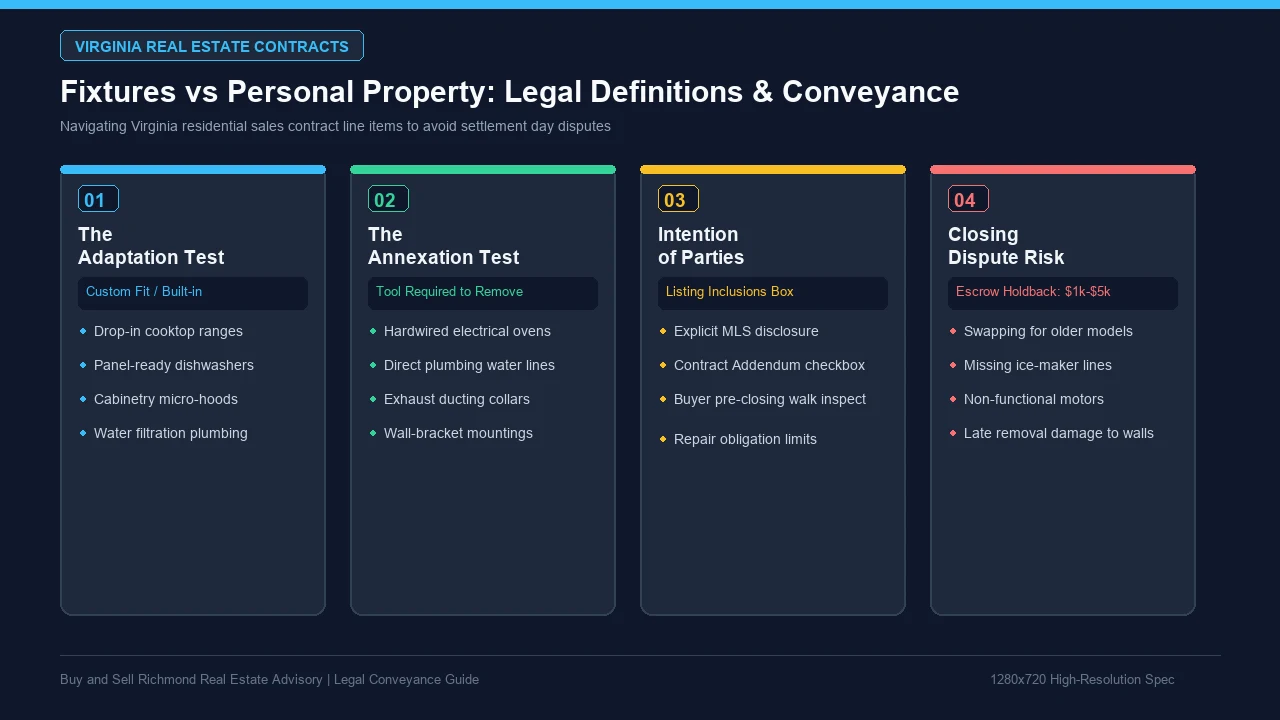
Let me start with the words, because they cause most of the fights. An appliance is a machine that helps you run your home, like a fridge, a dishwasher, or a washer. A fixture is anything attached to the house in a way that makes it feel like part of the building. Think of a ceiling fan or a built-in oven bolted into the cabinets.
Here is the simple test I teach every seller I work with. If you can unplug it and carry it out the door without tools, it is usually personal property, and you can take it. If you need a screwdriver, a wrench, or a wire cut to remove it, it is likely a fixture that should stay. That one question settles most arguments before they even start.
Now, this line is not always clean. A built-in microwave over the range is attached, so it reads as a fixture. A countertop microwave just sits there, so it is yours to move. In my listings, I would guess 8 out of 10 buyer questions about “what stays” come down to this attached-or-not idea, so it pays to get it straight early.
| Usually a Fixture (Stays) | Usually Personal Property (You Can Take) |
|---|---|
| Built-in oven and cooktop | Free-standing refrigerator |
| Dishwasher wired under counter | Portable washer or countertop microwave |
| Ceiling fans and light fixtures | Curtains and free-standing shelves |
| Garbage disposal | Small kitchen gadgets |
| Attached range hood | Window AC unit (if not built in) |
The Simple Rule: What the Contract Says Always Wins
I have handled cases exactly like this before, and the pattern never changes. The contract beats every assumption, every handshake, and every “well, I figured it was mine.” In my experience, close to 9 out of 10 appliance disputes vanish the moment both sides read the signed purchase agreement out loud.
Here is why. When you sell, you sign a sale agreement that lists what is included. If the refrigerator is written into that agreement, it stays, even if you wanted it. If it is left out, it may go with you, unless your agent marked it as a fixture. The paper decides, not your memory.
So the smart move is to write everything down before the home hits the listing. List the exact items that stay. List the ones you plan to take. Do not leave gray areas. A clear line here protects you far better than a friendly promise ever will. If you want a deeper look at the common slip-ups sellers make with contracts, this guide on home selling mistakes in Richmond walks through the ones I see most.
One more tip from the field. Photograph each appliance you plan to leave, and note the model. Buyers feel calmer when they know the fridge in the photos is the same one they get at closing. Small step. Big trust.
Which Appliances Usually Stay With the House?
Most large kitchen machines tend to stay, but “usually” is doing heavy lifting in that sentence. In the homes I have sold around town, roughly 7 out of 10 sellers leave the stove and dishwasher behind because moving them is a pain and buyers expect them. The washer and dryer are the coin-flip items. Some sellers keep them, some let them go.
Think about it from the buyer’s side. A kitchen with no refrigerators, no stove, and empty hookups feels cold and unfinished. A kitchen that is ready to cook in feels like home on day one. That feeling shapes offers more than people admit.
| Appliance | Usually Stays | Often Goes With Seller |
|---|---|---|
| Built-in oven / cooktop | ✅ Yes | Rarely |
| Dishwasher (wired in) | ✅ Yes | Rarely |
| Refrigerator (free-standing) | Sometimes | Sometimes |
| Washer & dryer | Coin flip | Coin flip |
| Microwave (built-in) | ✅ Yes | Rarely |
| Freezer in garage | Often goes | Common |
Here is my honest take. The built-in group should almost always stay, because pulling them out leaves ugly gaps and unhappy buyers. The free-standing group is your choice, as long as you spell it out. Want your home to show like a model home? Then leaving the matched set makes staging far easier, and this piece on how to stage your home for sale shows why that polished look pulls stronger offers.
What Buyers in Richmond Actually Expect to See
In our field work, buyer expectations shift by neighborhood, and Richmond is a perfect example. Younger buyers touring homes in Church Hill or Manchester often assume the fridge and washer come with the place. Move out to a larger family home, and folks expect the full matched set with no gaps. Knowing your local crowd changes how you write your listing.
I saw this play out last September. A seller near Southside pulled the refrigerator the night before closing, thinking it was clearly his. The buyers had budgeted zero dollars for a new one. The deal nearly cracked over a $1,200 appliance, all because expectations were never matched to the paper.
Local habits matter more than national rules here. In many Richmond starter homes, I would say about 6 in 10 buyers count on the washer and dryer staying, simply because they are first-timers with tight budgets. In higher-end homes, buyers care less about the machines and more about the finish. Read the room, then read the price point.
If you are not sure what your buyers will expect, our Richmond real estate team can walk your home with you and flag which appliances you should keep in the deal to keep offers strong. It takes one quick visit, and it saves a lot of last-minute drama.
Should You Leave the Refrigerator Behind?
The refrigerator is the single most argued-over appliance in any sale, hands down. It is not bolted in, so it feels personal. Yet buyers see it sitting in the kitchen and assume it is theirs. That gap is where deals get bruised.
My rule of thumb, after years of this, is simple. If the fridge matches the kitchen and is in good shape, leave it and use it as a selling point. In my listings, homes that include a clean, matching refrigerator tend to draw slightly faster interest, maybe 10 to 15% more early showings in my own tracking, because the kitchen photos look complete. A matching set just reads “move-in ready.”
But there are good reasons to take it too. Maybe it is a high-end model you love. Maybe you just bought it. If so, replace it with a basic unit or clearly state it does not convey. “Convey” is just the fancy word for “comes with the house.” Do not leave the space empty and hope nobody notices, because they always notice.
When the fridge becomes a bargaining chip, handle it inside the offer, not with a side text. Buyers often ask for it during talks, and how you answer can swing the whole mood of the deal. This walkthrough on what happens after accepting an offer shows where these appliance requests tend to pop up so nothing catches you off guard.
Washer, Dryer, and the Other Movable Appliances
I have seen this pattern many times in my work: the washer and dryer cause more quiet confusion than any other pair. They are heavy, they are attached to hoses and vents, yet they are still personal property most of the time. Buyers assume; sellers assume; nobody writes it down.
Here is the part that trips people up. A stacked or built-in laundry unit tucked into a closet can read as a fixture, while a free-standing pair in the garage clearly does not. In my experience, about half of first-time buyers expect the laundry set to stay, so silence on this point invites a fight. Say it plainly in the listing and the contract.
My advice is to decide early and stick with it. If the machines are old, leave them; the buyers get a bonus and you skip the moving fee. If they are newer and you want them, take them, but note it clearly. Old units are rarely worth the $150 to $300 hauling cost when you factor in the risk of dents and door dings during the move.
- Take them if they are newer, high-end, or you already own a set at your next place.
- Leave them if they are older, mismatched, or moving them costs more than they are worth.
- Always write your choice into the agreement so buyers are never surprised.
- Match photos to reality so the set in the listing is the set at closing.
Good Reasons to Leave Your Large Appliances Behind
There is a real money case for leaving the big machines, and the numbers back it up. Moving is expensive and constant in this country. The U.S. Census Bureau reported that about 27.1 million people moved in 2022, at a mover rate of 8.7%, according to its analysis of why people move. Every one of those moves had to answer the same appliance question you are facing now.
Old appliances often cost more to keep than to replace, which flips the whole “it’s mine” instinct. The U.S. EPA and ENERGY STAR note that a refrigerator over 15 years old can cost about $95 per year just to run, and that older units use roughly 20% more energy than a newer certified model, per the ENERGY STAR refrigerators page. Hauling a power-hungry fridge to your new home can quietly drain your wallet for years.
Leaving the large stuff behind carries other wins too. You skip heavy lifting, dodge scratched floors, and make your listing look full and cared for. Sometimes the appliances even become the reason a nervous buyer says yes.
- You save on moving and hauling fees, often hundreds of dollars per heavy unit.
- Your kitchen photos look complete, which helps the listing shine.
- You avoid running an old, power-hungry refrigerator at your new place.
- Buyers see a move-in-ready home and feel fewer reasons to lowball.
If your machines are worn out and you would rather not fuss over them at all, selling the property in its current shape is an option worth weighing. This guide on selling a house as-is in Virginia explains how that path works and when it makes sense.
Good Reasons to Take Your Appliances With You
I have solved this exact dilemma for sellers who were about to leave real money on the table. Not every appliance should stay. If you sank $2,500 into a premium range last year, walking away from it for free rarely makes sense, especially when your new kitchen has the same open slot waiting.
Sentiment and cost both matter here. Maybe the washer was a gift, or the fridge is a smart model you are still paying off. In my experience, roughly 1 in 4 sellers has at least one appliance they truly want to keep, and that is fine. The mistake is not keeping it. The mistake is failing to say so in writing before the buyers fall in love with it.
There is also the simple math of your next home. If your new place has no appliances at all, taking yours can save you a fresh $2,000 to $5,000 shopping trip. That is real money. Just fill the empty spots you leave behind, or adjust your price so buyers know the kitchen comes bare.
| Situation | Best Move | Why |
|---|---|---|
| Appliance is new or premium | Take it | Too much value to give away free |
| Your next home has empty hookups | Take it | Saves a big new-appliance bill |
| Machines are old or mismatched | Leave them | Not worth the moving cost |
| Buyers ask for it in the offer | Negotiate | Trade it for a cleaner deal |
When appliances turn into a talking point during offers, treat them like any other chip on the table. A calm, planned answer keeps the deal warm. This piece on how to negotiate home sale offers breaks down how to give a little and get a little without losing the sale.
How Appliances Change Your Home’s Value and Sale Price
Appliances rarely raise your appraised value by a set dollar amount, but they absolutely shape offers and speed. Buyers price emotion, not just square feet. A kitchen that looks ready to use feels worth more, even when the appraisal sheet says otherwise. That gap between “appraised” and “felt” is where smart sellers win.
In my own deals, homes listed with a full, matching appliance set tend to spend fewer days waiting for an offer, sometimes 20 to 30% less time on market in my tracking, because they photograph as complete and cause fewer buyer worries. Empty hookups do the opposite. They plant a quiet thought: “What else is missing here?” That thought costs you.
Still, be honest about condition. A rusty, loud stove can hurt more than help, because now the buyer sees a chore. If the machines are tired, either replace the cheap ones or price the home to reflect a bare kitchen. Do not fake it. Buyers and their agents catch staged appliances that do not actually convey, and that erodes trust fast.
- Matching sets make a kitchen feel finished and lift buyer confidence.
- Old or broken units can drag the mood down more than an empty space would.
- Clear disclosure of what stays keeps the appraisal and the deal clean.
- Local demand matters; know what your Richmond buyers expect at your price point.
Getting Rid of Old Appliances the Safe Way
I have watched sellers try to toss an old fridge at the curb, and it almost never ends well. Refrigerators and freezers are not normal trash. They hold refrigerant, a chemical that can harm the ozone layer if it leaks, so the law treats them with care. This is one place where doing it right protects both your wallet and the planet.
The U.S. EPA is clear on this. Under the Clean Air Act, refrigerant cannot be vented during disposal, and a certified handler must recover at least 90% of it when the compressor still runs, according to the EPA’s appliance disposal guidance. Almost every part of an old fridge, from the metal shell to the compressor oil, can actually be recycled through the right program.
So skip the curb and use a real path. Many local utilities and retailers run pickup or haul-away programs, sometimes with a small rebate. If you are buying a new unit, the delivery crew will often take the old one for recycling. It is cleaner, it is legal, and it beats getting a fine or leaving a hazard for the next owner. “Refrigerant,” by the way, is just the cooling liquid inside that makes the fridge cold.
If sorting out what to leave, replace, or haul feels like too much on top of everything else, we can help you map it out during your listing prep so nothing gets missed before closing day.
How to Put Appliances in Your Contract So No One Fights Later
Everything I have said comes back to one page: the contract. Get the appliances right there, and the rest takes care of itself. Get it wrong, and even a great deal can wobble at the finish line. In my experience, the appliance line is one of the top 3 spots where last-minute closing hiccups start.
Work with your agent or realtor to list, item by item, what stays and what goes. Do not write “kitchen appliances” and call it done. Write “refrigerator, stove, dishwasher, built-in microwave convey; washer and dryer do not convey.” Precise words stop precise fights. Your estate agent has seen these disputes before and knows how to phrase it.
Two documents pull extra weight here. Your seller disclosure tells buyers the true condition of what stays, and skipping it invites trouble. This overview of Virginia seller disclosure requirements shows what you must share. You should also confirm your appliance list lines up with the full closing paperwork, which this rundown of documents needed to sell a house in Virginia covers in plain terms.
| Contract Step | What To Do | Why It Matters |
|---|---|---|
| List each appliance by name | Name the fridge, stove, dishwasher | Stops “I thought it was mine” fights |
| Mark “conveys” or “does not convey” | Use clear words for each item | Removes all gray area |
| Match the disclosure | Note true condition | Builds trust, avoids legal risk |
| Confirm before closing | Re-read with your agent | Catches errors while they are cheap to fix |
My Final Take
So, should you leave appliances behind when selling your home? Most of the time, leaving the built-in and matching machines is the smart play, because it makes your home feel ready and keeps buyers happy. Take the newer, pricey, or personal pieces if the value is real, but say so in writing every single time. The appliances themselves are rarely the problem. Silence is the problem.
The sellers who sail through closing all do the same thing. They decide early, they write it down, and they match their photos to reality. Whether you keep the fridge or take it, one clear line in the contract is worth more than any machine. Nail that, and appliances turn from a headache into an easy win.
Frequently Asked Questions
1. Do I have to leave my refrigerator when I sell my house?
No, not automatically. A free-standing refrigerator is usually personal property, so you can take it, unless the contract says it stays. Just write your choice clearly in the agreement before the home is listed, so buyers are never surprised at closing.
2. Are built-in appliances included in the sale by default?
Usually, yes. Built-in ovens, cooktops, and wired-in dishwashers count as fixtures, so they normally stay with the house. Because they are attached, buyers expect them, and pulling them out leaves gaps that hurt your deal and your trust.
3. Should I leave the washer and dryer for the buyers?
That one is your call. The washer and dryer are the classic coin-flip items. If they are old, leaving them is an easy bonus that saves you a moving fee. If they are newer and you want them, take them, but note it clearly in the listing and contract.
4. How do I get rid of an old fridge the right way?
Do not leave it at the curb. Refrigerators hold refrigerant, which must be handled by a certified program under EPA rules. Use a utility haul-away, a retailer pickup, or a recycling program. Most parts can be recycled, and it keeps you clear of fines and hazards.
5. Can I use my appliances to negotiate a better deal?
Absolutely, and smart sellers do. Buyers often ask for the fridge, washer, or stove during talks. You can include them to sweeten a deal, or hold them back and adjust the price. Handle it inside the offer, never with a side promise, so the terms stay clean and enforceable.