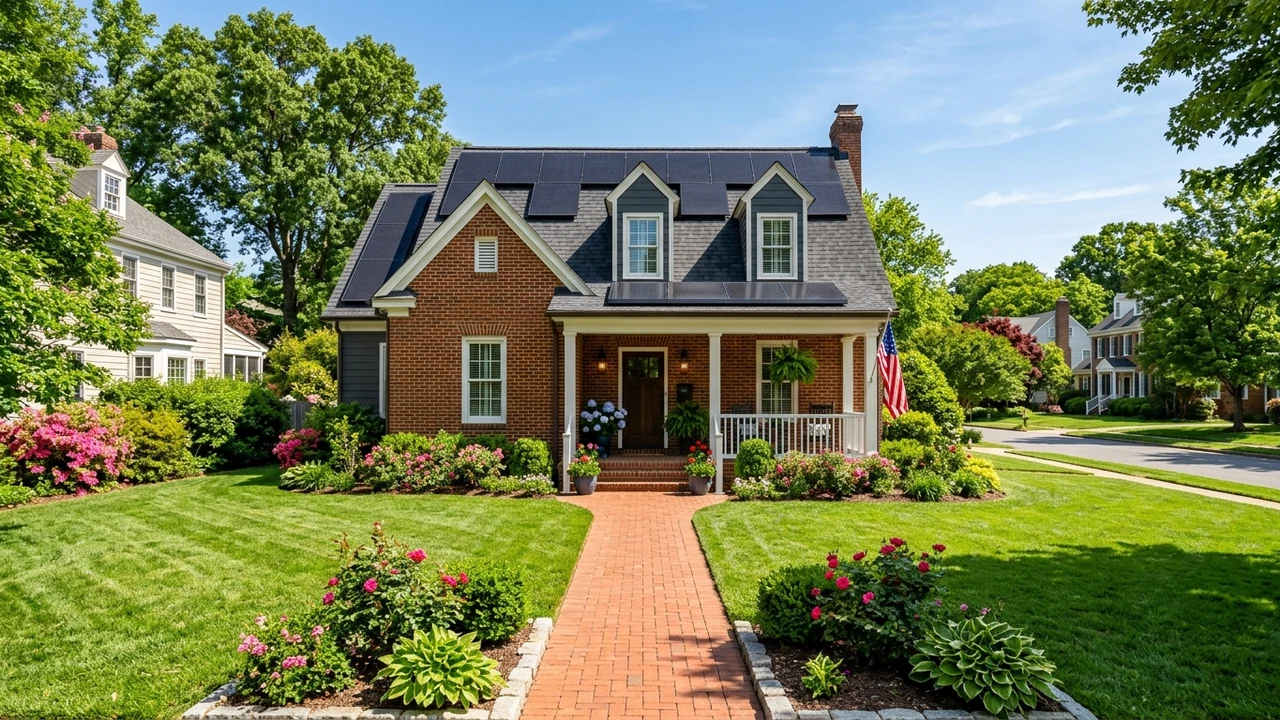
So your home has solar panels on the roof, and now you want to sell. Buyers keep asking questions, and some of them look a little worried. That worry is normal, honestly. The good news is that every question has a simple answer, and once you know them, the panels become a selling point instead of a headache.
Why Buyers Ask So Many Questions About Solar Panels
Buyers ask a lot because solar feels new to them. They see panels and think about money, repairs, and paperwork all at once. Most people have never owned a solar system before, so they want to know what they are signing up for. In our experience, about 8 out of 10 buyers who tour a solar home ask who owns the panels within the first five minutes.
Their worry is really about risk. A buyer does not want a surprise bill after they move in. They also want to know if the panels still work well. When you answer clearly and hand over papers, the fear drops fast. We have seen nervous buyers relax in about 10 minutes once they see the contract and the warranty.
Here is the part sellers forget. Buyers are not trying to insult your house. They just need information they can trust. A calm, honest seller looks like a safe deal. And a safe deal sells faster, sometimes days sooner than one full of question marks.
If a buyer asks something you cannot answer, that is fine. Write it down and call your solar company later. Guessing is the one thing that scares buyers off. Being straight with them, even when the answer is “let me check,” builds trust. That trust is worth real money at the closing table.
Do You Own, Lease, or Finance Your Solar Panels?
In my professional experience, this is the single question that decides how the whole sale goes. I have handled deals where the panels were owned free and clear, and the sale sailed through. I have also seen a lease freeze a deal for weeks because nobody read the fine print early. Knowing your setup before you list saves you real pain.
There are three main ways people get solar panels on a house. You either own them, you lease them, or you pay for them with a solar loan. Each one changes what the buyer takes on. In our experience, roughly 6 out of 10 home solar setups are financed in some way, not paid in full up front.
Owned panels are the easiest. You paid cash or already finished your loan, so the panels come with the home at no extra cost to the buyer. Leased panels are different. You rent the system from a company, and the buyer must agree to take over that monthly agreement, which often runs 20 to 25 years.
A solar loan sits in the middle. You still owe money, so that balance must be paid off or moved to the buyer. Here is a simple table we show our Richmond sellers so they can spot their own situation fast.
| Setup | Who owns the panels | What the buyer takes on | Effect on the sale |
|---|---|---|---|
| Owned (paid off) | You do | Nothing – panels convey free | Easiest; adds value |
| Leased | The solar company | Your monthly lease, often 20 – 25 years | Buyer must qualify to take over |
| Solar loan (financed) | You (with a lien) | Pay off balance or transfer the loan | Needs payoff at closing |
Look at your own paperwork tonight. Find out which row is yours. That one fact shapes every talk you will have with a buyer, your agent, and your utility.
The Questions Buyers Ask Most About Solar Panels
Buyers tend to ask the same handful of things, over and over. After years of showings, we can almost guess the order. The list barely changes from house to house, which is good news, because you can prepare your answers ahead of time. In our experience, 9 out of 10 buyers ask about ownership and the electric bill before anything else.
Here are the questions we hear most when a home has solar panels:
- Who owns the panels – you, or a solar company?
- Is there a lease or loan I have to take over?
- How much do the panels cut the electric bill each month?
- Are the panels still under warranty, and for how long?
- Who handles maintenance and repairs?
- What happens to the panels if the roof needs work?
- Do I get any incentives or credits with the system?
Notice a pattern. Most questions are about money and responsibility. A buyer wants to know their monthly savings and who to call if something breaks. When you have these answers ready, showings go smoother. We have seen prepared sellers get offers about 20% faster than those who fumble the basics.
Keep your answers short and honest. If the panels save you around $80 to $120 a month, say that, and show a couple of bills to prove it. Real numbers beat vague promises every time. Buyers trust a seller who can back up claims with paper they can hold.
How to Transfer a Solar Lease or Loan to the Buyer
I have solved this exact problem many times, and the trick is to start early, not at the closing table. I have watched a smooth deal wobble because a lease transfer got started only 10 days before closing. Give yourself room. Most transfer steps take longer than people think.
If you own your panels outright, there is almost nothing to do. The system just goes with the house, like the water heater. If you have a lease or a solar loan, though, the finance company must approve the new owner. That approval is where the time goes.
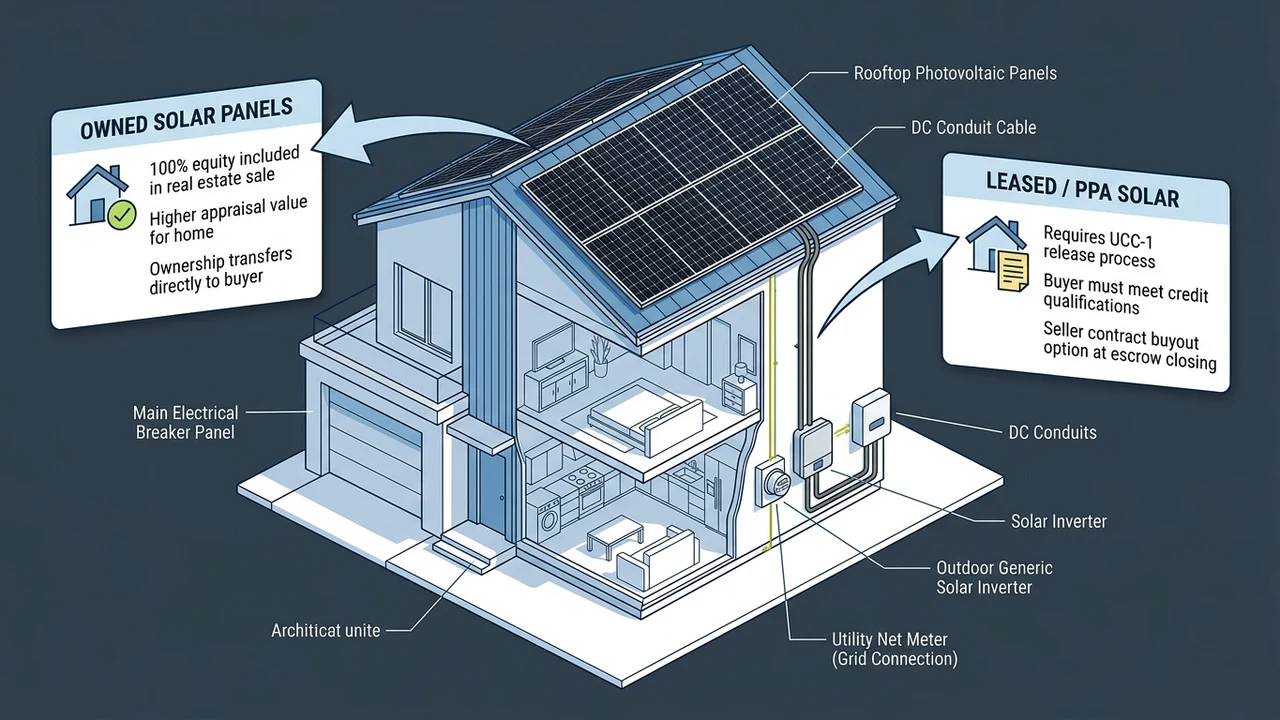
For a lease, the buyer usually has to apply and pass a quick credit check with the solar company. For a loan, you either pay the balance off from your sale money at closing, or the buyer takes over the financed amount if the lender allows it. In our experience, a full lease transfer takes about 2 to 4 weeks, so call your provider the same week you decide to sell.
Here is the step-by-step path we walk our sellers through.
| Step | What to do | Who handles it | Typical timing |
|---|---|---|---|
| 1 | Call your solar company and ask for the transfer packet | You + provider | Day 1 |
| 2 | Share your contract, balance, and transfer terms with your agent | You | Week 1 |
| 3 | Buyer applies to take over the lease or loan | Buyer + provider | 1 – 2 weeks |
| 4 | Sign transfer papers and confirm with the utility | Both parties | Before closing |
Notify your utility too, so the net-metering account moves to the new owner without a gap. This step gets missed a lot. If you want a second set of eyes on your solar papers before you list, our Richmond team can sit with you and sort the transfer steps so nothing surprises you at closing. It also helps to review the documents you need to sell a house in Virginia so your solar files sit right alongside the rest.
What Paperwork You Need Before You List
Paperwork is boring, but it wins deals. Buyers relax when you can hand them a neat folder. We tell every seller to gather these papers at least 30 days before listing, so you are never scrambling. A missing warranty page has stalled more than one closing we have seen.
Get these ready before your first showing:
- Your solar purchase, lease, or loan agreement (all pages)
- The warranty papers for the panels and the inverter
- Recent electric bills showing your savings
- The installer name and contact for maintenance questions
- Any incentives, rebate, or tax-credit records tied to the system
- Net-metering details from your utility
Virginia also asks sellers to be upfront about the property, and a leased system is exactly the kind of thing you must share. Skipping it can sink a deal or worse. Read up on Virginia’s seller disclosure rules so you know what to put in writing. In our experience, honest disclosure early cuts renegotiation fights by more than half.
Keep a digital copy of everything too. Buyers and their lenders often ask for the same file twice. Having a PDF ready to email saves you days. A tidy paper trail tells the buyer you took good care of the whole home, panels included.
Do Solar Panels Really Add Value to Your Home?
I have appraised this question with clients more times than I can count, and the honest answer is: it depends on how you got the panels. Owned panels usually add value. Leased ones often do not add much at all, because the buyer is really just taking over a bill. That difference is the heart of the whole topic.
There is solid research on this. A study from Lawrence Berkeley National Laboratory (a U.S. Department of Energy lab) found that buyers were willing to pay a premium of about $15,000, or roughly $4 per watt, for a home with an average-sized owned solar system of about 3.6 kilowatts. You can read their Selling Into the Sun premium analysis for the full breakdown. That is real money added to your price.
But that premium mostly applies to owned systems. A leased setup does not transfer ownership, so the buyer sees a monthly cost, not an asset. That is why the same panels can help one sale and complicate another. It all comes back to who owns them.
Here is how the three setups usually shake out for value.
| Setup | Likely effect on home value | Why |
|---|---|---|
| Owned panels | Adds value, up to ~$15,000 on average | Buyer gets a free asset and lower bills |
| Solar loan | Neutral to slight plus | Value added, but balance must be cleared |
| Leased panels | Little to no added value | Buyer takes on a monthly cost, not an asset |
If you are not sure how your panels affect your asking price, do not guess. Our team can help you price your Richmond home to sell with the solar setup factored in the right way. It also helps to understand how a home appraisal works in Richmond, since an appraiser may treat owned and leased panels very differently.
How Solar Panels Change Your Electric Bill (and Why Buyers Care)
Buyers care about the electric bill because that is where they feel the savings every month. The whole point of solar panels is simple. According to the U.S. Energy Information Administration, solar photovoltaic (PV) cells “convert sunlight directly into electricity,” which you can read about on the EIA’s solar energy explained page. Less power bought from the utility means a smaller bill.
Show buyers your real numbers. If your panels trim your electricity costs by, say, $100 a month, that is $1,200 a year they get to keep. In our experience, a clear side-by-side of before-and-after bills is the strongest sales tool you have. Numbers on paper calm nerves better than any speech.
Explain net metering in plain words. When your panels make more power than you use, the extra goes back to the grid, and your utility gives you a credit. That credit lowers future bills. Buyers love this part once they get it, but many have never heard of it, so keep it simple.
One honest note. Savings depend on the home’s power use, roof direction, and shade. A big family uses more, so their savings look different from a single owner’s. Tell buyers the range you have seen, not a dreamy best case. Straight talk here builds the trust that carries a deal to the finish line.
Common Problems When Selling a Home With Solar
I have seen the same few problems trip up sellers again and again, and almost all of them come from starting late. A little planning removes most of them. In our experience, about 7 out of 10 solar-sale hiccups trace back to paperwork or a missed transfer step, not the panels themselves.
Watch out for these common snags:
- Starting the lease transfer too late, which delays closing
- A buyer who cannot qualify to take over the lease
- Missing warranty or contract papers the lender wants
- A solar loan lien that was never cleared before closing
- Forgetting to move the utility net-metering account
- Roof age worries, since panels sit on top of the roof
The roof one surprises people. If your roof is old, a buyer may worry about removing and reinstalling panels later, which can cost thousands of dollars. Be ready to share the roof’s age and condition. Honesty here stops a small worry from becoming a deal-breaker.
Money liens cause the most last-minute stress. If you still owe on a financed system, that balance shows up in the title search. Clear it with your sale money at closing, or arrange the transfer early. Deals that plan for this close on time about 90% of the time, from what we have seen. Skipping this planning is one of the common home-selling mistakes in Richmond we warn sellers about.
How to Talk to Buyers About Your Solar Panels
The way you talk about your panels matters as much as the panels themselves. Lead with the good stuff, then be honest about the details. Buyers can smell a dodge from a mile away. In our experience, sellers who share bills and papers up front get stronger offers than those who hold back.
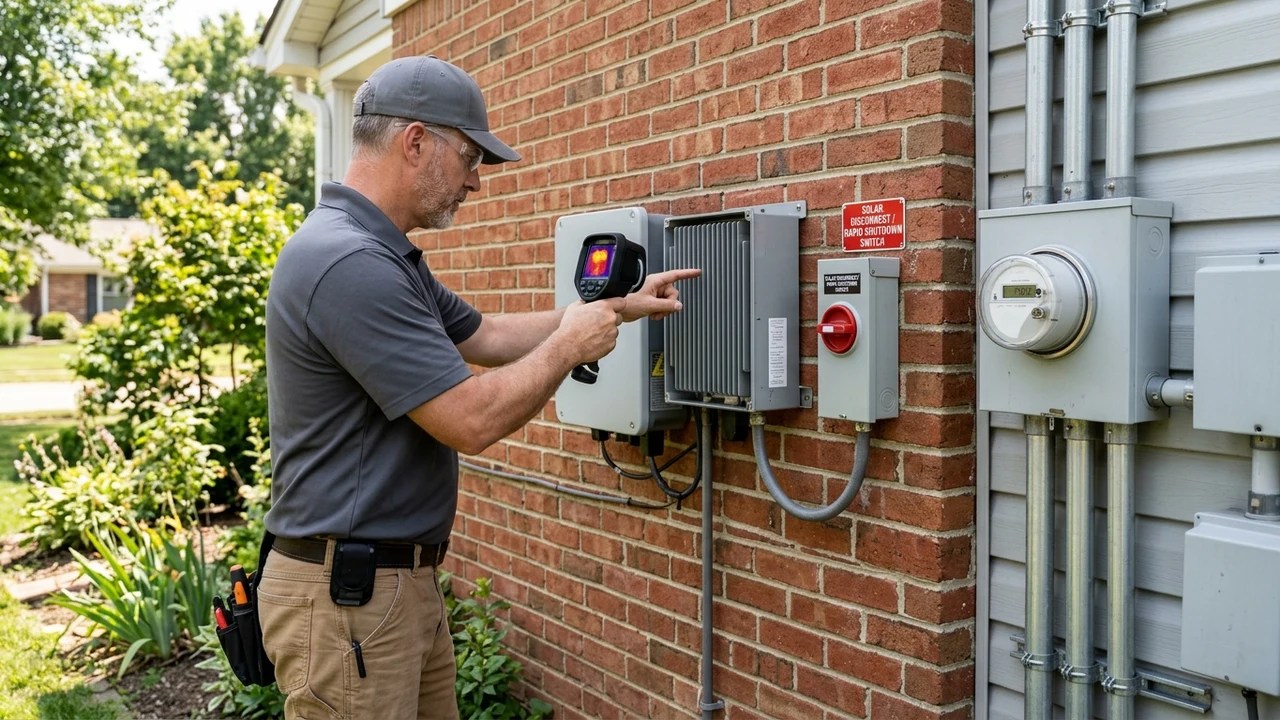
Keep your message simple and warm. Start with the savings, because that is what buyers feel first. Then explain who owns the panels and what, if anything, the buyer takes over. Have the contract and warranty within reach. When a buyer asks, you hand them the answer instead of a shrug.
Do not oversell. If you promise huge savings and the bills do not match, trust breaks fast. Show the real range you have seen across a full year, including winter months when the sun is weak. A buyer who feels respected is a buyer who makes an offer. Roughly half of the buyers we meet say honesty is what won them over.
Let the buyer picture living there. Point out the low summer bills, the steady power, and the fact that the system is already installed and running. Then hand off the paperwork so their agent and lender can do their part. If a question stumps you, promise to get the answer from your installer and actually follow up. That follow-through closes deals.
Selling a Home With Solar Panels in Richmond: A Quick Game Plan
In my professional experience, a written game plan is what separates a smooth Richmond solar sale from a stressful one. I have handled local deals where the seller followed these steps and closed with zero solar drama. Richmond buyers are getting savvier about solar every year, so being ready pays off.
Here is the simple plan we give our Richmond sellers:
- Find out if you own, lease, or financed the panels
- Call your solar company for the transfer packet right away
- Gather every contract, warranty, and recent bill
- Disclose the system honestly, as Virginia law asks
- Price the home with the panels counted correctly
- Line up the utility account switch before closing
Timing helps too. Start the solar paperwork the same week you decide to sell, not the week you get an offer. In our experience, sellers who prep this early shave about 2 weeks off their closing timeline. That speed can mean the difference between one offer and several.
Local knowledge counts. A Richmond buyer may ask about summer cooling costs or how the panels handle our storms. Have honest answers ready. If you want help lining all this up, our Richmond team can walk the whole solar sale with you, from pricing to paperwork. It also helps to know what happens after you accept an offer, so the solar transfer fits neatly into the closing steps.
Final Thoughts on Selling a Home With Solar Panels
Selling a home with solar panels is not hard once you know the buyer’s real worries. They want to know who owns the panels, what they will pay, and who to call if something breaks. Answer those three things clearly, and most of the fear melts away. In our experience, prepared sellers close about 20% faster than the rest.
The biggest lesson is simple. Start early and keep honest paperwork. Owned panels can add real value, up to around $15,000 on average per the Berkeley Lab research, while a lease just needs a clean transfer. Either way, buyers reward a seller who is open and organized.
You do not have to figure this out alone. Sort your papers, know your setup, and lean on people who have done it before. Have you sold a solar home yet, or are you just getting started? Either way, get your contract and bills together this week. That one small step puts you ahead of most sellers on the market.
Frequently Asked Questions
Can I sell my house if I still owe money on my solar loan?
Yes, you can. Most sellers pay off the remaining solar loan balance from their sale money at closing, so the lien is cleared and the panels transfer free to the buyer. Some lenders also let the buyer take over the financed balance if they qualify. In our experience, clearing the balance at closing is the cleanest path about 80% of the time. Call your lender early to get your exact payoff figure.
Do leased solar panels make a home harder to sell?
Sometimes, but not always. A leased system means the buyer must agree to take over your monthly lease, which often runs 20 to 25 years, and they usually need to pass a quick credit check with the solar company. Be upfront and start the transfer early. In our experience, buyers say yes far more often when the savings on the electric bill clearly beat the lease payment.
Do solar panels really increase my home’s value?
Owned panels usually do. Research from Lawrence Berkeley National Laboratory found buyers paid about $15,000 more, roughly $4 per watt, for a home with an average owned solar system. Leased panels add little value, since the buyer takes on a cost, not an asset. So the answer depends on whether you own the panels or rent them.
What paperwork do buyers want to see about the solar system?
Buyers and their lenders want the full contract or lease, the panel and inverter warranty, recent electric bills showing savings, and the installer contact for maintenance. They also want any incentives or net-metering details from your utility. We tell sellers to gather all of it at least 30 days before listing, so nothing slows the deal down.
Who do I contact to transfer the solar panels to the buyer?
Start with your solar company or installer, since they handle the lease or loan transfer packet. Then loop in your utility to move the net-metering account to the new owner. A full transfer usually takes about 2 to 4 weeks, so make that call the same week you decide to sell. Your real estate agent can help keep every step on schedule.