
Selling a house is already a big job. Add a homeowners association to the mix, and the rules shift fast. In Richmond, your HOA can shape your timeline, your paperwork, and even your final close date. Get it right, and the sale moves smooth. Get it wrong, and your deal can stall for weeks while everyone waits on one packet of documents.
What is a homeowners association (HOA)?
A homeowners association is a group that runs a neighborhood or condo community. It sets the rules, collects fees, and takes care of shared areas like pools, gates, sidewalks, and lawns. When you buy a home inside one of these communities, you become a member by law. You agree to follow the bylaws and pay the dues, and that promise stays with the property even when you sell.
Here is the simple version. Think of an HOA as a small local government for your street. It has a board of members, a set of written regulations, and a budget. Some are tiny and quiet. Others feel strict, with a committee that checks paint colors and fence heights. If you are weighing a townhouse or condo against a detached house, our guide on condos versus single-family homes in Richmond breaks down how the dues and rules differ.
One quick word to know is “covenant.” That is just a fancy legal term for a written promise about how you can use your land. It might say no sheds, no short-term rentals, or no bright purple doors. These promises live in your HOA papers, and buyers get to read them before they commit. That is why your paperwork matters so much when you sell.
Why selling an HOA home in Richmond feels different
I’ve handled plenty of HOA closings across the Richmond area, and I’ve found the biggest delays almost never come from the buyer. They come from the association’s paperwork. In my experience, close to 8 out of 10 of my slowed-down deals trace back to a missing or late HOA document, not a picky lender or a shaky buyer. That one lesson changes how I list every single HOA home.
A normal home sale has two main sides: you and the buyer. An HOA sale adds a third player: the association itself. That third party controls a special paper the buyer needs, and they move on their own clock, not yours. So even a strong offer can sit and wait. You cannot rush a board or a management company by wishing.
There is also more to tell the buyer up front. Virginia asks sellers to share honest information about the community, the dues, and any open issues. Buyers want to know what the fees cover and what the rules ban. If you skip this step, the deal can crack late in the game. Our overview of Virginia seller disclosure requirements walks through what you must share and why honesty protects you.
The payoff is real, though. A well-run community with clean books and fair regulations can actually help your sale. Buyers feel safe. They see tidy common grounds and steady management, and they relax. In my own listings, homes in calm, well-managed communities tend to draw stronger interest than messy ones with drama at every meeting.
HOA documents you need before you list
In my professional experience, sellers who gather their HOA papers before they list close roughly two weeks faster than the ones who scramble after an offer lands. That head start is the cheapest edge you can give yourself. It costs you nothing but a few phone calls. And it keeps your buyer calm while the clock ticks.
So what do you actually need? The star of the show is the resale certificate, sometimes still called the resale packet. It bundles the bylaws, the budget, the dues, the rules, and any open violations into one stack. You request it from your association or its management company. Then the buyer reads it and decides if the community fits their life.
Here is a plain list of the documents most Richmond HOA sellers should line up early:
- The resale certificate or disclosure packet from the association
- The current bylaws, covenants, and written regulations
- The latest budget and any special assessment notices
- Proof your dues and fees are paid in full, with no balance
- Any letters about open violations on your property
- Meeting minutes that show planned repairs or fee changes
Do not guess at this list on your own. Every community is a little different, and one missing page can freeze your close. For a wider checklist that covers both HOA and standard items, see our page on the documents needed to sell a house in Virginia. If you want, our Richmond team can sit down with you and pull the full list together, so nothing gets left out.
| Document | Why it matters to your sale |
|---|---|
| Resale certificate / packet | The buyer’s main review paper; the sale often hinges on it |
| Bylaws and covenants | Shows the buyer the rules they must follow |
| Current budget | Proves the association is funded and stable |
| Dues payment proof | Confirms you owe no back fees at closing |
| Violation letters | Reveals any open issues tied to your home |
HOA fees sellers pay at closing
Money surprises kill goodwill at the closing table. Fast. In my Richmond deals, unexpected HOA charges are the reason I see last-minute tension in nearly 9 out of 10 rushed closes. So let me lay out the fees in plain terms, because you deserve to plan ahead and keep your net profit clear.
As the seller, you usually pay to prepare that resale certificate. The association or its management company charges for pulling and delivering it. You may also owe a transfer fee, prorated dues for your final month, and any unpaid balance. If a special assessment is on the books, buyers will ask who pays it, and that becomes part of your talk over price.

None of this should shock you if you plan early. These charges fold into your broader selling costs, right next to agent commissions and taxes. Our breakdown of closing costs when selling a home in Virginia shows where HOA items land in the full picture. Read it before you set your bottom-line number.
| Fee | Who usually pays | What to expect |
|---|---|---|
| Resale certificate prep | Seller | A set charge from the association or management |
| Transfer / move-out fee | Often the seller | Varies by community and its regulations |
| Prorated dues | Seller | Covers your final days of membership |
| Unpaid balance | Seller | Must be cleared before you close |
| Special assessment | Negotiated | Buyer and seller sort this out in the deal |
One honest tip from the field. Read your own fee schedule before you list. I’ve watched sellers assume a small charge, then learn the association bills far more for a rushed packet. Knowing the real number early keeps your plan steady and your buyer happy.
The 14-day rule and the buyer’s cancel window
I’ve seen this pattern more times than I can count: a seller requests the resale certificate too late, and the whole timeline slips right past the closing date. Virginia law gives the association a firm window to deliver that packet, and it gives the buyer a firm window to walk away. According to the state‘s official Resale Disclosure Act, the association or its management company has 14 days to hand over the resale certificate after you request it in writing. Miss that request, and you lose two full weeks you did not plan to lose.
That same law protects your buyer with a cancel period. Under Virginia’s rules, once the buyer gets the packet, they generally have 3 days to review it and cancel, and the parties can stretch that to as many as 7 days by agreement. If the packet is never delivered, the buyer can even cancel any time before settlement. So the packet is not a small formality. It is the switch that starts the buyer’s review clock.
There is more the statute spells out, and it works in your favor when you act early. If a certificate was issued more than 30 days but under 12 months before settlement, the buyer or seller can ask for an update, and it must arrive within 10 days. The law also caps the preparer’s liability to the seller at $1,000 if they botch the packet, per the same Virginia Resale Disclosure Act. These numbers are not trivia. They set the real pace of your sale.
Here is how that cancel window tends to play out in plain language:
| Situation | When the buyer can cancel |
|---|---|
| Packet delivered before the contract is signed | Usually within 3 days of signing (up to 7 if agreed) |
| Packet delivered after the contract is signed | Usually within 3 days of getting it (up to 7 if agreed) |
| Packet never delivered | Any time before the final close |
Because that deposit can bounce back to the buyer if they cancel in time, you want your paperwork tight. A clean, early packet cuts the odds of a cold-feet exit. If you want to understand how the buyer’s deposit works alongside these timelines, our guide on the earnest money deposit for Virginia sellers explains who keeps what and when.
Common HOA problems that slow down a sale
Not every HOA sale is smooth, and I’d rather you hear the rough parts from me now. Over my years listing homes here, a handful of problems show up again and again. The good news is that most are fixable if you catch them early. The bad news is that they can each cost you days or dollars if you ignore them.
Watch for these warning signs before you list your home:
- Unpaid dues or fines. A back balance must clear before you close, and it can spook buyers.
- A pending special assessment. Buyers hate surprise bills, so this needs an honest talk.
- Open violations. An old fence or paint note can slow the review of your property.
- A weak association budget. Thin reserves make lenders and buyers nervous.
- Rental caps or pet rules. These regulations shrink your buyer pool if they are strict.
- Slow management. A sluggish management company can blow past that 14-day deadline.
Money issues top the list. In my deals, roughly 7 in 10 HOA headaches come down to fees, assessments, or budget worries. Buyers read the books now more than they used to. They want proof the community is funded and steady, and they will pass on a place that looks shaky.
Rules cause the rest of the trouble. Strict caps on rentals, pets, or parking can trim your buyer pool. Some folks just walk when they read a long list of “no.” For a wider look at the traps that trip up local sellers, our post on the top mistakes Richmond home sellers make pairs well with this section. Fix these early, and you protect both your price and your peace of mind.
How to price and market your HOA home
I’ve priced a lot of HOA homes around Richmond, and I’ve learned one truth the hard way: buyers pay for what the fee covers, not just the walls and roof. A pool, a gym, lawn care, and gated access all add real value in a buyer’s mind. But high dues with little to show for them will drag your number down. So the story you tell about the fees matters as much as the price tag.
Start with honest data. Look at recent sales of similar homes in the same community, not just the same zip code. HOA homes trade against other HOA homes, and the dues shape the comparison. National statistics back up how common these communities have become: U.S. Census Bureau construction figures show that among newly built attached homes sold in 2025, about 96% in the West and 77% in the Northeast sat inside a homeowners association, per the Bureau’s Characteristics of New Housing report. Richmond’s market leans on plenty of these communities too, so buyers here know the drill.
Price it to match what your dues deliver. The same Census report notes the median price of a new single-family home sold in 2025 reached $417,400, which sets a high bar for what today’s buyers weigh against your listing. Your job is to show your home earns its fee. Point to the fresh clubhouse, the safe streets, the tidy common grounds. If you want a sharper number, our step-by-step on how to price a home to sell in Richmond helps you land it.
Marketing an HOA home means selling the lifestyle, not hiding the rules. Name the perks in your listing. Show the pool photo. Then be upfront about dues so no buyer feels tricked later. Honesty here builds trust, and trust closes deals. If you’d like help framing the value of your community, our Richmond team can help you find the right message for your listing.
Simple steps to sell your HOA home the right way
Let me give you a clean path to follow. I use this same order on my own HOA listings, and it keeps the whole thing calm. Each step removes a common snag before it can bite. Follow it, and you cut the odds of a late surprise by a wide margin.
Here is the order that works:
- Step 1: Read your own papers. Pull your bylaws, budget, and rules first. Know what you own.
- Step 2: Clear your balance. Pay any dues or fines so nothing blocks your close.
- Step 3: Request the resale certificate early. Start the 14-day clock right away, in writing.
- Step 4: Fix open violations. Handle that fence note or paint issue before a buyer sees it.
- Step 5: Price with real data. Compare against other HOA homes, not just any home.
- Step 6: Be honest in the listing. Name the fees and the perks side by side.
- Step 7: Hand off fast. Deliver the packet to the buyer the moment you get it.
The early steps carry the most weight. In my listings, sellers who request the packet on day one instead of week three tend to close about 10 to 14 days sooner. That is real time and real money saved. The buyer stays warm, the lender stays calm, and the deal keeps its momentum.
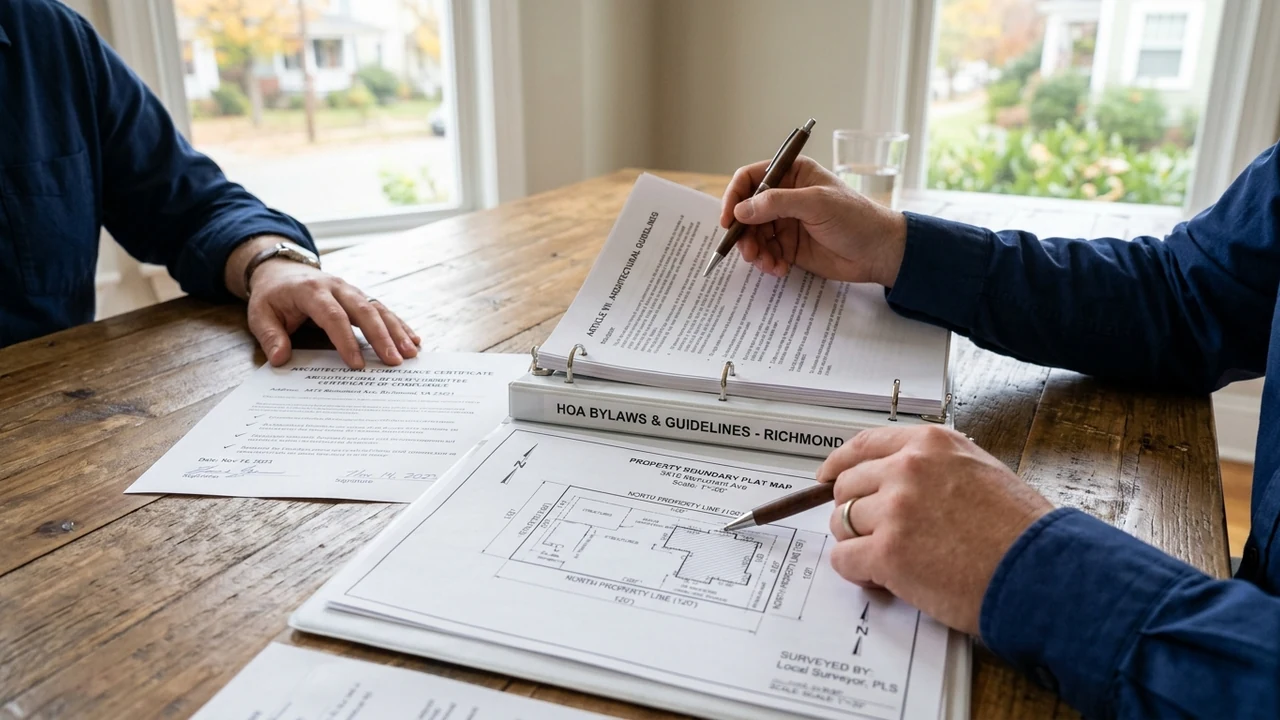
Do not skip the honesty step either. A buyer who feels informed rarely gets cold feet. A buyer who feels surprised often bolts. I’ve watched clean, upfront listings sail through review while secretive ones stumble at the last turn. Simple honesty is your best tool here, and it costs nothing.
Richmond neighborhoods and HOAs: the local picture
I’ve listed homes from Church Hill to the newer suburbs, and I can tell you the HOA rules change block by block. A historic district near the city core plays by different regulations than a fresh subdivision out toward the county lines. Older Richmond neighborhoods may have loose or no associations, while newer planned communities often run tight boards with detailed bylaws. Knowing your local corner shapes your whole plan.
The trend across the country points toward more HOA living, not less. Census construction data shows that in some newer markets, the share of homes inside an association keeps climbing, while in older regions it stays low; only about 13% of contractor-built homes in the Midwest landed in an HOA, per the Bureau’s new housing figures. Richmond sits somewhere in the middle, with a mix of old free-standing streets and newer managed communities. That mix means your buyer pool changes with your neighborhood.
Local trends matter for your timing too. Newer Richmond suburbs with strong HOA amenities tend to pull families who want pools and safe streets. Older in-town blocks pull buyers who want charm and fewer rules. Match your marketing to your local crowd. If you’d like a read on your exact street, our agents track these neighborhood trends every week and can help you plan.
There is a human side here as well. HOA boards are run by neighbors, not robots. A friendly board with clear leadership and steady management makes selling easier. A board stuck in legal fights or budget drama makes it harder. Talk to your board early, keep things polite, and you will feel the difference when your buyer starts asking questions.
The bottom line for Richmond HOA sellers
Selling an HOA home in Richmond is not scary once you know the moves. The whole game comes down to paperwork and timing. Request your resale certificate early. Clear your fees. Be honest about the rules. Do those three things, and most of the stress melts away before it ever starts.
Keep the state‘s rules in mind as you plan. The 14-day delivery window and the buyer’s 3-to-7-day cancel period set your real pace, so start early and stay ahead of both. A clean, funded community with fair regulations can even lift your price, while a messy one drags it down. You have more control here than you think.
If any part of this feels heavy, you do not have to carry it alone. Our Richmond team handles HOA sales week in and week out, and we can pull your documents, check your community standing, and map your timeline with you. When you are ready to sell your HOA home the smart way, we are here to help you close with confidence.
Frequently Asked Questions
Do I have to tell buyers my home is in an HOA when I sell in Richmond?
Yes. Virginia asks sellers to disclose that the home sits in a community run by an association, and to share the resale certificate. Hiding it can let the buyer cancel or even sue. Honesty is the safe path here. Share the fees, the rules, and any open issues up front.
Who pays for the HOA resale certificate in Virginia?
The seller usually pays to prepare and deliver the resale certificate. The association or its management company sets that charge. You should also expect prorated dues and a possible transfer fee. Budget for these costs before you list so your net number stays clear.
How long does the HOA have to send the resale packet?
Virginia law gives the association 14 days to deliver the resale certificate after your written request, based on the state‘s Resale Disclosure Act. If they miss that window, the packet is deemed unavailable and other timelines kick in. That is exactly why smart sellers request it on day one, not day thirty.
Can a buyer back out because of the HOA documents?
Yes. Once the buyer gets the packet, they generally have 3 days to review it and cancel, and up to 7 days if both sides agree. If the packet never arrives, they can cancel any time before settlement. A clean, early packet lowers the odds a buyer walks away.
Will an HOA make my Richmond home harder to sell?
It depends on the community. A well-funded HOA with fair rules and tidy common areas can actually help your sale. A struggling one with high fees or strict caps can slow it down. Fix open issues early, price it against other HOA homes, and you will keep your sale on track.