
Selling a house is stressful on its own. Add a tenant who has lived there for years, and it gets trickier. Now you have a lease, their rights, and their daily life to think about. The good news? With a little planning, you can sell smart and keep everyone calm.
What “Selling With Tenants” Really Means
Selling a home with long-term tenants means you put the house on the market while people still live in it and pay you rent. You are the property owner. They hold a lease agreement. Both of those things travel with the house.
Here is the part many owners miss. When you sell, the lease does not just vanish. In most cases, the new owner steps into your shoes and must honor it until it ends.
In our work with Richmond landlords, about 7 out of 10 first-time sellers think they can ask a tenant to leave the day they list. That is almost never true. The lease sets the rules, not your listing date.
So the first thing to know is simple. You are selling a tenant-occupied property, not an empty one. That changes your timeline, your buyer pool, and your paperwork. If you own a few rentals, our checklist for rental property investors is a handy place to start before you list.
Start With the Lease – You Can’t Skip This
I’ve handled plenty of these sales, and the same thing decides how smooth it goes almost every time: the lease. Pull it out and read it before you do anything else. One line in that document can change your whole plan.
The big question is the lease type. A fixed-term lease locks in an end date, like a full year. A month-to-month agreement rolls over each month until someone gives notice.
That difference matters a lot. With a fixed-term lease, the tenant usually has the right to stay until the term ends, even after you sell. With month-to-month, Virginia lets either side end the deal with at least 30 days’ written notice before the next rent due date.
Here is a quick way to see it:
Check for one more thing: a “sale clause.” Some leases say the deal can end early if the home sells. Most do not. In my experience, fewer than 1 in 5 standard leases include one, so do not count on it.
Read every page. If the lease confuses you, that is normal. We can look at it together and map out your real options.
What Rights Do Your Tenants Have?
Your tenant has real rights, and ignoring them can cost you money. In Virginia, renters are protected while they live in your home, even during a sale.
They have the right to quiet enjoyment. That is a legal way of saying they get to live in peace without you barging in. You cannot pop by whenever you feel like it, even to show the place.
They also have the right to fair notice before you enter for showings or repairs. And their security deposit stays protected the whole time. Under state rules, that deposit can be no more than two months’ rent, and it must be handled the right way.
One more right matters here. Your tenant must get their deposit back, minus fair charges, within 45 days of moving out. That clock does not reset just because you sold the house.
You also still owe honesty to buyers. Virginia has clear rules on what you must share about the home’s condition. Our guide on Virginia seller disclosure requirements breaks down what you have to tell buyers before closing.
How to Break the News to Your Tenant
In my professional experience, the sale gets 90% easier the moment you treat the tenant like a partner instead of a problem. I’ve seen friendly tenants help sell a home fast. I’ve also seen angry ones quietly scare buyers off.
Tell them early. Do not let them find out from a yard sign or a stranger with a camera. A calm, honest chat goes a long way.
Put it in writing too. A short letter or email that explains your plan protects both of you. Keep a copy with the date.
Here is what to say, in plain words:
You are planning to sell the home.
Their lease will be honored, and you will explain what happens next.
You will give proper notice before any showing.
Their deposit is safe and will transfer or be returned the right way.
Small kindness helps. Some owners offer a gift card or a small rent break for keeping the place tidy during showings. In our experience, a $50 to $100 thank-you can lift a tenant’s mood and keep your home showing well.
Ask them how they feel. A tenant who feels heard will work with you. One who feels pushed around will not.
Your Options for Selling a Tenant-Occupied Home
You have more choices than you might think. The right one depends on your lease, your timeline, and how much cash you want. Let me lay them out.
Option one: sell with the tenant in place. The buyer takes over as the new landlord and keeps collecting rent. This works great for investor buyers who want income from day one.
Option two: wait for the lease to end, then sell empty. This opens the door to families who want to move in. It takes longer, but empty homes often draw more buyers.
Option three: offer “cash-for-keys.” That means you pay the tenant a fair sum to move out early, by choice. A typical deal runs one to two months’ rent, sometimes more in a tight market.
Option four: sell as-is to a direct buyer who is fine with tenants and repairs. If speed matters most, our page on how to sell a house as-is in Virginia explains how that path works.
There is no single “best” answer. If you are torn between these, we can sit down, look at your numbers, and pick the path that fits your goals.
Investor Buyers vs Regular Home Buyers
I’ve closed deals with both types, and the difference is night and day. Knowing who your buyer is helps you price the home and set your timeline right from the start.
An investor buyer wants rental income. A sitting tenant is a plus for them, not a problem. They often move fast and pay cash.
A regular buyer, called an owner-occupant, wants to live there. A tenant in the home is a hurdle for them. They usually need the place empty before they can move in.
This matters because most buyers want to live in the home they buy. U.S. Census Bureau data shows Virginia’s homeownership rate sat at about 69.6% in 2025 (Federal Reserve Economic Data). So roughly 3 in 10 homes are rented, which tells you the owner-occupant crowd is the larger group by far.
So if your home is stuffed with a happy long-term renter, investors may be your sweet spot. If it is a family-style house in a great school zone, waiting for it to be empty may earn you more.
Showings With Tenants: How to Keep the Peace
Showings are where sales live or die. A messy, tense showing can kill a deal. A clean, calm one can spark an offer.
Always give notice before you bring prospective buyers through. Virginia law says you must give fair, reasonable notice and only enter at reasonable hours. You also cannot use showings to harass or crowd the tenant.
Try to batch your showings. Instead of ten random visits, group them into two or three open blocks each week. In our experience, grouped showings cut tenant stress by more than half and keep the home in better shape.
Work with the tenant’s schedule when you can. Ask about work hours, pets, and nap times for little ones. A tenant who trusts your timing will keep the home ready.
Keep a simple log of every showing: the date, the time, and the notice you gave. This paper trail protects you if any question comes up later. Our rundown on the documents you need to sell a house in Virginia can help you stay organized through the whole sale.
Money Stuff: Deposits, Rent, and Taxes
In my professional experience, this is where owners get burned most. The rules on the security deposit, rent, and taxes are strict, and a small slip can cost you real money.
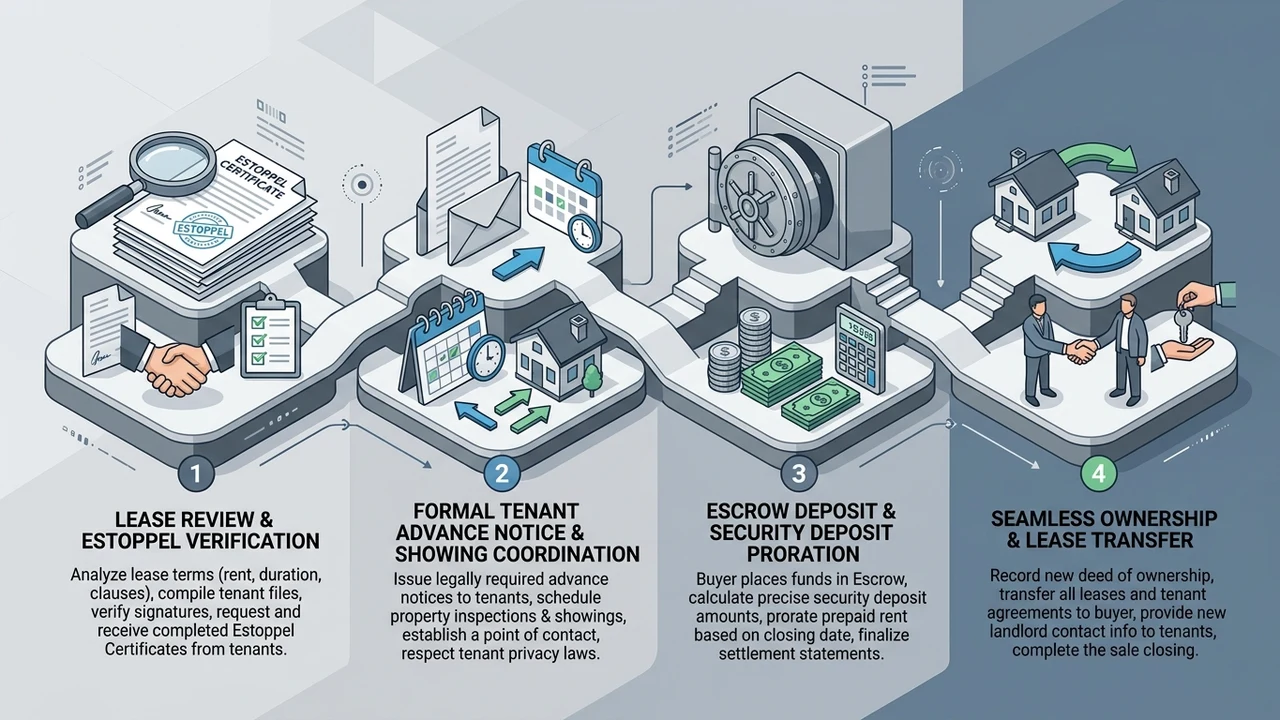
Start with the deposit. Under the Virginia Residential Landlord and Tenant Act (VRLTA) – the main law for renters and landlords – the deposit follows the home. State code says the current owner at the end of the tenancy must return any deposit the tenant is owed, even if the old owner never handed it over (Code of Virginia § 55.1-1226). So at closing, transfer that deposit to the buyer in writing.
Next, the rent. On the day you close, rent gets split by the exact days, called prorated rent. If you close on the 20th, you keep rent for your days and the buyer gets the rest.
Now, showings and entry. The same VRLTA rules limit how and when you enter. For routine maintenance the tenant did not ask for, you must give at least 72 hours’ notice (Code of Virginia § 55.1-1229). Follow that, and you stay on the right side of the law.
Then there are taxes. When you sell a rental for profit, you may owe capital gains tax, which is the tax on the money you make above what you paid. Selling an investment home is not the same as selling your own house, so the rules differ. Our guide on capital gains tax when selling a home in Virginia walks through what to expect.

If the tax and deposit side feels like a lot, you do not have to sort it alone. We can help you plan the sale and point you to the right pros.
Mistakes I See Landlords Make
I’ve watched good owners lose thousands over small, avoidable slips. Most of these mistakes come from moving too fast or skipping the lease. Let me save you the pain.
The biggest one? Trying to force a tenant out during a fixed-term lease. You usually cannot, and pushing it can lead to legal trouble and lost time. Court delays alone can stall a sale by 60 to 90 days.
Another common miss is poor notice. Skipping proper notice for showings can void your right to enter and anger your tenant. That one is easy to avoid with a simple heads-up.
Some owners also forget to transfer the deposit at closing. When that deposit is unaccounted for, it can hold up the deal or spark a fight later. Handle it on paper, every time.
Here are the slip-ups to dodge:
Listing without reading the full lease first.
Promising buyers an empty home you cannot legally deliver.
Skipping written notice before showings.
Forgetting to prorate rent and move the deposit at closing.
Treating the tenant like a hurdle instead of a helper.
One more: rushing the offer stage without a plan. Knowing what happens after you accept an offer on a home helps you keep the tenant piece lined up all the way to closing.
The Bottom Line
Selling a home with long-term tenants is not scary once you know the steps. Read the lease first. Learn your tenant’s rights. Pick the selling path that fits your goals.
Treat your tenant well, and they often become your best helper. Give fair notice, move the security deposit the right way, and plan for taxes. Do that, and your sale can go smooth and fast.
The market still favors sellers in many Virginia neighborhoods, and homes here move well when they are priced and shown right. You have a real chance to sell for a strong price, tenant and all.
Have you sold a rental with tenants before? I’d love to hear how it went for you. And if you are staring at a lease and feeling stuck, reach out – we can look at your options together and build a plan that works.
Frequently Asked Questions
Can I sell my house if my tenant has a lease?
Yes, you can. But the lease usually goes with the home. If it is a fixed-term lease, the buyer must honor it until it ends. With a month-to-month deal, you can end it with at least 30 days’ written notice.
Does my tenant have to move out when I sell?
Not always. With a fixed-term lease, they can stay until the term ends, even under a new owner. With month-to-month, they must leave after proper notice. You can also offer “cash-for-keys,” often 1 to 2 months’ rent, to help them move early by choice.
Who keeps the security deposit when the home sells?
The deposit moves to the new owner at closing. Virginia law says the owner at the end of the tenancy must return any deposit the tenant is owed, within 45 days of move-out. Always transfer it in writing so nothing gets lost.
How much notice do I give before showings?
Give fair, reasonable notice and only enter at reasonable hours. For routine work the tenant did not request, Virginia requires at least 72 hours’ notice. Grouping showings into a few weekly blocks keeps your tenant happy and your home ready.
Will I pay tax when I sell my rental home?
Maybe. If you sell for a profit, you may owe capital gains tax, the tax on your gain above what you paid. Rental homes follow different rules than your own house. In many cases sellers set aside 15% to 20% of the gain, so plan early and talk to a tax pro before you sell. [tool] ヽ(>∀<☆)☆ cogitating...