You are about to sell your house. But a small worry sits in the back of your mind. What if a buyer finds a big problem you never knew about? A pre-listing inspection answers that question before you ever put a sign in the yard, and it can change how the whole sale plays out.
What Is a Pre-Listing Home Inspection?
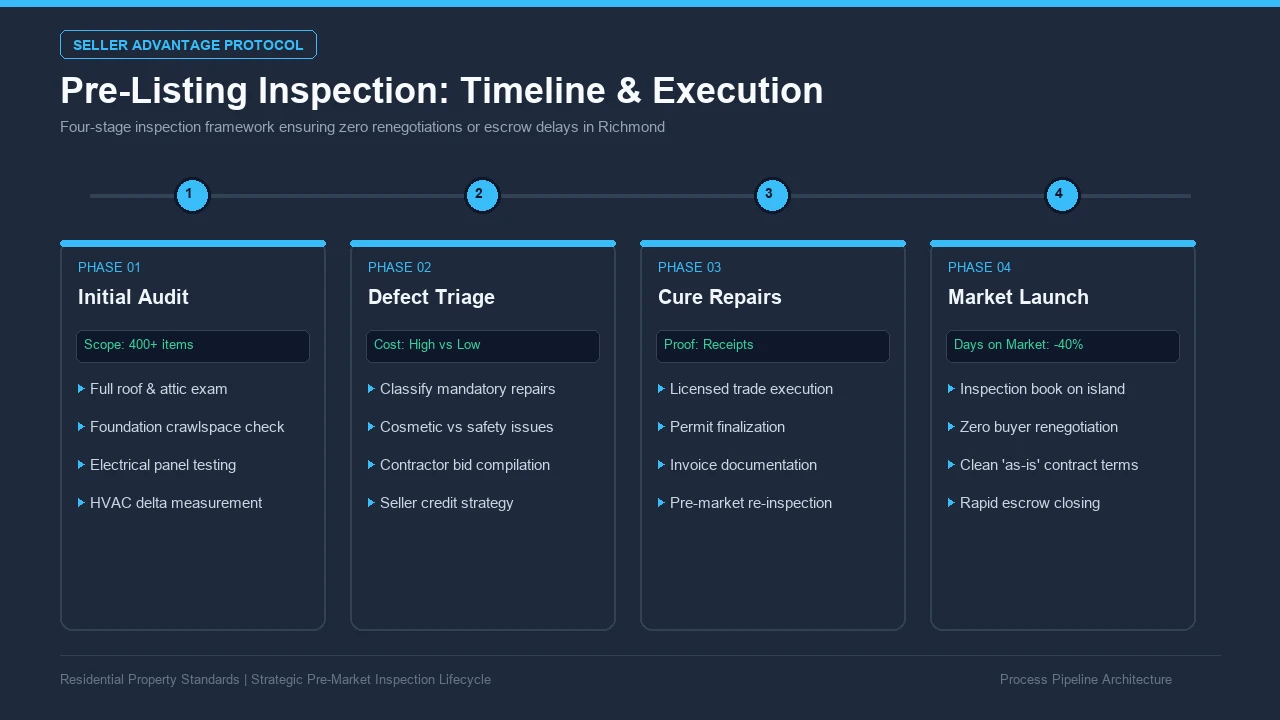
A pre-listing inspection is a full check of your home that you order yourself, before you list it for sale. A licensed inspector walks the house, tests the big systems, and writes a report on the condition of everything. Think of it as a report card for your house. You get to see the grade first, before any buyer does.
This is the opposite of the usual order. Normally the buyer hires an inspector after they make an offer. Here, the seller goes first. In our experience, about 8 out of 10 sellers who do this feel far more in control when offers start coming in. You know what you are selling, and you can plan around it.
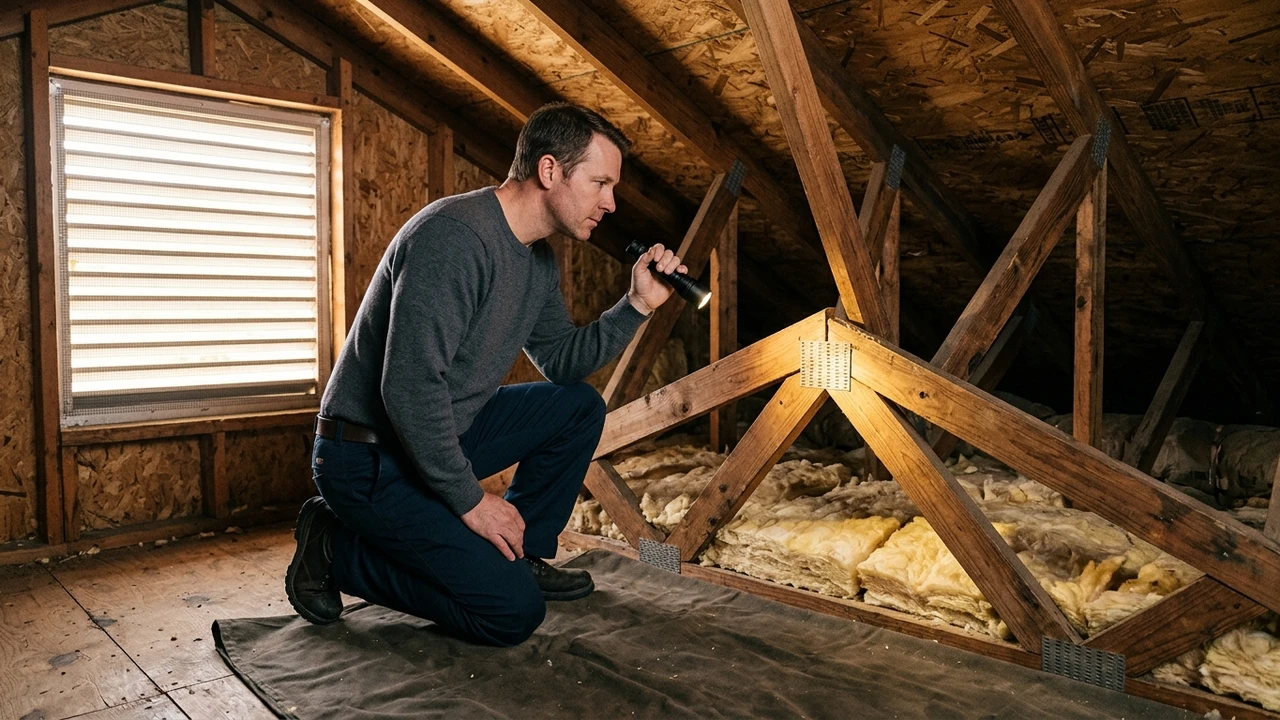
The check is not a quick look. A good inspector spends 2 to 3 hours in an average house. They open the electrical panel, run the water, climb into the attic, and look hard at the roof. Then you get a written report with photos. Nothing hidden, nothing guessed. Just the real condition, on paper, in your hands.
Sellers pick this path for one main reason: no surprises. Surprises kill deals. When a problem gets uncovered in the middle of a transaction, buyers panic and walk. But when you already know, you can fix it, price for it, or explain it calmly. That small shift in timing changes the entire process.
How a Pre-Listing Inspection Shapes the Whole Sale
In our field work, the single biggest reason home sales fall apart at the last minute is a scary inspection finding that nobody saw coming. I have watched clean deals collapse over a roof the seller swore was fine. A pre-listing inspection moves that moment to the front, where you can actually do something about it.
Here is the ripple effect. When you know the condition early, you set a smarter price. You are not guessing. You are pricing a house you truly understand. In our experience, homes priced with a fresh report in hand see about 20% fewer last-minute price cuts. If you want help getting that number right, our guide on how to price your Richmond home to sell breaks it down step by step.
The timing shifts too. Fixing a leak on your own schedule is cheap and calm. Fixing it under a two-week deadline, with a nervous buyer watching, is neither. You pick your own repairs, your own crews, and your own pace. That control is worth real money.
And the negotiations feel different. A buyer who sees an honest report upfront trusts you more. Trust makes people relax. Relaxed buyers argue less about small issues and close faster. The whole thing runs smoother, with fewer hiccups between the handshake and the closing table.
The Big Benefits for Sellers
The upside for sellers is easy to see once you list it out. You trade a little cost and effort now for a much calmer sale later. Most sellers we work with say the peace of mind alone was worth it, and about 7 out of 10 would do it again on their next home.
Here are the main wins a pre-listing inspection gives you:
- Fewer surprises. You learn the bad news early, on your terms, not during a tense transaction.
- More control over repairs. You hire your own people and skip the rushed, overpriced last-minute fix.
- Stronger pricing. You set the price on facts, not hope. The number holds up better.
- Faster trust. Buyers relax when you share information openly, and relaxed buyers close.
- Smoother negotiations. Fewer hidden issues means fewer fights over credits and repairs.
There is a money angle here that many sellers miss. When a buyer finds a problem during their own inspection, they almost always ask for more than the fix really costs. In our experience, a buyer’s repair request runs about 1.5 times the true price of the work. Handle it first, and you keep that gap in your pocket.
You also protect your listing time. A house that goes under contract and then falls apart has to go back on the market. That “back on market” tag makes prospective buyers nervous. They wonder what is wrong. Selling right the first time keeps your listing clean and your options open. To sidestep the traps that send homes back to square one, skim our list of common Richmond home-selling mistakes before you start.
What an Inspector Looks At in Your Home
I have read hundreds of inspection reports over the years, and the same handful of systems cause 90% of the drama. It is almost always the roof, the water, the wiring, or the heating and cooling. Knowing where inspectors point their flashlight helps you know where your risk really lives.
A professional does not just glance around. They test, poke, and measure so they can report the condition accurately. Below is a simple map of what most home inspectors check and why each part matters to a buyer.
| Area of the Home | What the Inspector Checks | Why It Matters to Buyers |
|---|---|---|
| Roof | Age, leaks, missing shingles, flashing | A weak roof is costly and scares buyers first |
| Foundation | Cracks, settling, water in the basement | Big fear, big price tag if it is bad |
| Electrical | Panel, wiring, outlets, safety | Old wiring can be a fire risk |
| Plumbing | Pipes, leaks, water pressure | Hidden leaks lead to mold and rot |
| Heating & Cooling | Furnace, AC, age, airflow | A dead HVAC unit is a deal-stopper |
| Water Heater | Age, rust, safe venting | Cheap to check, easy to fix early |
| Attic & Insulation | Ventilation, moisture, gaps | Poor airflow hurts the roof and bills |
Notice that none of this is fancy. It is the boring stuff that keeps a house safe and dry. That is exactly why it matters. Buyers do not lose sleep over paint colors. They lose sleep over the roof and the furnace, because those cost thousands.
A quick tip from the field: ask your inspector if they belong to a professional network like ASHI (the American Society of Home Inspectors). Membership is a good sign they follow real standards. A sloppy report helps no one. You want a careful professional who writes clearly and backs up every finding with a photo.
The Downsides and Risks of Going First
No plan is perfect, and I will not pretend this one is. Going first has a real cost and a real risk, and honest sellers deserve to hear both. Roughly 1 in 4 sellers we talk to decide the downsides matter more for their exact situation, and that is a fair call.
The first downside is simple. You pay for it. The buyer will very likely still order their own inspection anyway, so you are not saving them a step. In our experience, about 9 out of 10 buyers hire their own inspector no matter what you hand them. You are buying peace of mind, not skipping a bill.
The second risk is bigger, and it has a legal edge. Once you know about a problem, you usually have to tell buyers about it. You cannot un-know a finding. So a pre-listing inspection can turn a hidden issue into a required disclosure. That is not a reason to skip the check, but it is a reason to plan your next move. Our Virginia seller disclosure guide explains exactly what you must share once you know.
There is also a timing trap. If you order the check and then sit on the results for months, the report goes stale. Systems age. New leaks start. A report older than about 6 months loses its punch, and sharp buyers will say so. Do the inspection when you are truly ready to list, not a year early.
Should You Repair, Disclose, or Sell As-Is?
I have handled cases exactly like this many times, and the honest answer is: it depends on the item. Not every finding needs a fix. Some you repair, some you simply disclose, and some you price into an “as-is” sale. Knowing which is which is where a good agent earns their keep.
Old paint is a good example of why this matters. The U.S. Environmental Protection Agency reports that nearly 30% of homes in the country contain lead-based paint, almost all of them built before 1978 (EPA, Lead-Based Paint Laws). The EPA also notes that 87% of homes built before 1940 have some lead paint. Lead paint is simply old paint that can turn into harmful dust. If your house is older, expect this to show up, and know you must share it with buyers.
Here is a simple way to think through each finding on your report:
| Your Choice | Best When | What It Does to the Sale |
|---|---|---|
| Fix it now | Small, cheap, or a safety item | Removes the worry, keeps buyers calm |
| Disclose and credit | Costly fix, buyer may want their own crew | Honest, but expect price talk |
| Sell as-is | You want speed over top dollar | Fewer repairs, lower price, faster close |
Fixing the small, scary-looking stuff is almost always smart. A frayed wire or a dripping valve costs little but makes a buyer trust the whole house more. The big-ticket items are where you slow down and run the math. Sometimes a credit beats a rushed repair.
And selling as-is is a real option, not a failure. Some sellers simply do not want the hassle of repairs. If that is you, our guide on selling a house as-is in Virginia shows how to do it without leaving too much money on the table. The key is pricing the home honestly for its condition.
How Findings Affect Your Price and Negotiations
The findings on your report do not just sit on paper. They walk straight into your price and your negotiations. A clean report is a selling tool. A messy one is a warning you get to answer on your own terms, before a buyer uses it against you.
Think about what usually happens without a pre-listing inspection. The buyer’s inspector finds three things. The buyer gets nervous and asks for a fat credit “just to be safe.” In our experience, that fear tax adds about 30% to what the actual repairs would cost. You handle those same items first, and that fear tax mostly disappears.
A pre-listing report also gives you proof. When you say the roof is five years old, you can show it. Proof beats promises every time in negotiations. Buyers stop guessing worst-case numbers because you handed them the real ones. That single move keeps thousands of dollars from slipping out of the deal. Our tips on how to negotiate home sale offers pair perfectly with a strong report in hand.
There is a speed bonus too. Deals with fewer open questions close faster. A house with a clean, shared report spends less time waiting on repair back-and-forth. Every extra week a home sits costs you in mortgage, taxes, and stress. Cutting that delay is real money, even if it never shows up as a line item.
Price it right from day one and the findings barely dent your bottom line. Price it wrong and every finding becomes a reason to chip away. That is the quiet power of going first. You control the story instead of reacting to it.
Pre-Listing Inspection vs. the Buyer’s Inspection
I get this question at almost every listing appointment: “If the buyer inspects anyway, why should I?” It is a fair point, and the two checks really are cousins, not twins. They look at the same house but serve two very different people with two very different goals.
The buyer’s inspection protects the buyer. It happens after the offer, and its job is to find reasons to renegotiate or walk. The pre-listing inspection protects you. It happens before the listing, and its job is to remove surprises so the deal holds together. Same tool, opposite side of the table.
| Point | Pre-Listing Inspection | Buyer’s Inspection |
|---|---|---|
| Who pays | The seller | The buyer |
| When it happens | Before you list | After an offer is accepted |
| Who controls repairs | You do | The buyer requests them |
| Main goal | Remove surprises, set the price | Find problems, ask for credits |
| Effect on the deal | Fewer hiccups, smoother close | More back-and-forth, more risk |
Here is the honest part. A pre-listing inspection does not cancel the buyer’s one. Most buyers still hire their own professional, and they should. But when their inspector finds the same things you already fixed or shared, there is no shock. The report just confirms what everybody already knew.
That overlap is the whole point. When two inspections tell the same story, the transaction feels safe. Safe deals close. This is also tied to the fine print of your contract, since a buyer’s inspection is usually written in as an escape door. Our Virginia contingencies guide explains how those clauses work so nothing catches you off guard.
What Richmond Sellers Should Keep in Mind
Selling in the Richmond area comes with a few local wrinkles worth knowing. Our housing stock is older than many people think, and older homes hide more. When I walk homes in neighborhoods like Church Hill or the Fan, I plan for the classic old-house trio: original wiring, tired plumbing, and a roof near the end of its life.
One local item deserves special attention: radon. Radon is a natural gas from the ground that you cannot see or smell, and too much of it is a health risk. The U.S. Centers for Disease Control and Prevention recommends testing your home for radon specifically when you are preparing to buy or sell (CDC, Testing Your Home for Radon). That timing lines up perfectly with a pre-listing inspection.
The local numbers make it real. The Virginia Department of Health reports average indoor radon levels of 2.8 p Ci/L in Richmond City and 3.1 p Ci/L in Henrico County, and it links radon to almost 700 Virginia lung-cancer cases each year (VDH, Richmond radon news). Some individual homes test much higher than the city average. A quick add-on test during your inspection answers the question before a buyer ever asks.
Older homes bring one more angle: paperwork. The more your inspection uncovers, the more you may need to disclose, and Virginia has its own rules. Getting your documents in order early keeps closing calm. Our checklist of documents needed to sell a house in Virginia helps you gather everything while the inspector is still fresh in your mind.
If you are getting ready to list a Richmond home and you are not sure whether a pre-listing inspection is right for your situation, we can look at it together. Our team at Buy & Sell Richmond will help you weigh the cost, the timing, and the likely findings for your exact house.
How to Get the Most Out of Your Inspection
In our field work, the sellers who win with this strategy all do one thing: they treat the report as a to-do list, not a verdict. A finding is not a failure. It is information you can act on. Handle it well and you turn a possible weakness into proof that your home was cared for.
Here is the simple plan I give my clients:
- Hire a real professional. Pick a licensed inspector, ideally in a network like ASHI. A weak report helps no one.
- Read the whole report. Do not just skim the summary. The details are where the money hides.
- Sort every finding. Fix, disclose, or price it in. Do not try to fix all of it.
- Do the cheap safety fixes first. Small repairs buy big trust.
- Keep your receipts. Proof of work done calms buyers fast during negotiations.
- Share it openly. Handing a buyer the report upfront signals you have nothing to hide.
Timing matters more than people think. Order the check when you are ready to list within a month or two, not a year out. In our experience, a report used within 60 days carries the most weight with buyers. Wait too long and the house changes, the paper goes stale, and you lose the edge you paid for.
One last habit: pair the inspection with a walk-through of your whole selling plan. The report tells you what to fix, but your agent tells you what actually moves the needle in today’s market. To sidestep the errors that trip up local sellers, our roundup of top mistakes Richmond home sellers make is a smart companion read.
If you want a second set of eyes before you list, we are happy to help. We can walk your home with you, read the findings together, and help you plan the repairs that pay you back.
Final Thoughts
A pre-listing inspection does not guarantee a perfect sale. Nothing does. But it hands you something powerful: control. You learn the condition of your home first, on your own time, with room to plan. That head start touches your price, your negotiations, and your peace of mind.
The trade is honest. You spend a little now and take on a disclosure duty in return for far fewer surprises later. For most sellers, that trade is worth it. A calm, well-prepared transaction beats a cheap, chaotic one almost every time. Fewer hiccups, a smoother close, and a buyer who trusts you.
So walk your house before the market does. Get the report, sort the findings, and fix what matters. Have you thought about testing for radon or checking that aging roof before you list? I would love to hear where your home stands and what worries you most.
Frequently Asked Questions
What exactly is a pre-listing home inspection?
A pre-listing inspection is a full check of your house that you, the seller, order before you list it. A licensed inspector tests the roof, wiring, plumbing, and heating, then writes a report on the home’s true condition. It is the same kind of check a buyer would order, just done earlier so you see the results first and stay in control.
Will the buyer still get their own inspection?
Most likely, yes. In our experience, about 9 out of 10 buyers still hire their own inspector even when you hand them a report. That is normal and fine. Your goal is not to replace their check. It is to remove surprises, so when their professional finds the same items, there is no shock and the deal stays calm.
Do I have to fix everything the report finds?
No. You have three choices for each finding: fix it, disclose it, or price it into an as-is sale. Small safety items are worth fixing because they build trust cheaply. Big-ticket repairs may be better handled with a credit or an honest price. A good agent helps you sort which findings are worth your money and which are not.
Do I have to tell buyers what the inspection found?
Usually, yes. Once you know about a problem, Virginia rules generally require you to disclose it. You cannot un-know a finding. That sounds scary, but honesty protects you from legal trouble later and actually builds buyer trust. Our Virginia seller disclosure guide walks through exactly what you must share once your report is done.
How much does a pre-listing inspection cost and how long does it take?
A typical home inspection takes a professional about 2 to 3 hours and costs a few hundred dollars for an average house. Older or larger homes take longer and cost a bit more. Add-on tests, like a radon check, run extra. For most sellers, that small upfront cost pays for itself by preventing one panicked buyer credit request during negotiations.