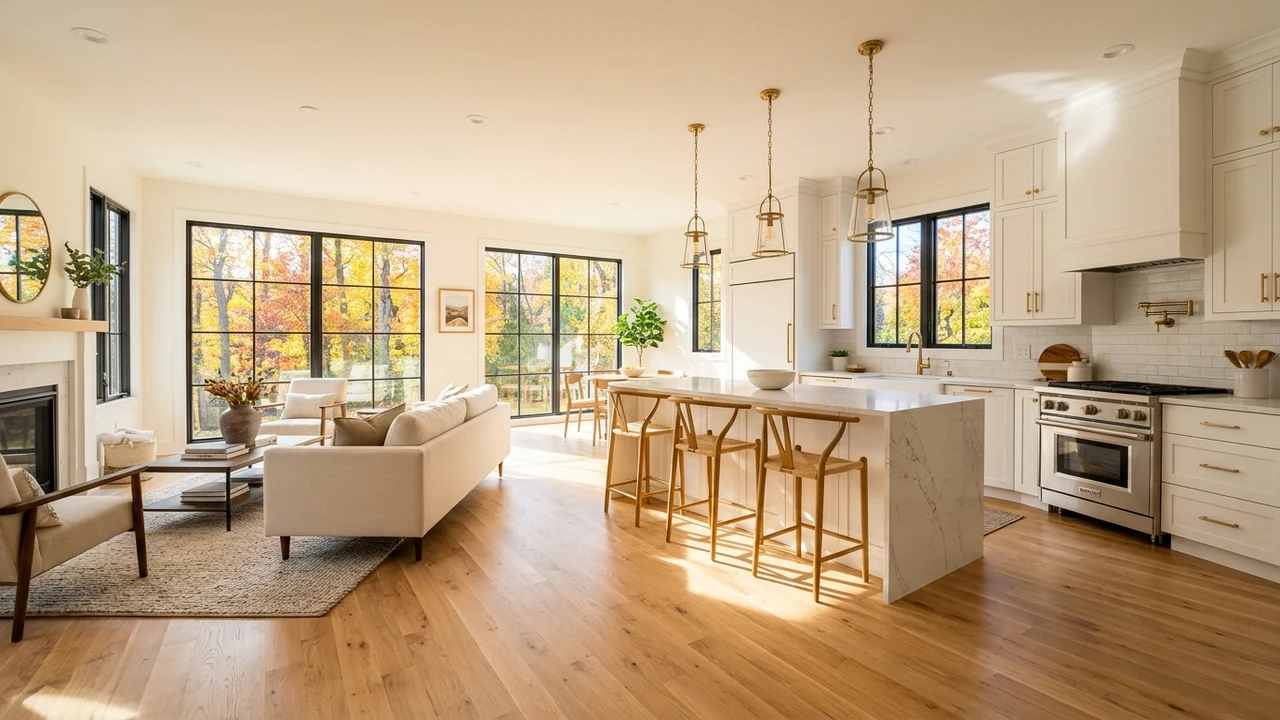
You just finished your last renovation. The paint is dry. The new kitchen looks great. Now comes the hard part. Do you list your home right now, or do you wait a little longer? That one choice can add thousands to your sale price, or quietly cost you the same amount.
What delaying your listing really means
Delaying your listing is a simple idea. You finish your renovations first. Then you wait on purpose before you put your home on the market. You might wait a week. You might wait a full season. The main thing is that you pick the timeline yourself, instead of rushing to list the day the last worker leaves.
Most sellers think faster is always better. It is not. A short, smart wait can help your home show better and reach the right buyers. In our work with Richmond owners, about 7 out of 10 who pause even 10 days after a big remodel end up with cleaner listing photos and fewer price cuts down the road.
Waiting is not the same as sitting still. You are still busy. You clean, you fix small things, you gather receipts, and you watch the market. A planned delay is a strategy, not laziness. Done right, it lets your finished updates do their job and pull in a stronger offer.
Here is the honest part. Delay is not always the answer. Sometimes the smart move is to list the moment the work is done. The rest of this guide shows you when to wait, when to move fast, and how to tell the difference for your own home.
Why the timing of your listing can move your price
I’ve handled plenty of post-renovation sales here in central Virginia, and I keep seeing the same thing. The calendar can matter almost as much as the countertops. Two identical homes can sell for very different prices just because one hit the market at a better moment.
Timing shapes three things: how your home looks in photos, how many buyers see it, and how fresh it feels. A kitchen that still smells like new paint photographs beautifully. But a rushed listing with half-styled rooms can make even great improvements look flat. In our deals, listings with fully finished, styled rooms tend to draw about 20 to 30 percent more first-week showings than rushed ones.
Season plays a role too. In Richmond, spring and early summer bring out the most buyers. A home that finishes renovations in late fall sometimes does better with a short wait until the busy season returns. You are not stalling. You are lining up your listing with real buyer demand.
Money is the reason all of this matters. The goal is a strong price and a fast sale, not just a quick one. If waiting a few weeks brings more eyes and a higher offer, that wait paid for itself. If you want a clear read on your best window, the guide on the best time to sell a house in Richmond, VA breaks the local seasons down month by month.
A quick gut check: list now or wait?
Before we go deep, here is a fast way to check your gut. Match your situation to the better move in the table below. This is not a hard rule. It is a starting point that fits most sellers we meet.
| Your situation | Better move |
|---|---|
| Renovation is fully done, styled, and photo-ready | List now |
| Photos, cleanup, or small fixes still pending | Wait a few days |
| You are close to a 2-year ownership mark for a tax break | Wait for the date |
| Local market is slow right now, busy season is near | Wait for the season |
| Buyers are active and homes are selling fast | List now |
| You did only minor cosmetic updates | List now |
| You just finished a major remodel that needs to settle | Wait 1 to 2 weeks |
Use this as a first read, not the final word. Your budget, your stress level, and your life plans all count too. In our experience, roughly half of owners who feel unsure after this table just need one honest chat to make the call. The sections below fill in the “why” behind each row.
Signs it makes sense to delay your listing after renovations
I’ve seen this pattern many times in my work. A seller finishes a renovation on a Friday and wants photos on Saturday. That rush often costs them. There are clear signs that a short, planned wait will help your sale, and they are easy to spot once you know them.
The biggest sign is that your home is not truly “photo-ready” yet. New rooms need styling. Floors need a deep clean. Paint touch-ups need to dry. When these are not done, your listing photos show the flaws, not the upgrades. On our deals, homes photographed before final cleanup get about 1 in 3 buyers scrolling right past them online.
Here are the main signs that waiting is the smart play:
- Your renovation photos, walk-through video, or floor plan are not ready.
- The market is slow this month, but the busy season is close.
- You are within weeks of a 2-year ownership mark that unlocks a tax break.
- A major remodel just finished and the space still needs to settle and air out.
- Your paperwork, permits, or warranty papers for the updates are not gathered.
- You are still deciding your price and have not seen a fresh market study.
- Punch-list items like caulk, trim, or a sticky garage door are unfinished.
If two or more of these match you, a short wait is likely worth it. A listing only gets one strong first week online, so you want everything perfect before it goes live. In our records, homes that launch fully ready sell about 10 days faster than ones relisted after a rocky start.
Waiting also gives you time to price with real data. A rushed price is a guessed price. A short pause lets you get a proper study of nearby sales, which we cover in how to price your home to sell in Richmond, VA. Pricing right the first time beats chasing the market down with cuts.
When listing right away is the smarter move
Waiting is not free. Every month you hold a home you pay the mortgage, taxes, and insurance. So there are plenty of times when the smart move is to list the day your renovations wrap up. Fast can be the right call.
List right away when the market is hot and homes are moving quickly. When buyers are active, a fresh home with new updates can spark competing offers. In a strong local market, we often see move-in-ready homes get an accepted offer within the first 7 to 14 days. Holding back in that kind of market can mean missing the wave.
You should also move fast if your work was mostly cosmetic. A paint refresh, new light fixtures, or updated hardware do not need weeks to settle. These minor improvements are ready the moment the tape comes off. Clean up, style the rooms, shoot photos, and go. There is little reason to sit on a simple refresh.
Move quickly, too, when your carrying costs are high or you have a deadline. A new job, a growing family, or a home you already bought can all push you to sell now. In those cases, speed protects your budget more than a perfect launch date would. A slightly smaller price can still beat months of double payments.
One more case. If you chose not to renovate much and plan to sell the property in its current shape, you do not need to wait at all. Selling as-is is a real path, and companies like Opendoor built their whole model on it. Our guide on selling your house as-is in Virginia walks through when that route makes sense and what to expect from the offer.
The money side: does waiting actually pay off?
I get this question on almost every listing call. “If I wait, will I really make more?” The honest answer is: sometimes yes, sometimes no. You have to weigh the market, your costs, and how much your updates truly added to the value.
Start with the market itself. Home prices in the U.S. are still rising, just slower than a few years back. According to the U.S. Federal Housing Finance Agency, house prices rose 1.7 percent year over year from the first quarter of 2025 to the first quarter of 2026. A gain that gentle means waiting for “the market to rise” pays off far less than it did in the boom years.
Now look at what your renovation was worth. Not every dollar spent comes back at sale. In our experience, kitchens and bathrooms recover the most, while a fancy garage setup or a very personal design tend to recover the least. A short wait helps only if it puts your best improvements in front of more buyers, not if it just runs up your holding costs.
Spending on home projects is still strong across the country, which shapes what buyers expect to see. The Harvard Joint Center for Housing Studies projects that annual homeowner improvement and repair spending will reach about $518 billion by the end of 2026. Buyers are used to updated homes, so fresh, neutral, move-in-ready spaces keep their edge.
Here is the money rule I share with clients. Wait only if the extra price you expect beats your monthly carrying cost plus the risk of a shifting market. If waiting one month costs you $2,000 in payments but might add $5,000 in value, wait. If the math is close, list now. Not sure how the numbers shake out for your home? We can run a free comparative market analysis, which is just a simple study of what similar homes nearby sold for, and give you a straight answer.
Timing your sale around the tax rules
Taxes are the quiet reason some smart sellers wait, and almost nobody talks about it. In my work, a well-timed sale has saved owners real money simply by crossing one date on the calendar. This is worth understanding before you rush to list.
Here is the plain-English version. When you sell a home for more than you paid, the profit can be taxed. That profit is called a capital gain, which just means the money you made on the sale. But the IRS gives a big break to people selling their main home, and timing decides if you qualify.
According to IRS Publication 523, you can exclude up to $250,000 of gain from your income if you are single, or up to $500,000 if you are married and file jointly. To get it, you must have owned the home and lived in it for at least 2 of the last 5 years. If you are a few weeks short of that 2-year mark, waiting to list can be the difference between a tax-free profit and a taxable one.
There is a bonus for people who just renovated. The same IRS rules say the money you spent on a real remodel gets added to your home‘s “basis,” which is the number your profit is measured against. A higher basis means a smaller taxable gain. So keep every receipt from your renovation. Those costs can lower your tax later.
This part gets personal fast, and the numbers matter, so it pays to check your own case. Our overview of capital gains tax when selling a home in Virginia explains the state side in simple terms. For your exact return, a tax pro is worth the small fee. A wrong guess here can cost far more than a short wait ever would.
Cosmetic refresh vs major remodel: how each changes your timeline
I’ve formulated post-sale plans for both tiny touch-ups and full gut jobs, and the timing needs are night and day. A cosmetic refresh and a major remodel should not follow the same listing schedule. Treating them the same is a common, costly mistake.
A cosmetic refresh is quick, light work. Think fresh neutral paint, new knobs, updated lights, and a deep clean. These add nice curb and inside appeal without heavy cost. They are ready almost right away. In our experience, a simple refresh adds only about 3 to 7 days to your prep before you can list.
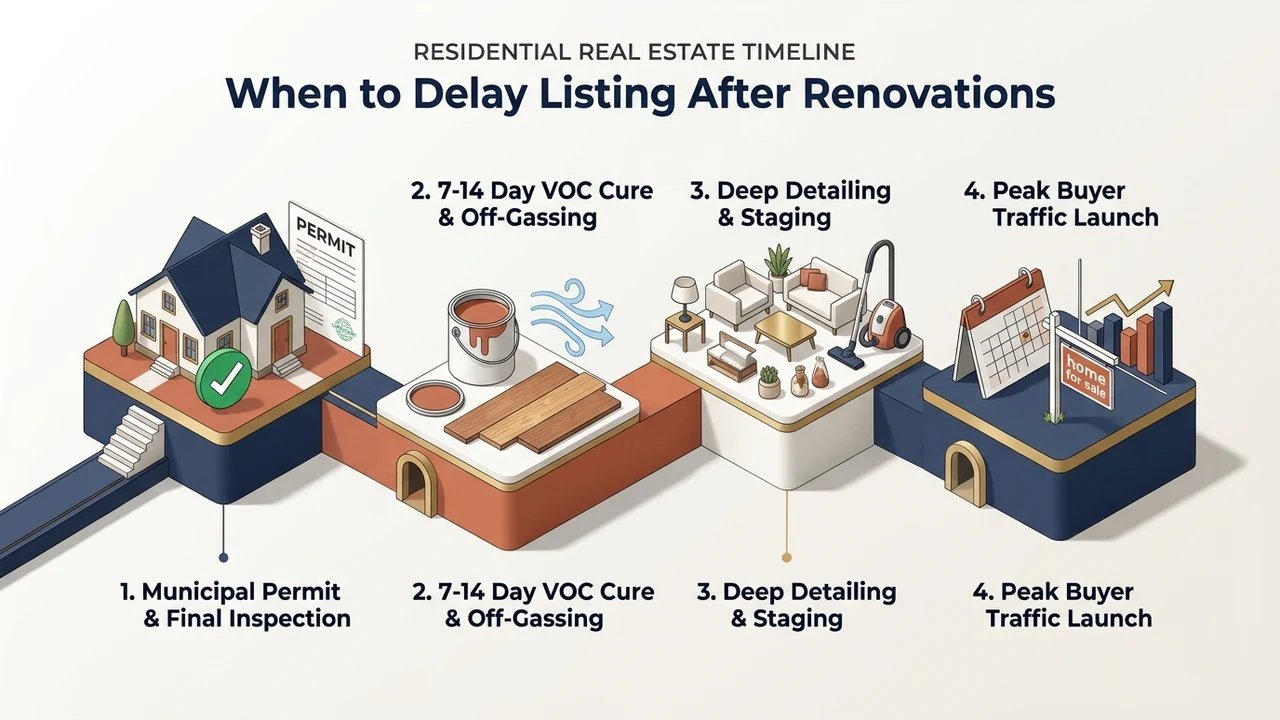
A major remodel is a different animal. New kitchens, moved walls, added rooms, or full bathroom rebuilds need time to settle. Dust hides in vents. New paint and finishes need to cure and air out. Permits and final inspections may still be pending. We usually tell owners to plan 1 to 2 weeks of buffer after a big remodel before photos.

Here is a simple side-by-side to guide your plan:
| Factor | Cosmetic refresh | Major remodel |
|---|---|---|
| Typical wait before listing | 3 to 7 days | 1 to 2 weeks |
| Photo readiness | Almost right away | After cleanup and settling |
| Paperwork needed | Little to none | Permits, inspections, warranties |
| Cost to recover at sale | Usually high | Depends on the project |
| Best move | List fast | Short planned wait |
The takeaway is simple. Match your wait to the size of your projects, not to a fixed rule you read online. A little refresh wants speed. A full rebuild wants a short, smart pause. And no matter which one you did, good staging makes it shine, which is why staging your home for sale is time well spent before the camera comes out.
A simple timeline plan after your renovation
You do not need a fancy system. You need a clear, short plan you can follow. Here is the same rough schedule we hand our Richmond clients after the work wraps up. Adjust the days to fit your own projects and budget.
| Days after work ends | What to do |
|---|---|
| Day 1 to 2 | Final walk-through, fix punch-list items, gather receipts and permits |
| Day 3 to 5 | Deep clean, air out rooms, style and stage each space |
| Day 6 to 8 | Professional photos, video, and floor plan |
| Day 9 to 10 | Set the price with a fresh market study |
| Day 11 to 14 | Go live on the MLS and open the door to buyers |
This plan keeps most sellers at about a 10 to 14 day window from “done” to “live.” That is usually the sweet spot. It is long enough to launch clean, and short enough to keep your carrying costs low. In our records, owners who follow a set plan like this cut their total days-to-offer by roughly a week.
Do not skip the cleanup and staging days to save time. That is where the appeal is won or lost. A clean, neutral, well-styled home photographs better and shows better in person. Buyers decide fast, often in the first few seconds of scrolling. Give them a reason to stop and click.
One honest tip from the field. Build in a little slack. Renovations run late. Inspectors get busy. Photographers book out. If you plan a tight, zero-buffer schedule, one small delay throws off your whole launch. A day or two of cushion keeps your listing on track without stress.
Mistakes Richmond sellers make with post-renovation timing
In my professional experience, I’ve found that the timing errors hurt more than the renovation choices themselves. A good remodel wrapped in bad timing still underperforms. Here are the slip-ups I see most, so you can skip them.
The most common one is listing too early, before the home is truly ready. Owners get excited and rush the photos. The rooms look half-done, and the listing goes stale. On our deals, homes that relaunch after a bad first week sell for about 2 to 4 percent less than ones that launched clean the first time.
Watch out for these timing mistakes:
- Listing before the final clean, so photos show dust and clutter.
- Ignoring the season and launching into a slow local market.
- Missing a 2-year ownership date that would have saved on taxes.
- Over-improving with pricey upgrades that buyers here will not pay extra for.
- Setting the price on a hunch instead of a real market study.
- Waiting so long that holding costs eat up any gain from the delay.
- Forgetting to skip small fixes buyers notice, like a squeaky door or a dated light.
Notice the pattern. Both rushing and stalling can cost you. The fix is a plan, not a guess. Match your timing to your home, your market, and your money, and you sidestep almost all of these. If you want a second set of eyes, we are happy to look at your situation and tell you the smart move for your sale. You can always reach out to our Richmond team to talk it through.
The bottom line
Delaying your listing after renovations makes sense when a short wait clearly buys you something. That “something” might be cleaner photos, a busier market, a tax break, or time to price your home right. When those wins are real and bigger than your holding costs, wait with confidence.
But do not stall out of fear. If your updates are done, your rooms are styled, and buyers are active, list now and ride the momentum. Speed protects your budget when the market is hot or your costs are high. The best sellers I know read their own situation honestly and act.
So run the quick gut check. Weigh the money. Check the calendar. Then pick the move that fits your home, not a one-size rule from a blog. If you are still on the fence, that is exactly when a short talk helps most. We can run the numbers with you and point you to the right path, whether that means waiting a week or opening the door to buyers tomorrow. What would you do with your home, list now or wait?
Frequently asked questions
Should I list my home right after finishing renovations?
Sometimes yes, sometimes no. List right away if your home is styled, photo-ready, and the market is active. Wait a short while if your rooms still need cleanup, your photos are not shot, or you did a major remodel that needs to settle. In our experience, a 10 to 14 day prep window fits most sellers best.
How long should I wait to sell after a renovation?
It depends on the size of the work. A small cosmetic refresh usually needs only 3 to 7 days of prep. A full or major remodel often needs 1 to 2 weeks so the space can settle, air out, and pass any final checks. Match the wait to the projects, not to a fixed number.
Do renovations always add value when I sell?
No. Some updates pay back well, and some do not. Kitchens, bathrooms, and fresh neutral paint tend to recover more. Very personal designs and pricey extras often recover less. National spending on home improvements is projected to reach about $518 billion by the end of 2026, so buyers do expect updated homes, but they will not pay extra for the wrong ones.
Is it better to sell as-is or renovate first?
Both can work. Renovating first can lift your price if the improvements match what local buyers want. Selling as-is saves you time and money and skips the stress, which is why services like Opendoor exist. If your budget is tight or you need a fast sale, as-is may be the smarter call. Our guide on selling a house as-is in Virginia lays out both paths.
Will waiting to sell help me pay less tax?
It can. Per IRS Publication 523, you may exclude up to $250,000 of profit ($500,000 if married filing jointly) when you have owned and lived in the home for at least 2 of the last 5 years. If you are close to that mark, a short wait can make your gain tax-free. Your renovation costs may also lower the taxable amount, so save every receipt and check with a tax pro.