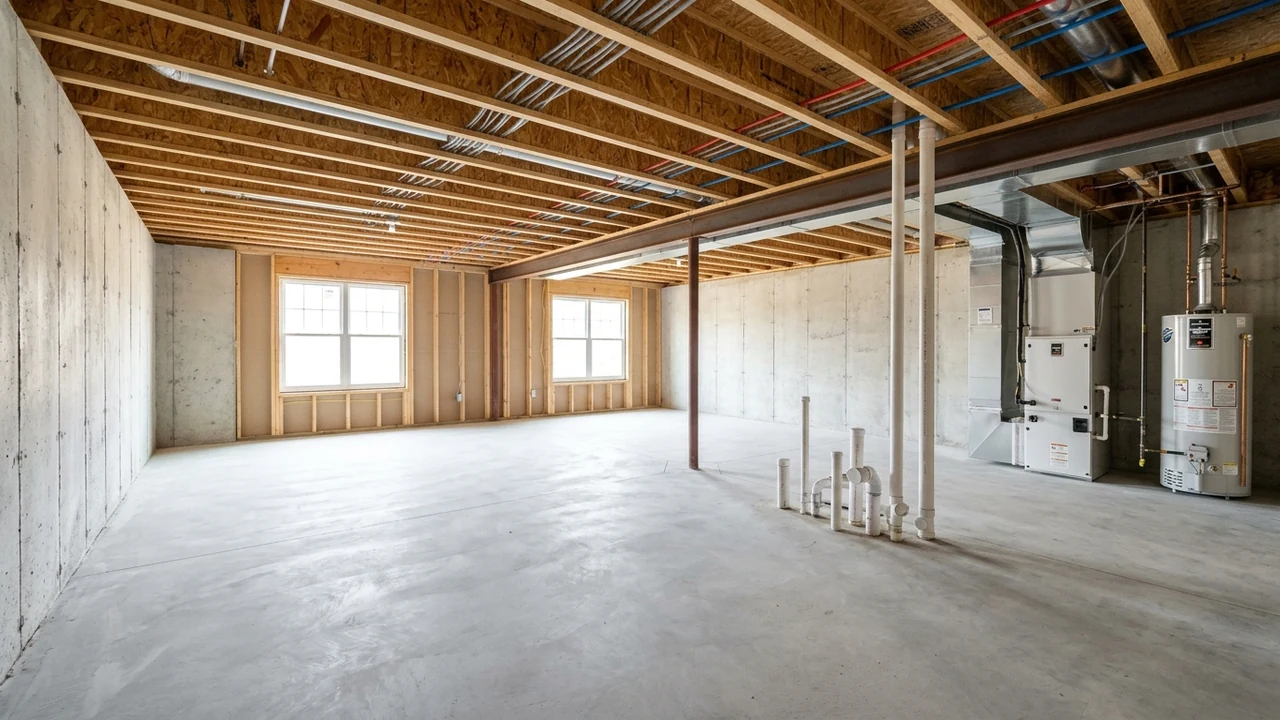
Should you finish your basement before selling your home? Usually, no. In most Richmond homes, basement finishing costs more than it pays back at resale. A clean, dry, safe unfinished basement often sells just fine, while finished basements only earn their keep in specific, higher-end neighborhoods.
What an Unfinished Basement Really Means When You Sell
Let me start with the honest truth. Most sellers think a raw basement is a big problem. It usually is not. Around Richmond, plenty of homes sit on full or partial basements, and many of them are unfinished by design. Buyers here have seen bare concrete floors and open ceilings many times before. So an unfinished basement is normal, not shameful.
Here is what “unfinished” really means in plain words. It is space under your home with concrete walls, a concrete floor, exposed pipes, and no heat or cooling. There is no drywall. No carpet. No finished ceiling. Buyers walk down and see the bones of the house. That is fine for storage, laundry, or a workshop, but it is not counted as real living space.
The big question is simple. Should you spend money turning that raw space into a finished room before you list? Or should you sell it as it sits and let the buyer decide? I have helped many Richmond families answer this exact question, and the answer changes based on your neighborhood, your budget, and how fast you need to move.
The Simple Idea Behind Finishing a Basement
Basement finishing means turning that cold, raw area into a warm, usable room. Workers add framing, insulation, drywall, a floor, a ceiling, lights, and heat. When the project is done, the basement looks and feels like the rest of your home. That new finished room can become a family den, a play area, or a spare bedroom.
A finished basement feels different the second you step down the stairs. It is dry. It is bright. It smells clean. The construction work hides the pipes and wires, so the eye sees a finished living room instead of a utility zone. That good feeling is exactly what drives up perceived value for some buyers.
Basement Words Every Seller Should Know
Before we talk about money, let me explain a few terms in simple words. I want even a first-time seller to follow along.
- Unfinished basement: raw space, bare concrete, used for storage.
- Finished basement: a basement turned into a real room with heat and walls.
- Below-grade space: any room that sits underground, like a basement. Appraisers treat it differently from upstairs rooms.
- Comparable homes (comps): similar homes near you that recently sold. They set your fair price.
- ROI (return on investment): how much of your project cost you get back at sale. If you spend one dollar and get back seventy cents, your ROI is 70 percent.
- Egress window: a big window a person can climb out of in a fire. Building rules often require one before a basement bedroom counts as legal.
- Radon: an invisible gas that seeps up from soil into basements. More on that later.
Why This Choice Matters for Your Home’s Value
I have handled this exact question hundreds of times at Richmond kitchen tables. In my professional experience, sellers almost always overestimate what a finished basement adds back at closing. They picture a huge price jump. The real number is smaller.
Here is the hard part that surprises people. Basement finishing rarely returns every dollar you put in. Across the long-running remodeling cost data that agents watch each year, a basement remodel tends to pay back only about 70 cents on the dollar. That means a $40,000 finish might lift your home value by around $28,000. You lose the rest.
So why does this choice still matter so much? Because the gap between finished and unfinished shapes how buyers feel, how fast your home sells, and what price they will accept. In the right market, a finished space can be the thing that wins the sale. In the wrong one, it is wasted money.
The Quick Wins You Get Before You List
A finished basement can help in ways that are not just about the sale price. It can make your home stand out in photos. It can pull in buyers who need a home office or a room for aging parents. In my experience, a bright, dry finished basement can shave off an extra 2 to 4 weeks of time on the market compared to a raw one in the same neighborhood.
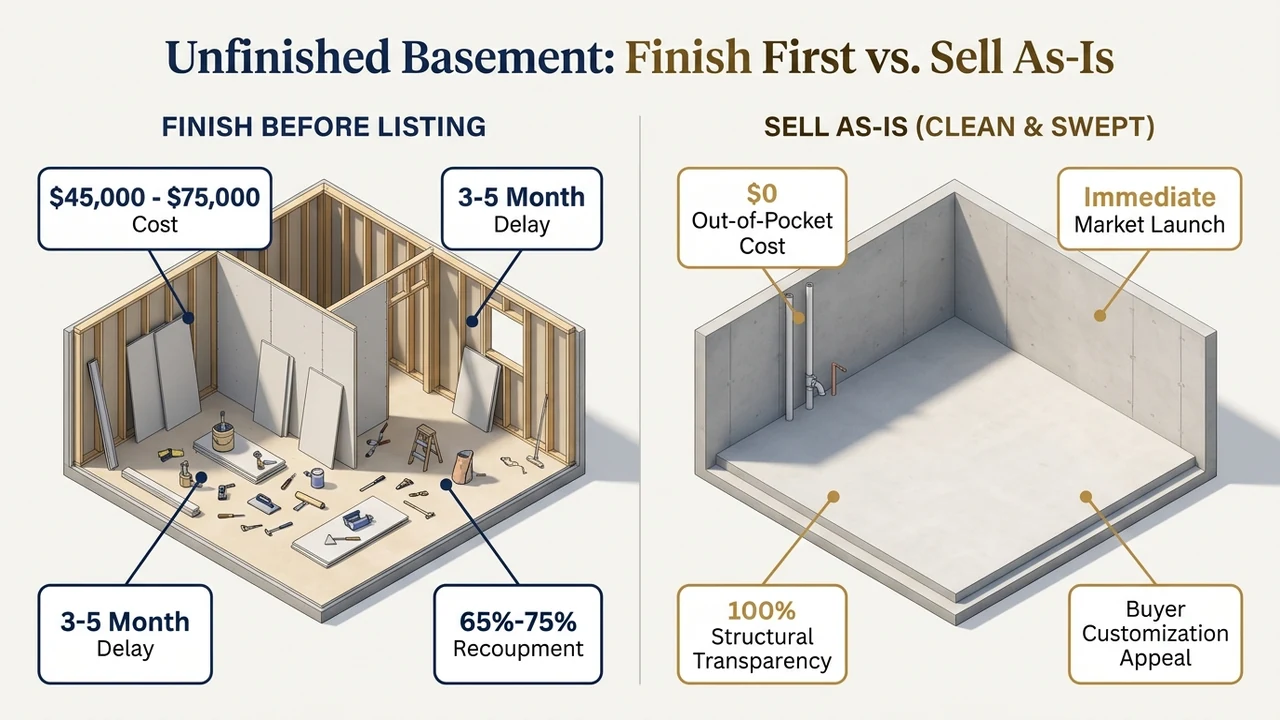
That speed has real worth. Every month your home sits unsold, you keep paying the mortgage, taxes, and upkeep. So even a modest bump in buyer interest can save you real money. A clean finished living space also lets buyers picture their own life there, which is half the battle when selling any house.
The Long Game: ROI and Return on a Basement Project
Now for the numbers side. Think of basement finishing as an investment, not a magic value button. The return depends on your local market ceiling. Below is a rough guide I use with clients, based on how the data usually shakes out.
| Basement scenario | Typical return on your spend |
|---|---|
| Full finish in a high-end neighborhood | 65% – 75% of cost |
| Full finish in a mid-range market | 50% – 65% of cost |
| Adding a bathroom and bedroom (with egress) | 60% – 70% of cost |
| Basic clean-up, paint, and lighting only | Often the best ROI per dollar |
Notice the last row. The cheapest fixes often give the strongest return. A raw basement that is simply clean, dry, and well-lit can move buyer feelings a lot for very little money. That is why I rarely push clients toward a full, costly construction project right before listing.
How the Finish-or-Sell Decision Actually Works
Here is the part most guides skip. Whether finishing pays off comes down to how appraisers and buyers count the space. This is where the decision actually gets decided, not by your feelings, but by the math on the appraisal sheet.
Appraisers treat a basement differently from your upstairs rooms. A finished basement is “below-grade,” so it is usually valued at a lower rate per square foot than the main floor. You can see how a local appraisal treats basement space in our guide on how a Richmond home appraisal works when you sell. The short version: your shiny new basement room does not count the same as an upstairs bedroom.
| Space type | How appraisers usually count it |
|---|---|
| Above-grade finished room | Full price per square foot |
| Below-grade finished basement | Often 10% to 20% less per square foot |
| Unfinished basement | Counted as storage, not living space |
Then there is the neighborhood ceiling. Every local market has a top price that buyers will pay, no matter how nice your basement is. If comparable homes around you all sell for $350,000, a finished basement will not push you to $450,000. Buyers simply will not go there. Pricing to that real ceiling matters more than the finish, which is why I always start with how to price your home to sell in Richmond before touching any construction plans.
Your Step-by-Step Plan Before You List
I have walked into basements that were one weekend of cleanup away from adding real value, and others that needed to be left completely alone. Telling those two apart is the whole game, and it is easier than you think once you follow a plan.
Do not rush into basement finishing the moment you decide to sell. Slow down. A little planning here saves you thousands. In my experience, sellers who audit first spend about 30% less on wasted work than those who call a contractor on day one. Here is the order I use with real Richmond clients.
Phase 1: Look, Check, and Plan
Start by studying the space with clear eyes, not a dream in your head. Walk down and look for water stains, cracks, musty smells, and rust. These signal deeper problems that no amount of drywall can hide. If the basement is damp, finishing it will only trap the moisture behind new walls, and buyers will smell trouble fast.
Two safety checks come first, before any pretty project. One is moisture and mold. Damp basements grow mold, and the U.S. EPA notes that controlling basement moisture is the key to stopping mold before it starts, as shown in its guidance on mold and moisture. Two is radon, that invisible soil gas I mentioned. The EPA estimates that nearly 1 in 15 U.S. homes has high radon, and basements are the main entry point, which is why the agency urges every home to be tested in its radon information for homeowners.
Here is your quick Phase 1 checklist:
- Check for water, cracks, and musty smells.
- Test for radon and fix moisture before anything else.
- Look at comparable sold homes to see if they have finished basements.
- Note your neighborhood price ceiling.
- Decide your real budget and how many months you have before you must move.
One more step: know your legal duties. Virginia has clear rules about what you must tell buyers, and hidden basement water is a common trouble spot. Read up on the Virginia seller disclosure requirements so a wet basement does not blow up your deal later.
Phase 2: Fix, Finish, or Sell As-Is
Now you choose your path. Most sellers land in one of three lanes: full finish, light touch-up, or sell as-is. Your local comps and your budget decide which lane fits. Below is the simple table I hand to clients.
| Finish it first if… | Sell as-is if… |
|---|---|
| Nearby homes all have finished basements | Most nearby homes have unfinished basements |
| The space is already dry and safe | There are moisture, radon, or crack problems |
| You have time and budget before listing | You need to move or sell fast |
| High-end neighborhood with room to grow the price | Mid-range market with a firm price ceiling |
If you land on the “sell as-is” side, that is a totally valid path, not a failure. Many Richmond buyers actually want a raw basement so they can build it their own way. You can learn how this works in our guide to selling a house as-is in Virginia. You skip the construction headache and still find your buyer.
If you do finish, spend smart. Insulation and moisture control matter more than fancy flooring, and the U.S. Department of Energy’s Energy Saver guidance explains how proper basement insulation cuts energy bills, a selling point buyers love. Here are rough Richmond ballparks (not quotes, just planning numbers):
| Basement job | Rough Richmond ballpark |
|---|---|
| Basic clean-up, paint, sealing, lights | $2,000 – $6,000 |
| Partial finish (one room, flooring) | $12,000 – $25,000 |
| Full finished basement (drywall, floor, ceiling) | $30 – $75 per square foot |
| Full finish with a bathroom | $40,000 – $70,000+ |
Common Mistakes Richmond Sellers Make
I have seen the same basement mistakes cost sellers real money, over and over. Let me save you the pain. These slip-ups can wipe out your whole return and, honestly, some can even kill a sale.
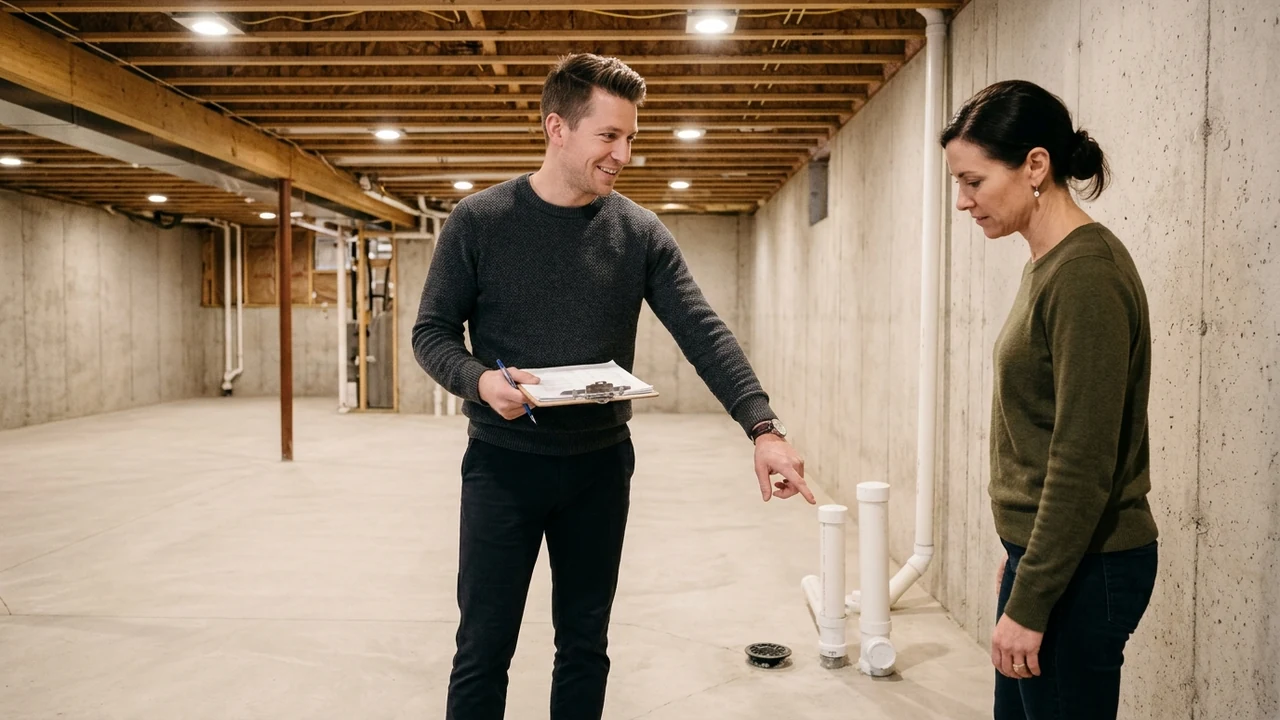
- Finishing a basement that still leaks. New walls over old water equals mold and angry buyers.
- Chasing a price your neighborhood will never support. The ceiling is real.
- Skipping the egress window, so your new “bedroom” is not legal and cannot be listed as one.
- Over-building a luxury basement in a starter-home market. The quality does not match the block.
- Doing cheap, low-quality work that looks worse than raw concrete. Buyers can tell.
- Forgetting curb appeal upstairs while dumping the whole budget downstairs. First impressions still start at the front door and the outdoor yard.
Small staging fixes often beat a big basement build. A clean, well-lit raw basement with a fresh coat of paint can charm buyers for a few hundred dollars. If you want the full playbook, see our tips on how to stage your home for sale. Staging the whole house well usually gives a stronger return than any single project downstairs.
If you are not sure which mistakes apply to you, we can help. Walk us through your home, and we will give you a straight, no-pressure read on whether finishing makes sense for your specific space and market.
How to Measure If Finishing Paid Off
In my professional experience, sellers who track a few real numbers make calmer, smarter choices than those who go on gut feeling. So if you do decide to finish, watch these signs to know it worked. This keeps you honest about the investment.
Watch four things. First, days on market: a finished basement in the right area should sell faster, often within the first few weeks. Second, price per square foot versus your comparable sales. Third, the appraisal, to confirm the finished space actually lifted value. Fourth, buyer feedback, since real reactions tell you if the room landed.
Here is my honest rule of thumb. If your finish returns at least 60 to 70 percent of its cost and cuts your selling time, it was worth it. If it returns less and your home still sits, the money would have been better kept in your pocket, or spent on paint, landscaping, and the outdoor areas buyers see first.
Frequently Asked Questions
Should I finish the basement before selling the house?
Usually, no. In most cases, finishing costs more than it adds back, returning only about 70 cents on each dollar. Finish it only if nearby homes all have finished basements and your neighborhood price has room to grow. Otherwise, clean it, dry it, light it, and sell it as-is.
In what order should you finish a basement?
Fix problems first, pretty stuff last. Rushing the order is the top way people waste money on basement finishing. Here is the safe order:
- Test and fix moisture, water, and radon.
- Seal cracks and waterproof the walls.
- Add framing and insulation.
- Run any needed plumbing and wiring (for a bathroom or lights).
- Hang drywall and finish the ceiling.
- Install the floor.
- Paint, add trim, and set final fixtures.
What is the hardest month to sell a house?
Winter is the slow season, and December and January are the toughest months. Cold weather and holidays keep buyers home, so homes sit longer and offers come in lower. Spring and early summer bring the most buyers to Richmond. If timing is flexible, aim for those warmer months, and see our guide on the best time to sell a house in Richmond.
What not to fix before selling your house?
Skip big projects that will not pay you back. Do not do a full basement finish in a mid-range market. Do not spend on things buyers plan to change anyway. Common “leave it alone” items:
- Full basement finishing in a starter or mid-range neighborhood.
- High-end kitchen or bathroom rebuilds you will not recoup.
- Personal quality upgrades like bold paint or custom built-ins.
- Small cosmetic dings a buyer will fix to their own taste.
Does a finished basement count in my home’s square footage?
Not the same way upstairs rooms do. A finished basement is below-grade, so appraisers usually list it apart from your main floor area and value it 10% to 20% lower per square foot. Buyers still love the extra living space, but do not expect your asking price to jump as if it were a full second story.
So, Should You Finish It First?
Here is my final take after years of helping Richmond families sell. For most homes, do not pour your whole budget into basement finishing right before you list. Clean it, dry it, make it safe, and let a smart price do the heavy lifting. Save the big construction for buyers who want it their way.
Finish first only when your neighborhood truly rewards it and your space is already dry and sound. In every other case, a tidy unfinished basement and a well-staged home will serve you better. The money you keep is real money in your pocket at closing.
Still unsure about your own basement? That is normal, and you do not have to guess. We can look at your space, your local comps, and your goals, then tell you honestly whether finishing is worth it for your house. Have you weighed this choice for your own home yet? I would love to hear where you landed.