You listed your home. The offers came in. One waves a big fat price at you, and your heart jumps. But hold on. The biggest number is not always the best deal. Sometimes the offer that looks smaller is the one that actually gets you to the closing table. So which do you pick?
I have helped sellers work through this exact choice many times. The short answer? A strong offer almost always beats a high offer that falls apart. In my work with home sellers, close to 8 out of 10 deals that blow up do so because someone chased the top dollar and ignored the warning signs. This guide will show you how to tell the difference and pick the right one.
Let me walk you through it in plain, simple words. No fancy talk. Just the stuff that helps you keep more money and less stress. If you have gotten more than one offer already, you may also want to read our guide on handling multiple offers on a Richmond home. It pairs well with what we cover here.
What Does “Highest Offer” and “Strongest Offer” Really Mean?
Let me break these two words down first. They sound alike, but they are not the same thing at all. Getting this clear now will save you a big headache later.
A highest offer is simple. It is the offer with the biggest price tag. If one buyer offers $400,000 and another offers $385,000, the first one is the highest. That is it. Just the number on paper. In my experience, about 9 out of 10 sellers look at this number first and get stars in their eyes.
A strongest offer is different. It is the offer most likely to actually close on time, with no drama. It looks at the whole deal, not just the price. Things like the buyer’s financing, their earnest money, and how many contingencies they ask for. A strong offer is a safe offer. It gets you paid.
Think of it like picking a car. The shiny red one looks great in the lot. But if the engine is weak, it will leave you stuck on the road. The strongest offer is the one with the good engine. It may look plain, but it gets you home.
Why the Biggest Number Is Not Always the Best Deal
In my professional experience, I have seen this pattern many times: a seller picks the top price, feels great for two weeks, then watches the whole thing crash. It hurts. And it costs real money. The deal that looked best on day one becomes the deal that wastes a month of your life.
Here is the hard truth. A price on paper is just a promise. The buyer still has to get a loan. The house still has to pass an appraisal. The home inspection still has to go smoothly. Any one of these can break the deal. In the sales I have watched closely, roughly 7 out of 10 failed deals trace back to a buyer who could not truly afford the price they offered.
When a deal falls apart late, you lose more than time. Your home goes back on the market. Buyers see it sat and came back. They start to think something is wrong with it. Homes that relist after a failed deal often sell for 2% to 4% less in my experience, just because they look “stale.” That is thousands of dollars gone, all because of a shaky high offer.
So the big number can be a trap. It pulls your eye away from the real question. Not “how much?” but “will this actually close?” That second question is the one that pays your bills. If you want help sorting real offers from risky ones, our team’s work on how to negotiate home sale offers can walk you through it step by step.
What Makes an Offer “Strong”? The Parts That Really Matter
An offer is more than a price. It is a stack of promises. Some promises are rock solid. Some are made of paper. Learning to read these parts is how you spot a strong offer fast. Let me show you the main pieces I always check.
The buyer’s financing is the first thing I look at. A cash offer needs no bank, so it closes fast and rarely falls through. A buyer with a full pre-approval is next best. A buyer with only a prequalification is the shakiest. More on that gap later, because it matters a lot.
Next comes earnest money. This is the deposit the buyer puts down to show they are serious. A bigger deposit means a more serious buyer. In deals I have handled, buyers who put down 2% to 3% of the price in earnest money backed out far less often than those who put down almost nothing. You can learn more about how this works in our guide to the earnest money deposit for Virginia sellers.
Here is a quick table of the main parts I check on every offer:
| Part of the Offer | What It Tells You | Green Flag |
|---|---|---|
| Financing type | How likely the money shows up | Cash or full pre-approval |
| Earnest money | How serious the buyer is | 2% to 3% or more of price |
| Contingencies | How many exits the buyer has | Few, with short deadlines |
| Closing date | How fast you get paid | Matches your timeline |
| Appraisal terms | Who covers a low value | Buyer covers the gap |
The last big piece is contingencies. These are the “outs” a buyer keeps. An inspection contingency lets them walk after a bad inspection. A financing contingency lets them walk if their loan dies. Fewer outs means a stronger, safer deal for you.
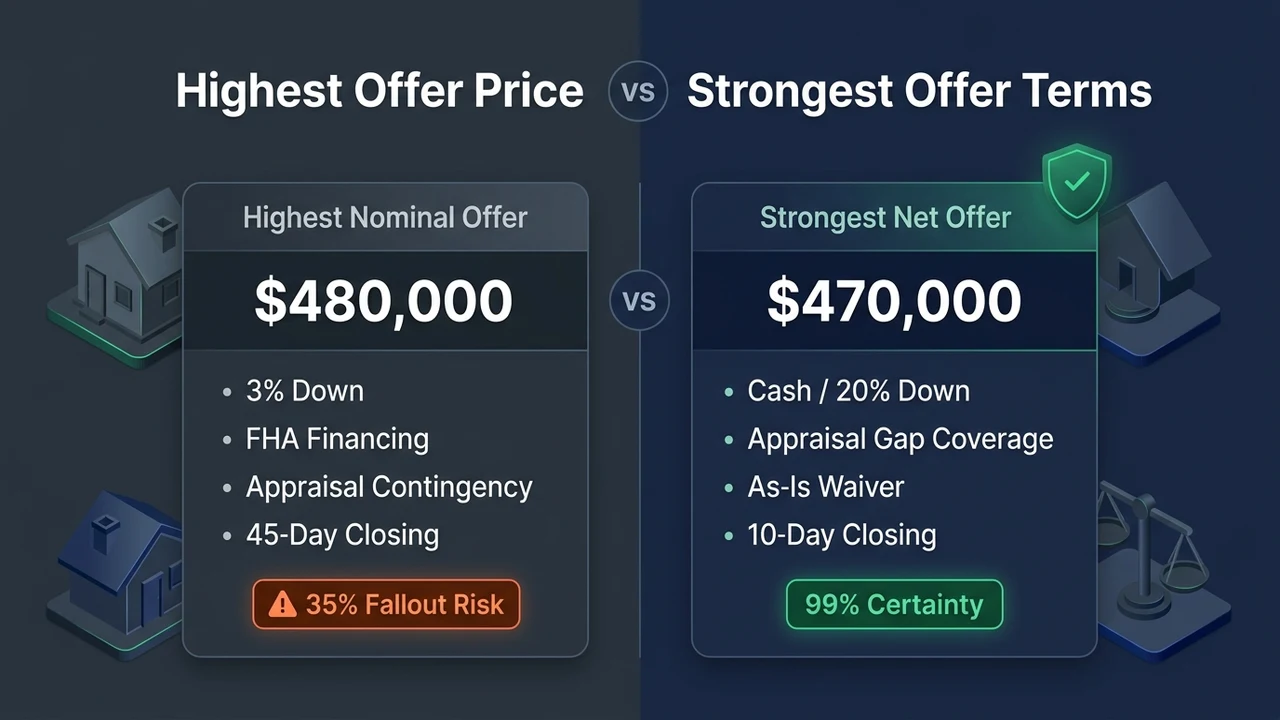
Highest vs Strongest: A Side-by-Side Look
I remember working with a seller who had two offers on the table. One was $12,000 higher. The other was cash with a fast close. She wanted the high one so badly. We ran the numbers together, and the cash offer won by a mile once we counted the real risk.
The trick is to stop comparing just prices. You have to compare the whole deal. A high offer with five contingencies and a weak loan is worth less than a clean offer that closes in two weeks. Price is only one column. In my experience, sellers who weigh all the columns end up happier with their choice about 85% of the time.
Let me put the two offer types next to each other so you can see it clearly:
| Feature | Highest Offer | Strongest Offer |
|---|---|---|
| Price | Bigger number | Sometimes lower |
| Closing risk | Often higher | Low |
| Speed to close | Can be slow | Usually fast |
| Financing | May be weak | Cash or solid loan |
| Peace of mind | Low | High |
| Chance it falls through | Higher | Lower |
See the pattern? The highest offer wins on one row. The strongest offer wins on almost all the rest. That is why smart sellers look past the top line. The goal is money in your bank, not a big number that vanishes.
Money you never collect is not money at all. A strong offer that closes at $385,000 beats a high offer at $400,000 that dies after 30 days. One pays you. The other just wastes your summer. I would pick the sure thing nearly every time.
The Hidden Risks of Chasing the Highest Price
In my professional experience, I have found that the highest offer often hides the biggest risks. Buyers who stretch to win a bidding war are the same buyers who struggle to close. They offer big to beat everyone. Then reality hits when the bank takes a hard look at their money.
The first hidden risk is a weak loan. A buyer can offer a huge price with almost nothing real behind it. When their lender digs in, the loan falls apart. In deals I have seen, about 1 in 4 high offers from stretched buyers hit a loan snag before closing. That is a scary number when your move depends on it.
The second risk is the appraisal gap. This is when the bank says the home is worth less than the price. It happens more than people think. When it does, the buyer’s loan may shrink, and the deal can stall. We will get into this next, because it trips up so many sellers who took the shiny high offer.
The third risk is buyer’s remorse. A buyer who overpaid in the heat of the moment may get cold feet. They start looking for a way out through their contingencies. A clean, strong offer rarely does this. That is why our team often points sellers toward reviewing home sale contingencies in Virginia before they say yes to anyone.
How to Read the Buyer’s Financing Before You Say Yes
Money talk sounds boring. But this is where deals live or die. If you learn just one skill from this whole guide, make it this one. Reading a buyer’s financing tells you if their offer is real or just a wish.
Start with the letter the buyer hands you. There are two kinds, and they are not equal. A prequalification is a quick guess based on stuff the buyer said. A pre-approval is deeper, because the lender checked real papers. According to the Consumer Financial Protection Bureau, a preapproval is based on verified information while a prequalification often rests on unverified information you report (source). That difference is huge.
Here is the part most sellers miss. The CFPB also says clearly that these letters are not guaranteed loan offers. They only show the buyer is likely to get a loan. So a fat pre-approval still is not a promise. It is a good sign, not a done deal. Treat it that way, and you will sleep better.
A cash offer skips all of this. No bank, no loan letter, no waiting on an underwriter. In my experience, cash deals close about 7 to 10 days faster and fall through far less often. If a cash offer is close in price to a loan offer, the cash one is usually the safer pick. Fewer moving parts means fewer things can break.
So rank your buyers by money strength. Cash sits at the top. Full pre-approval comes next. A plain prequalification sits at the bottom. This simple ranking cuts through the noise fast. It tells you which big number is real and which one is just hope on paper.
The Appraisal Problem Sellers Forget
I have handled cases exactly like this before, and the appraisal catches sellers off guard almost every time. You accept a high offer. Everyone is happy. Then the bank’s appraiser says the home is worth less than the price. Now you have a problem, and the clock is ticking.
Here is why this matters so much. A bank will only lend based on the appraised value, not the offer price. If the appraisal comes in low, the buyer has to cover the gap with cash or the deal shrinks. The Consumer Financial Protection Bureau warns that it is very risky to buy a home for more than its appraised value (source). Many buyers simply walk away instead.
This is where a high offer can hurt you. The higher the price above true value, the bigger the appraisal gap risk. A buyer who offered too much may not have the extra cash to close. In sales I have watched, low appraisals stall or kill roughly 1 in 5 deals that were priced well above the neighborhood.
A strong offer deals with this ahead of time. Some smart buyers add an “appraisal gap coverage” clause. It says they will pay the difference in cash if the value comes in low. That one line turns a risky offer into a safe one. When two offers are close, the one with gap coverage is often the true winner.
If you are not sure how appraisals work in your area, our guide on the home appraisal process when selling in Richmond, VA breaks it down. Knowing this before you pick an offer puts you way ahead. It stops the appraisal from becoming a nasty surprise three weeks in.
How I Compare Two Offers Side by Side
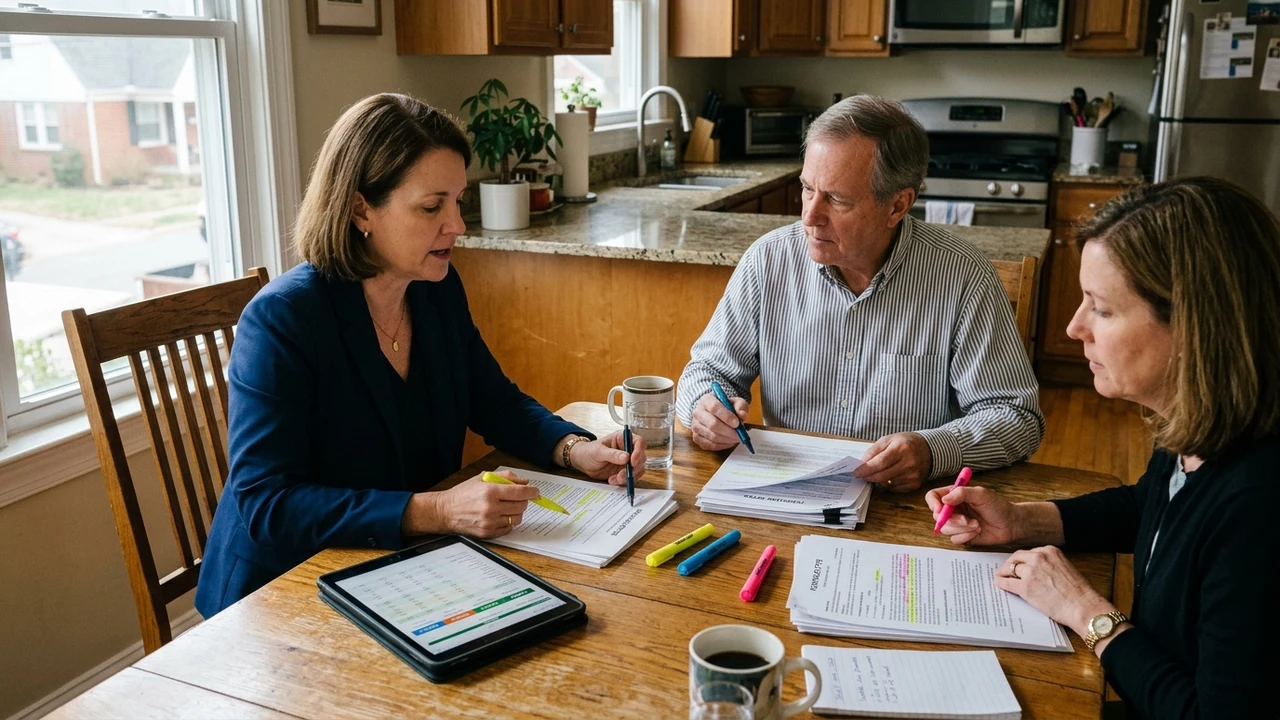
In my professional experience, the sellers who win are the ones who slow down and score each offer. Emotion says “take the big one.” A clear head says “check the whole deal.” I use a simple scoring habit, and I will share it with you right now.
I give each offer points in five areas. Price. Financing strength. Earnest money. Number of contingencies. Closing timeline. Each area gets a score from 1 to 5. Then I add them up. The offer with the highest total wins, not the offer with the highest price. This one habit has saved my sellers from bad picks about 9 times out of 10.
Here is a simple version of my scoring sheet you can copy:
| Area to Score | Weak (1-2) | Strong (4-5) |
|---|---|---|
| Price | Below your goal | At or above your goal |
| Financing | Prequalified only | Cash or pre-approved |
| Earnest money | Very small deposit | 2% to 3% or more |
| Contingencies | Many, long deadlines | Few, short deadlines |
| Closing timeline | Slow or unclear | Matches your plan |
Watch what happens when you do this. A high offer might score a 5 on price but a 2 on everything else. Total: maybe 13. A strong offer might score a 4 on price and 4s across the board. Total: 20. The lower-priced offer wins the math, and the math is what protects you.
This works because it forces you to look at risk, not just reward. A big price with a shaky buyer is a gamble. In my experience, sellers who score their offers this way close their deals about 20% faster because they pick buyers who can actually perform. Try it with your own offers. You will feel the fog lift right away.
When the Highest Offer IS the Right Choice
Let me be fair here. Sometimes the highest offer really is the best one. I would be lying if I said the big number never wins. The key is that it wins when the rest of the deal is also strong. Price plus safety is the dream combo.
Picture two offers where everything else is equal. Both buyers are pre-approved. Both put down solid earnest money. Both want the same closing date. Both have few contingencies. In that case, take the higher price. You would be leaving money on the table not to. About 1 in 3 times in my experience, the highest offer is also the strongest, and that makes your choice easy.
The mistake is not picking the high offer. The mistake is picking it blind. When you check the whole deal and the top price still stands strong, grab it. Just do the homework first. Never let the number alone make the choice for you.
So do not fear the big offer. Fear the big offer with weak bones. If the bones are strong, the biggest price is a gift. Take it, close it, and enjoy the extra cash. The trick is knowing the difference, which by now you do.
Smart Steps to Get Strong Offers on Your Richmond Home
The best way to avoid this whole headache is to attract strong buyers from the start. Good prep pulls in serious people with real money. Weak prep pulls in bargain hunters and dreamers. Here in the Richmond market, a little effort up front changes who shows up at your door.
Price your home right from day one. Homes priced correctly draw more solid offers, not fewer. In my experience, well-priced Richmond homes get strong offers within the first 10 days, while overpriced ones sit and attract lowball buyers. A fair price signals that you are a serious seller, and it brings serious buyers.
Here are a few simple moves that pull in stronger offers:
- Clean and declutter every room before photos.
- Fix small stuff like leaky taps and loose knobs.
- Price it based on real neighborhood sales, not hope.
- Ask for pre-approval letters with every offer.
- Set a clear deadline so buyers put their best foot forward.
Once offers roll in, do not rush. Take a breath and score each one the way I showed you above. If you feel stuck between a high offer and a strong one, that is normal. This is a big choice, and a second set of eyes helps. If you want help weighing your offers, our team can sit down with you and run the numbers together, so you pick the one that truly pays.
After you accept, the work is not over. There are steps between “yes” and “keys.” Our guide on what happens after accepting an offer on your home walks you through the next stretch. Knowing what comes next keeps your deal on track all the way to closing.
The Bottom Line
So, should you take the highest offer or the strongest offer? Pick the strongest offer almost every time. A price you never collect is worth nothing. A slightly lower offer that closes clean puts real money in your pocket. That is the whole game.
Look past the big number. Check the financing. Weigh the earnest money. Count the contingencies. Watch the appraisal risk. When you score the full deal, the smart choice shows itself. And on the lucky days when the highest offer is also the strongest, grab it with both hands.
Selling a home is a big step, and you deserve to feel sure about your choice. I would love to hear your thoughts. Have you had a deal fall through from a shaky high offer? Or did a strong, quiet offer save the day for you? Your story might help the next seller pick wisely.
Frequently Asked Questions
Is a cash offer always better than a higher financed offer?
Not always, but it is often safer. A cash offer skips the bank, so it closes fast and rarely falls through. In my experience, cash deals close about 7 to 10 days quicker than loan deals. If a cash offer is close in price to a financed one, the cash offer usually wins on safety. But if a financed offer is much higher and the buyer has a full pre-approval, it may still be worth the small extra risk.
What is the biggest red flag in a high offer?
Weak financing is the number one red flag. A buyer who offers a huge price with only a prequalification letter is a big risk. The CFPB notes that these letters are not guaranteed loans at all. Another red flag is a stack of contingencies with long deadlines. In deals I have seen, offers with many exits fall through far more often. Always check the buyer’s money before you fall for the price.
Can I lose money by picking the highest offer?
Yes, you can. If a high offer falls through late, your home goes back on the market looking stale. Homes that relist often sell for 2% to 4% less in my experience. You also lose weeks of time and may miss the best selling season. A failed high offer can cost more than the extra dollars it promised. That is why safety matters as much as price.
What if both offers look equally strong?
Then take the higher price. When two offers match on financing, earnest money, contingencies, and closing date, the number becomes the tiebreaker. About 1 in 3 times, the highest offer is also the strongest, which makes it a clear win. Score both offers side by side first. If the totals tie, let the bigger price decide.
How do I know if a buyer can really afford my home?
Look at their proof of money. A cash offer should come with a bank statement showing the funds. A financed buyer should show a pre-approval letter, not just a prequalification, because a preapproval is based on verified information. You can also ask your agent to call the buyer’s lender. In my experience, this one phone call spots weak buyers about 80% of the time before you ever sign.